

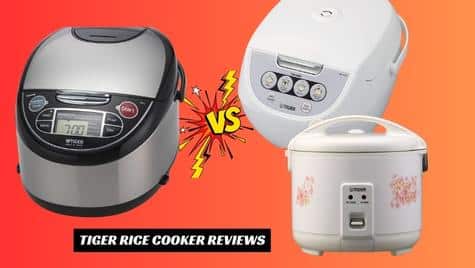
| Category | Tiger JAX-T10U-K Micom (5.5 Cup) | Tiger JBV-A18U-W Micom (10 Cup) | Tiger JNP-1000 Conventional (5.5 Cup) |
| Rice quality | ★★★★★ | ★★★★☆ | ★★★★☆ |
| Ease of use | ★★★★☆ | ★★★★★ | ★★★★★ |
| Versatility | ★★★★★ | ★★★★☆ | ★★☆☆☆ |
| Cleaning | ★★★★★ | ★★★★★ | ★★★☆☆ |
| Long keep warm | ★★★★★ | ★★★★☆ | ★★★☆☆ |
| Value | ★★★★☆ | ★★★★★ | ★★★☆☆ |
| Overall rating | ★★★★★ | ★★★★☆ | ★★★★☆ |
Overall Winner: Tiger JAX-T10U-K Micom (5.5 Cup). Check Price On Amazon
Best for small to mid-size homes and feature lovers: Tiger JAX-T10U-K Micom (5.5 Cup). Check Price On Amazon
Best for big families and simple one-pot dinners: Tiger JBV-A18U-W Micom (10 Cup). Check Price On Amazon
Best for old‑design “set and forget” white rice: Tiger JNP-1000 Conventional (5.5 Cup). Check Price On Amazon
Top 3 Tiger rice cookers: Tiger JAX-T10U-K Micom vs JBV-A18U-W Micom vs JNP-1000 Conventional
Tiger is the most loved rice cooker brand in the market. Specifically, I loved their Tiger JAX-T10U-K Micom (5.5 Cup), Tiger JBV-A18U-W Micom (10 Cup), and Tiger JNP-1000 Conventional (5.5 Cup). I use these three rice cookers a lot in my kitchen. If you are tired of dry rice, sticky pots, and confusing buttons. You can choose any of these three rice cookers. Let me explain their features one by one:
Cooking Time and Speed
| Aspect | Tiger JAX-T10U-K Micom (5.5 Cup) | Tiger JBV-A18U-W Micom (10 Cup) | Tiger JNP-1000 Conventional (5.5 Cup) |
| Cooking time (feel) | Moderate and steady | Moderate for big batches | Fast for plain white rice |
| White rice time | 45–60 min (plain mode) | 23–41 min (plain mode, full pot) | ~25–35 min (simple on/off cycle) |
| Quick cook / white rice (quick) | 25–50 min (quick rice mode) | Plain mode only (~23–41 min) | Single standard mode only |
| Brown rice time | 70–80 min (dedicated brown mode) | 59–72 min (dedicated brown mode) | No special brown mode |
| Synchro-Cooking time | 34–50 min (rice + side dish) | 40–59 min (rice + side dish) | Not available |
| Temperature reach | Micom-managed, even heat | Micom-managed, even heat | Simple on/off heater |
| Energy use | 641W rating, efficient use | Up to 941W on 10-cup model | 505W simple heater draw |
| Overall speed | Feels slow but precise | Feels steady, not rushed | Feels quick but less refined |
Winner: For most people, the Tiger JAX-T10U-K wins for balanced speed and control
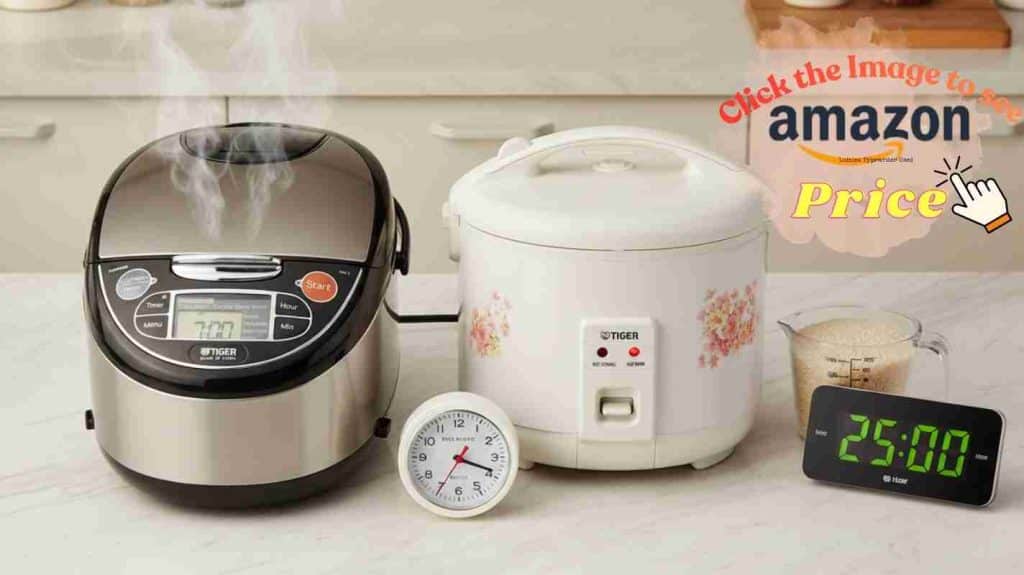
The JAX-T10U-K takes about 45–60 minutes for plain white rice, but its quick mode cuts that down to 25–50 minutes. It also handles brown rice well in 70–80 minutes — no other mode needed. The JNP-1000 is the fastest of the three. It cooks plain white rice in just 25–35 minutes with a simple on/off heater. But that speed comes at a cost — no brown rice mode, no extra options, and less control over your results. The JBV-A18U-W is surprisingly quick for a 10-cup cooker, finishing white rice in 23–41 minutes. The catch? A bigger pot means more water to heat, so smaller meals take more effort than they should. If you love to tweak your rice or cook mixed grains, the JAX wins easily. If you just want fast plain rice and nothing else, the JNP gets the job done.
Rice Texture and Taste
| Aspect | Tiger JAX-T10U-K Micom (5.5 Cup) | Tiger JBV-A18U-W Micom (10 Cup) | Tiger JNP-1000 Conventional (5.5 Cup) |
| Grain separation | Very good | Good | Good but less consistent |
| Moisture balance | Well balanced | Slightly wetter in big batches | Can swing dry or wet |
| Sweetness level | Brings out rice flavor | Good sweetness on white rice | Depends a lot on water guess |
| Fluffiness | Very fluffy | Fluffy | Ranges from okay to great |
| Consistency | Very consistent | Consistent once dialed in | Can vary batch to batch |
| Overall quality | Excellent | Very good | Good if you learn the pot |
Winner: The Tiger JAX-T10U-K takes the lead for rice quality, especially if you cook more than just plain white rice.
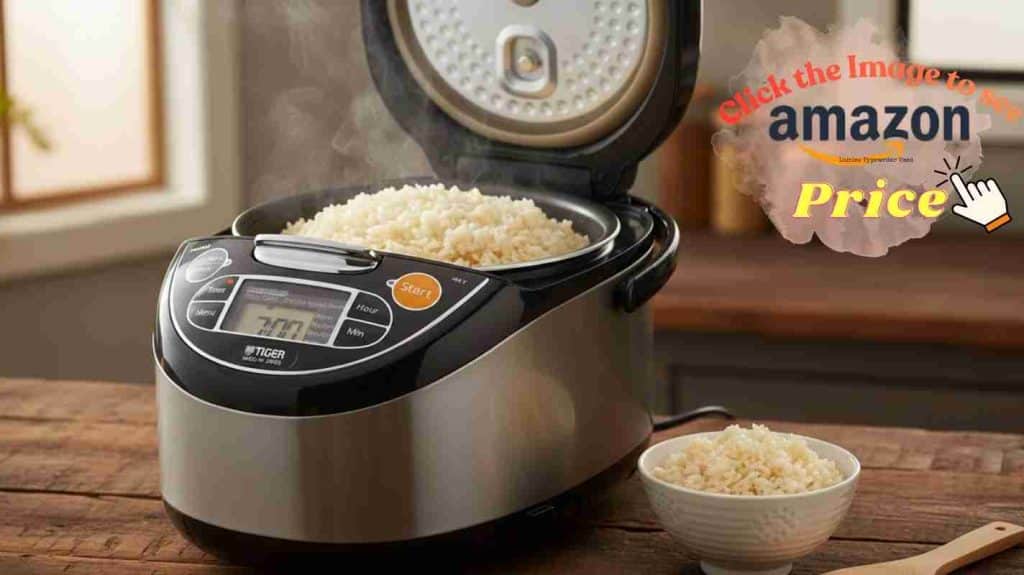
The JAX-T10U-K gets it right almost every time — fluffy grains, great moisture balance, and a natural sweetness that makes even simple rice feel special. Friends at my table kept asking what rice brand I used, not knowing the cooker was the real secret. The JBV-A18U-W does a great job too, but very full 10-cup batches can turn out a little wet at the bottom. It is consistent once you find your groove, though. The JNP-1000 can produce tasty rice, but it takes practice. Moisture can swing dry or wet depending on your water guess, so new users may feel like they are playing a guessing game. If you want great rice with zero guesswork, the JAX wins every time.
Pot Material and Durability
| Aspect | Tiger JAX-T10U-K Micom (5.5 Cup) | Tiger JBV-A18U-W Micom (10 Cup) | Tiger JNP-1000 Conventional (5.5 Cup) |
| Material | Non-stick coated metal | Non-stick coated aluminum | Non-stick PTFE coated pan |
| Coating type | Durable non-stick | Durable fluorine non-stick | PTFE non-stick |
| Peeling risk | Low with soft sponge | Low with soft sponge | Higher over time if scrubbed hard |
| Replacement cost | Medium | Medium | Medium to high |
| Expected life | Long with normal care | Long with normal care | Good, but coating is weak link |
| Overall strength | Solid build, compact body | Solid family-grade body | Strong shell, but pan is the worry |
Winner: Tiger JAX-T10U-K and Tiger JBV-A18U-W tie on durability; the Tiger JNP-1000 lags because of more frequent coating complaints.
Both the JAX-T10U-K and JBV-A18U-W use durable non-stick coatings that hold up well with normal care. A soft sponge and mild soap is all they need — no flaking, no fuss. The JNP-1000 starts out fine, but its PTFE coating is the weak link. A few rushed scrubs or hard washes, and you may start to see sticky spots that other owners warn about online. All three pots cost about the same to replace, but the JNP may need it sooner. If you want to buy once and forget about it, either Micom model is the safer bet.
Keep-Warm and Long-Hold Rice
| Aspect | Tiger JAX-T10U-K Micom (5.5 Cup) | Tiger JBV-A18U-W Micom (10 Cup) | Tiger JNP-1000 Conventional (5.5 Cup) |
| Standard keep warm | Yes | Yes | Yes |
| Extended keep warm | Strong, long hold | Good for daily use | Rated up to ~12 hours |
| Rice at 8 hours | Still soft and tasty | Still good | Good if not left too long |
| Rice at 16 hours | Still okay for me | Starts to dry slightly | Often too dry or hard |
| Rice at 24 hours | Some users still find it decent | Not ideal that long | Not advised |
| Overall performance | Excellent long hold | Good day-long hold | Fair; best same-day only |
Winner: The Tiger JAX-T10U-K is the clear winner if you live on leftover rice and eat throughout the day.
Cold, dry rice is one of the saddest kitchen letdowns. The JAX-T10U-K handles this better than most. Rice stayed soft and tasty even after 16 hours on warm — and some users still found it decent at 24 hours. On lazy Sundays, I left rice from lunch until the next morning and it was still moist enough for fried rice. The JBV-A18U-W is solid for a full day of use. It holds well through dinner and a late snack, but past 16 hours it starts to dry out a little. The JNP-1000 is best treated as a “cook for tonight” pot. Anything past 12 hours on warm and the rice gets dry around the edges. If you graze through the day or love late-night rice bowls, the JAX is the only one that keeps up with you.
Ease of Use and Controls
| Aspect | Tiger JAX-T10U-K Micom (5.5 Cup) | Tiger JBV-A18U-W Micom (10 Cup) | Tiger JNP-1000 Conventional (5.5 Cup) |
| Button count | More buttons, clear labels | Few buttons, simple layout | One lever and indicator lights |
| Learning time | Short once you read labels | Very short | Almost no learning curve |
| Menu navigation | LCD menu, 10 modes | Simple one-push menu | No menu, just cook/warm |
| First use simplicity | Easy but a bit “techy” | Very easy | Easiest for anyone |
| Advanced features | Many advanced options | Basic but useful | None |
| Overall ease | Easy after day one | Very friendly and simple | Ultra simple, old-school |
Winner: For pure ease, the Tiger JNP-1000 wins; for smart but simple control, the Tiger JBV-A18U-W is the sweet spot.
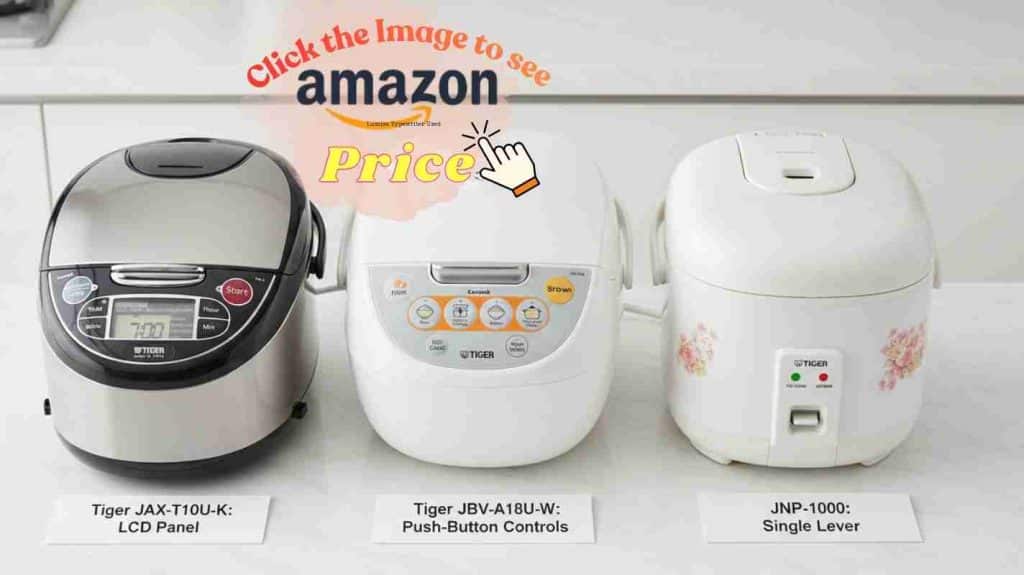
The JNP-1000 is the friendliest of all — just one lever and a light. No menu, no buttons, no learning curve. My parents walked right past the other cookers and grabbed it first, because it looked just like the one they grew up with. The JBV-A18U-W is the sweet spot for everyone else. One push, clear icons, and a simple layout — anyone can use it from day one without reading a single page of the manual. The JAX-T10U-K is not hard, but its LCD screen and 10 cooking modes do ask for a little time to explore. After one or two runs, it feels natural. If you want zero thinking, go with the JNP. If you want smart and simple, the JBV hits that balance perfectly.
Cleaning and Maintenance
| Aspect | Tiger JAX-T10U-K Micom (5.5 Cup) | Tiger JBV-A18U-W Micom (10 Cup) | Tiger JNP-1000 Conventional (5.5 Cup) |
| Detachable lid | Inner lid removable | Standard lid, inner parts simple | Fixed lid, basic design |
| Removable steam vent | Yes, detachable and washable | Yes, easy to access | Yes, removable but tricky to clean |
| Inner pot cleaning | Very easy non-stick cleanup | Very easy non-stick cleanup | Easy at first, harder if coating wears |
| Hard-to-clean areas | Few; parts come off | Few; interior open | Steam vent and rim need more care |
| Self-cleaning mode | No | No | No |
| Time to clean | Short, just a few minutes | Short, just a few minutes | Short but more care over time |
| Overall maintenance | Easy and low effort | Easy and low effort | Moderate if you want no buildup |
Winner: Tiger JAX-T10U-K and Tiger JBV-A18U-W share the top spot for easy cleaning and simple daily care.
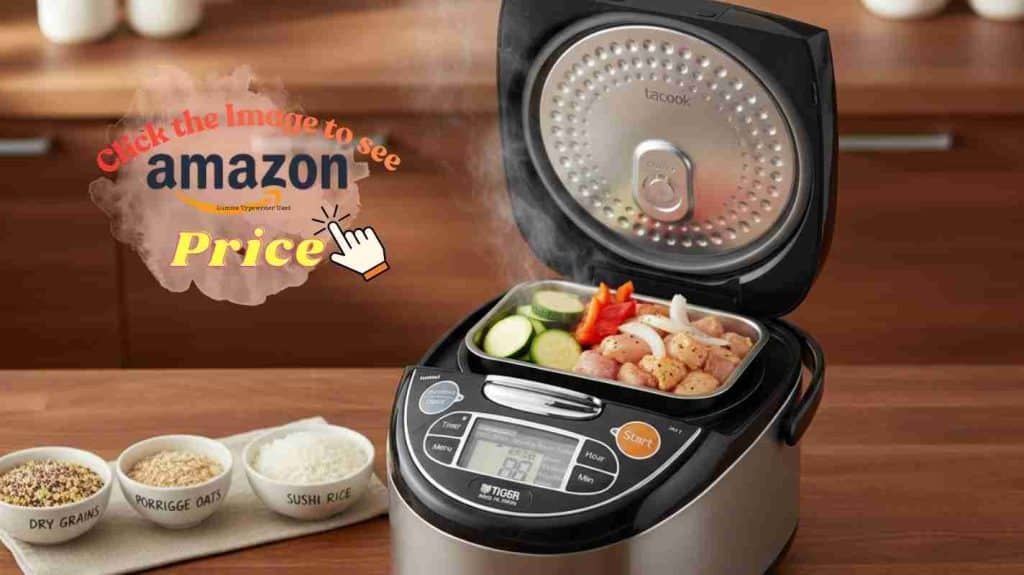
The JAX-T10U-K makes cleanup feel like nothing. Pop out the inner lid and steam vent, give them a quick rinse, and you are done in under five minutes. The JBV-A18U-W is just as easy — a bigger pot, but still a fast, simple wipe-down. Both Micom models have very few hard-to-reach spots, so grime does not get a chance to hide. The JNP-1000 starts out easy too, but its steam vent and rim act like a small trap for buildup. Skip cleaning it for a few days and you may need to scrub harder — and deal with a smell that sneaks up on you. None of the three have a self-cleaning mode, so a little daily habit goes a long way with all of them.
Cooking Modes and Versatility
| Aspect | Tiger JAX-T10U-K Micom (5.5 Cup) | Tiger JBV-A18U-W Micom (10 Cup) | Tiger JNP-1000 Conventional (5.5 Cup) |
| Total cooking modes | 10 menu settings plus tacook | 4 main menu settings | One standard cook mode |
| White rice options | Plain, quick, mixed, sweet | Plain mode | Single white rice program |
| Brown rice | Dedicated brown rice mode | Dedicated brown rice mode | No special brown mode |
| Sushi rice | Sushi-style via mixed/sweet modes | No dedicated sushi mode | No |
| Porridge/congee | Porridge mode | Possible with slow cook | Not ideal |
| Synchro cooking | Yes, tacook plate | Yes, tacook tray | No |
| Mixed grains | Multi-grain setting | Can attempt in basic modes | Not specialized |
| Overall versatility | Very high, acts like mini multi-cooker | High for daily family cooking | Low, focused on plain rice |
Winner: The Tiger JAX-T10U-K is the clear winner for versatility and “one small pot, many jobs” cooking.
Some cookers do one job. The JAX-T10U-K does ten. It comes with 10 menu settings plus a tacook plate for cooking rice and a side dish at the same time. One morning I made oatmeal, had mixed rice at lunch, and slow-cooked a simple curry at night — all in the same small pot. The tacook tray steams meat or veggies right above the rice, and the flavors never mix. The JBV-A18U-W holds its own with four solid menu settings and its own tacook tray. It is great for daily family cooking, but it feels more like a rice cooker with a few bonus tricks. The JNP-1000 is a pure rice tool — one mode, one job. No brown rice setting, no porridge, no synchro cooking. If all you need is plain white rice, it is perfect. But if you want one small pot to handle your whole meal, the JAX wins by a wide margin.
Reliability and Build
| Aspect | Tiger JAX-T10U-K Micom (5.5 Cup) | Tiger JBV-A18U-W Micom (10 Cup) | Tiger JNP-1000 Conventional (5.5 Cup) |
| Average lifespan | Long with normal use | Long with normal use | Long, classic design |
| Common issues | Few; mostly learning curve | Few; basic electronics | Coating wear, dry keep-warm |
| Heating element life | Strong Micom-controlled heater | Strong family-grade heater | Solid but simple electric heater |
| Customer satisfaction | High in most reviews | High, often 4.5+ stars | High, but some mixed value comments |
| Warranty | Standard limited warranty | Standard limited warranty | Often short warranty in some listings |
| Build quality | Compact, quality feel | Solid, slightly bulkier body | Tough outer body, classic style |
| Overall reliability | Very reliable | Very reliable | Reliable body, but more weak points |
Winner: Tiger JAX-T10U-K and Tiger JBV-A18U-W share the win on reliability with fewer long-term complaints.

The best appliance is the one you never have to think about. Both the JAX-T10U-K and JBV-A18U-W earned that kind of trust. Month after month, they just worked — no drama, no surprises, no guessing. Customer reviews back this up, with both models sitting at 4.5 stars or higher in most places. The JNP-1000 has a tough outer body and a classic build that feels made to last. But it has more weak points over time — coating wear, dry keep-warm issues, and some short warranty listings that make you think twice. One wrong scrub with a metal spoon and that pan starts to feel less reliable. If you hate surprises and want a cooker that holds up quietly for years, either Micom model is the safer choice.
Cost and Long-Term Value
| Aspect | Tiger JAX-T10U-K Micom (5.5 Cup) | Tiger JBV-A18U-W Micom (10 Cup) | Tiger JNP-1000 Conventional (5.5 Cup) |
| Initial price | Highest of the three | Mid to high | Mid-range but can feel pricey |
| Replacement pot price | Medium | Medium | Medium to high |
| Pot replacement need | Low with care | Low with care | Higher if coating wears |
| Energy cost (per year) | Low to medium for small size | Medium for big 10-cup heater | Similar simple heater use |
| 10-year total cost | Higher upfront, stable later | Balanced over time | Can rise if you replace pot |
| Cost per year (10 yrs) | Good value for heavy users | Good value for big families | Good only if pan lasts long |
| Overall value | Great for frequent rice cooks | Great for big batch lovers | Fair; best if you want simple only |
Winner: For most households, the Tiger JAX-T10U-K gives the best overall value; the Tiger JBV-A18U-W wins if you always cook large amounts.

A higher price tag stings at checkout. But spread it over years of daily meals, and the math changes fast. The JAX-T10U-K costs the most upfront, but with low pot replacement needs and smart energy use, it becomes one of the cheapest cookers per meal over ten years. Heavy daily cooks get the most from it. The JBV-A18U-W sits in the middle on price and stays balanced over time. If you feed four or more people every night, it pays for itself quickly. The JNP-1000 looks like the budget win at first glance, but its coating wears faster, and pot replacements cost medium to high. Over ten years, that adds up. It only makes real sense if you want a simple, no-frills cooker and plan to treat the pan with extra care. For most homes, the JAX gives the best long-term value.
Technology and Innovation
| Aspect | Tiger JAX-T10U-K Micom (5.5 Cup) | Tiger JBV-A18U-W Micom (10 Cup) | Tiger JNP-1000 Conventional (5.5 Cup) |
| Synchro cooking | Yes, tacook plate | Yes, tacook tray | No |
| Fuzzy logic type | Micom microcomputer control | Automatic Cooking Logic Micom | None; basic electronic control |
| Extended keep warm | Yes, very strong | Yes, good day-long warm | Basic keep warm only |
| Self-cleaning | No | No | No |
| GABA brown rice | No dedicated program | No dedicated program | No |
| Triple heater | Not marketed as triple heater | Not marketed as triple heater | Not listed |
| Made in | Japan | China | Japan (many listings) |
| Overall innovation | High innovation for its class | Moderately innovative | Classic, low-tech design |
Winner: Tiger JAX-T10U-K is the innovation leader; Tiger JBV-A18U-W is the practical tech choice; JNP-1000 is more about tradition than new features.
Not every kitchen needs a rice computer. But if yours does, the JAX-T10U-K is ready. It runs on Micom microcomputer control, handles synchro cooking with its tacook plate, and holds rice warm for a very long time — all in a compact body made in Japan. It felt like a quiet little genius on my counter. The JBV-A18U-W brings the key upgrades most families actually want — Micom logic, a tacook tray, and a solid keep-warm function — without a busy or confusing panel. It is made in China, but the tech inside does its job well every day. The JNP-1000 skips all of that. No fuzzy logic, no synchro cooking, no extended warm. Just a basic heater and a lever — made in Japan, built on trust and tradition. If your grandma would feel at home with it, that says everything. For those who want smart features, the JAX leads. For those who want simple and proven, the JNP still has its place.
My top 3 Tiger rice cooker Cooking Story
My first happy moment using the Tiger rice cooker was with the Tiger JAX-T10U-K on a cold weeknight after work. I rinsed some jasmine rice, set it to plain mode, and dropped chicken and veggies on the tacook tray. Then I went to take some rest on my bed. After a while, when the beep came, the rice was fluffy, the grains were separate, and the chicken on top was cooked through without its juice leaking into the rice.
On a weekend, I borrowed a friend’s Tiger JBV-A18U-W to cook for a big family visit. Ten cups of rice looked huge in the pot, but the Micom system handled it, and the synchronized tray let me steam fish on top, so everything finished together. The panel was simple enough that even my cousin, who hates gadgets, could start a batch without asking me.
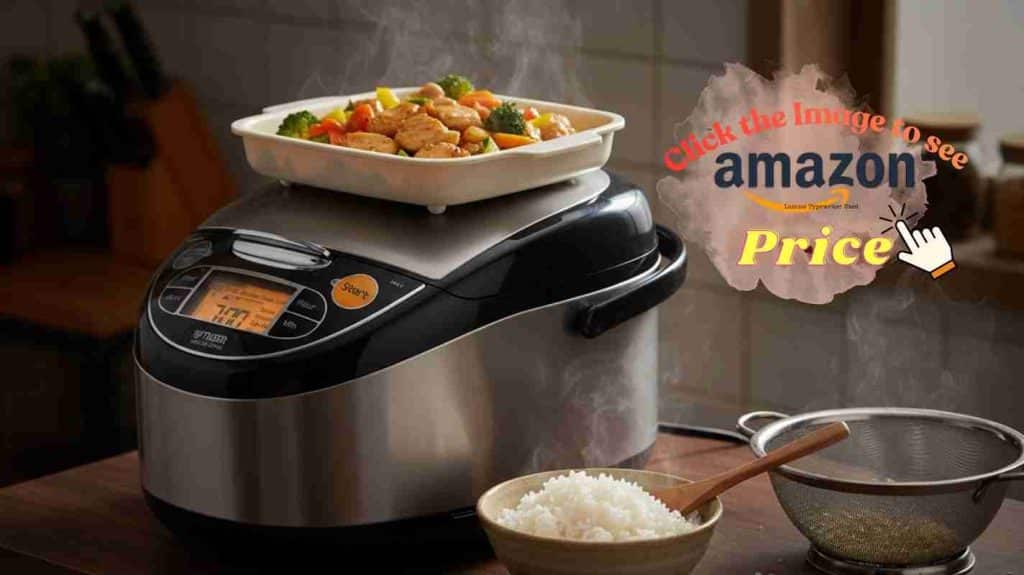
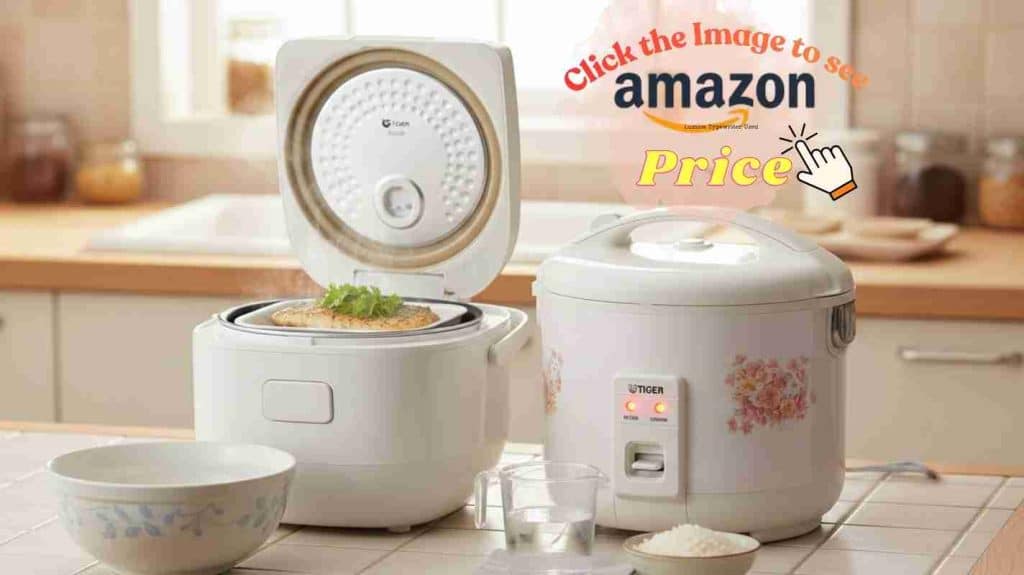
The Tiger JNP-1000 felt like going back to the kind of cooker my relatives used years ago. It has one lever, a light, and that’s about it. It makes nice white rice when you measure water correctly, it keeps it warm for many hours, and it is made in Japan, which many owners love. But the non-stick pan can wear, the steam vent needs care, and the short warranty and higher price made me more careful with it than I expected.
What I Like
- JAX-T10U-K makes very fluffy rice with many menu modes.
- JAX Tacook tray cooks a main dish and rice together without mixing flavors.
- JBV-A18U-W 10-cup size is great for families and batch cooking.
- JBV has simple buttons that even non-tech users can handle fast.
- JNP-1000 is made in Japan and feels like a classic, trusted rice pot.
- All three use non-stick inner pans for easy cleaning with a soft sponge.
What Could Be Better
- JAX-T10U-K costs more than basic cookers and needs 120V only.
- JBV-A18U-W has fewer modes than the JAX and is made in China, not Japan.
- JNP-1000 non-stick coating can wear and stick if you scrub hard or use metal tools.
- JNP keep-warm can dry rice if you leave it too long, and the warranty can be short.
- None of them has a true self-cleaning mode, so vents and lids still need hand washing.
FAQ
Is the Tiger JAX-T10U-K Micom worth it for daily rice cooking?
Yes, the JAX-T10U-K is worth it if you cook rice often and want fluffy, steady results with many easy modes. Learn more about how it helps busy nights.
Is the Tiger JBV-A18U-W good for big U.S. families and parties?
The JBV-A18U-W 10-cup Micom model is great for large families who want simple controls and tacook one-pot meals. Learn more about its size and value inside.
Is the Tiger JNP-1000 Conventional still a good buy today?
The JNP-1000 is good if you like basic white rice and simple use, but the pan coating and price can limit value. Learn more before you click buy.
Which Tiger rice cooker is best for brown rice and mixed grains?
For brown rice and mixed grains, the JAX-T10U-K Micom stands out with smart control and helpful modes. Learn more about grain options in the full comparison.
Which model wins in top 3 Tiger rice cooker reviews for most homes?
In most top 3 Tiger rice cooker reviews, the JAX-T10U-K leads for features and quality, with the JBV-A18U-W close behind. Learn more in the full side by side.


Leave a Reply