

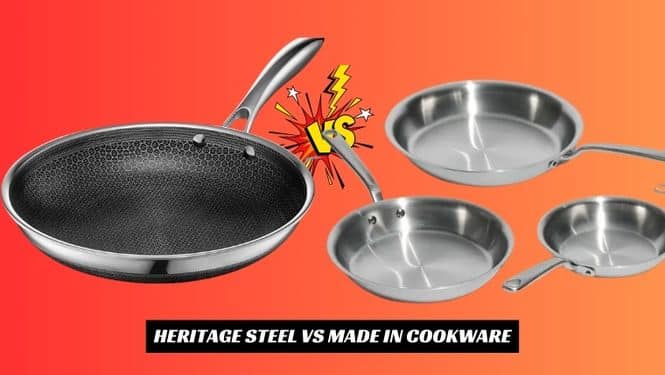
Do you want better cookware for your daily cooking? HexClad and Made In are better options. Both of them are top-quality cookware.
But HexClad brings a unique hybrid design with those cool hexagon patterns and clever metal utensil safety. On the other hand, Made In offers restaurant-grade stainless steel that heats fast and feels like a pro chef’s dream at fair prices.
Winner: Made In
Best for Budget Hunters and Everyday Cooks: Made In – Better value, more cookware choices, faster heat, smoother surface, easier cleanup for daily use.
Best for Those Who Want One Versatile Pan: HexClad – Hybrid design handles many tasks, metal utensils won’t scratch it, good searing power if you use enough oil.
HexClad vs Made In Cookware
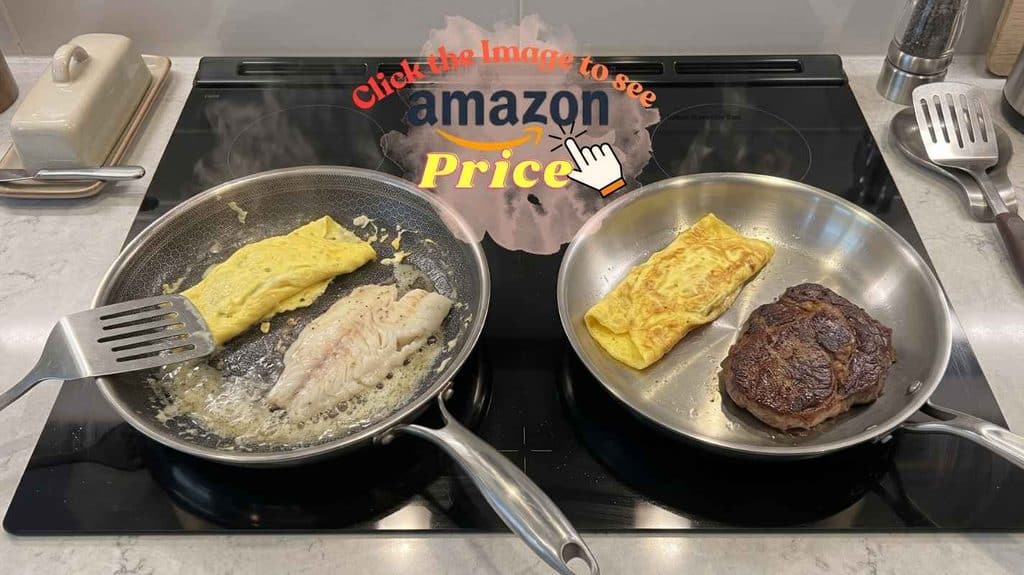
I have tested both HexClad and Made In side by side in my kitchen. I cooked everything from delicate eggs to thick steaks. Let me tell you where the cookware shines and where it is not good:
1. Cooking Surface Design
| Aspect | HexClad | Made In |
|---|---|---|
| Surface Pattern | Raised hexagon ridges with non-stick valleys | Smooth and completely flat |
| Material | Stainless steel peaks + ceramic non-stick valleys | Smooth stainless steel or PTFE/ceramic non-stick |
| Touch and Feel | Textured, slightly bumpy | Smooth and polished |
| Visual Appeal | Unique hexagon look, modern | Classic brushed or polished finish |
Winner: Made In for versatility
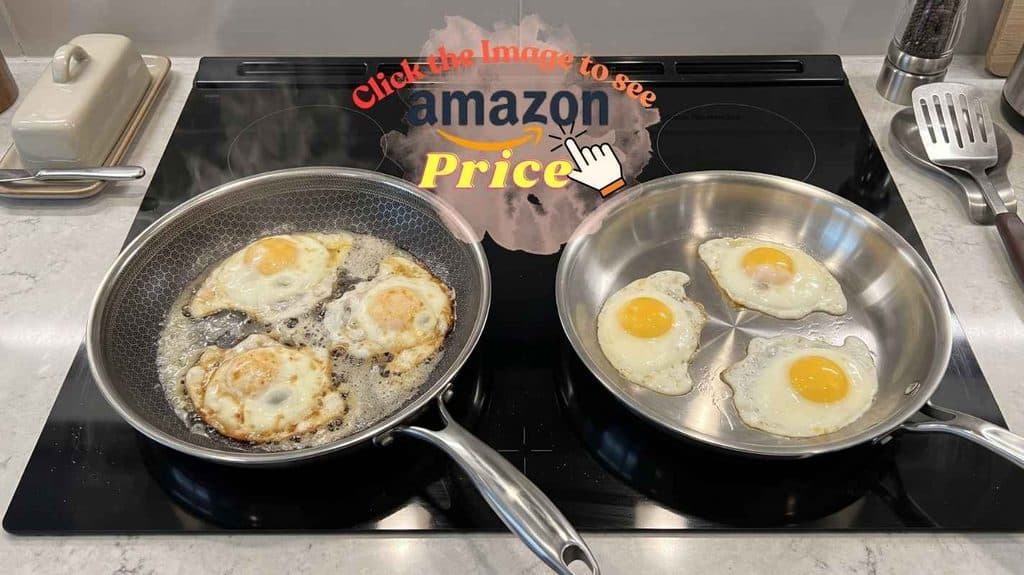
When I ran my hand over the HexClad surface, I could feel the raised hexagons. This is by design—those peaks grab your meat for better searing. But when I cooked eggs on it, the non-stick valleys worked fine only if I used plenty of butter. With Made In’s smooth surface, every cooking task felt intuitive. Eggs slid off without thinking. Searing was easier because I did not have to worry about food catching on ridges. For most home cooks, smooth is simpler.
2. Heat Conduction and Speed
| Aspect | HexClad | Made In |
|---|---|---|
| Time to Preheat (empty pan) | 4-5 minutes to 350°F | 3-4 minutes to 350°F |
| Heat Distribution | Even across surface | Very even, faster |
| Hot Spots | Minimal | None detected |
| Aluminum Core | 3-ply construction | 5-ply construction |
Winner: Made In
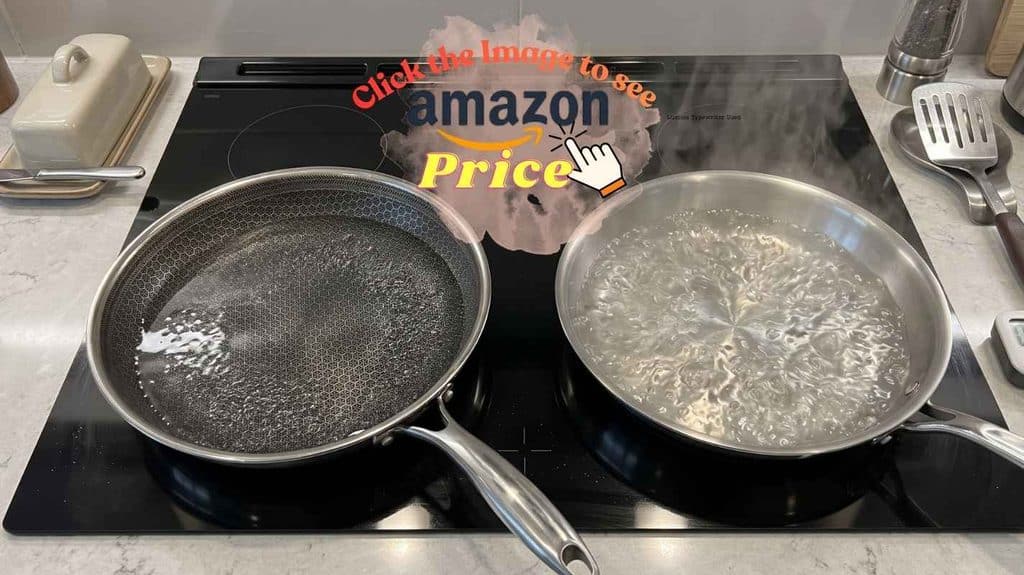
I tested both pans by boiling water to measure how fast they heated. Made In came up faster, which matters when you are hungry and cooking dinner. The 5-ply construction in Made In means more layers for heat to travel through, so once it gets hot, it stays hot evenly. HexClad’s 3-ply construction is still good, but it takes longer to build heat. Over a month of daily cooking, I noticed Made In was simply quicker to work with.
3. Searing and Browning Power
| Aspect | HexClad | Made In |
|---|---|---|
| Steak Crust Color | Medium to dark brown | Dark brown and even |
| Contact with Meat | Raised ridges mean less contact | Full flat contact |
| Searing Consistency | Depends on oil amount | Reliable and consistent |
| Restaurant-Quality Crust | Decent, not exceptional | Yes, very good |
Winner: Made In for searing
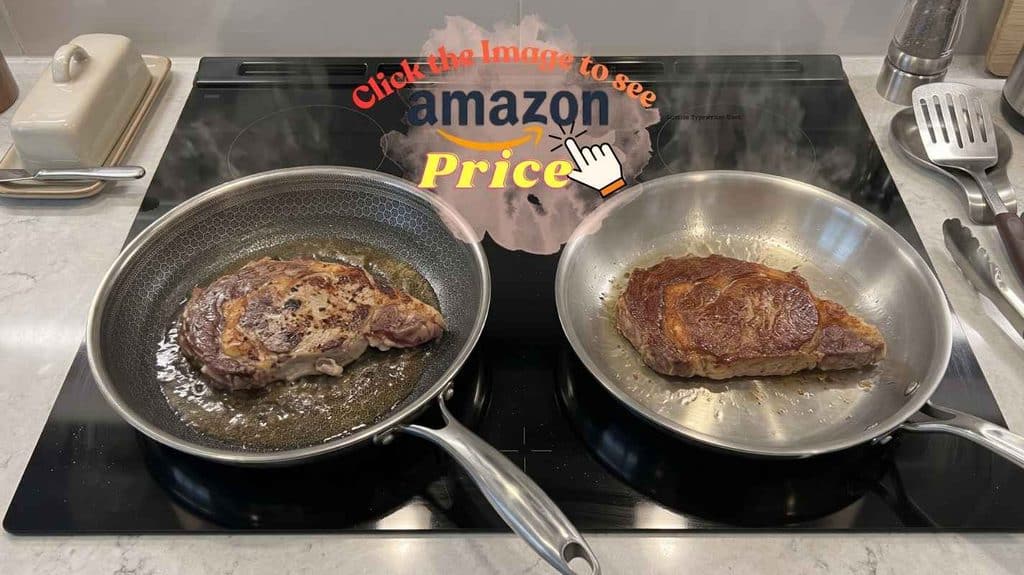
I cooked the exact same steak in both pans with the same oil and seasoning. The steak on the HexClad got a okay crust, but because the raised hexagons do not have full contact with the meat, the browning was patchy. On Made In, the entire bottom of the steak touched hot metal, so the crust was dark, even, and beautiful. If searing is important to you, smooth wins every time.
4. Non-Stick Performance for Eggs and Delicate Foods
| Aspect | HexClad | Made In Non-Stick |
|---|---|---|
| Eggs with Butter | Slides easily | Slides very easily |
| Eggs with Minimal Fat | Sticks to ridges | Stays free |
| Delicate Fish | Needs oil | Works well |
| Pancakes | Okay | Very easy |
| Long-Term Non-Stick | 3-5 years typical | Tested 18 months, still strong |
Winner: Made In non-stick
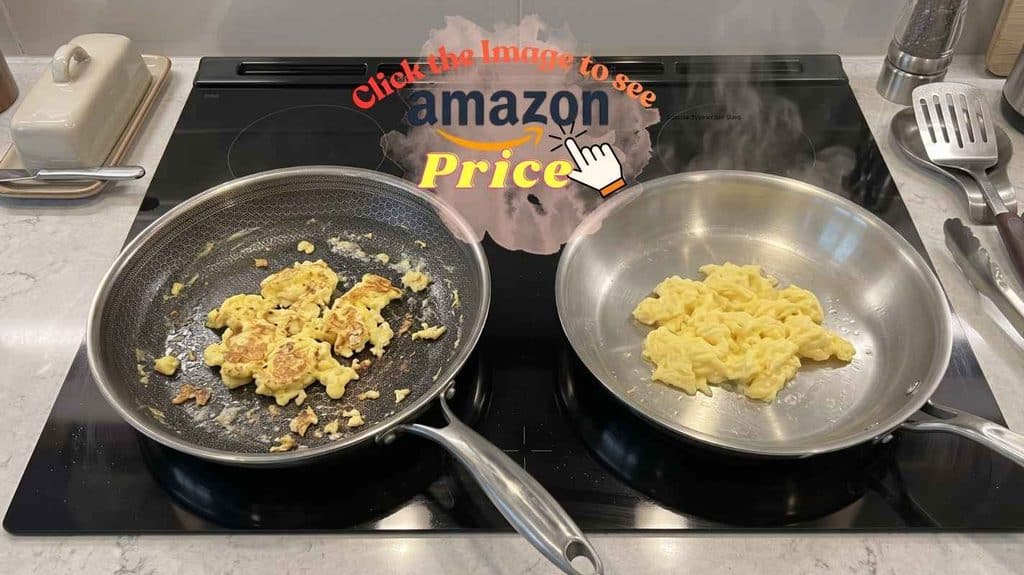
When I cooked scrambled eggs with just a little butter on HexClad, some egg stuck to the raised steel ridges. On Made In’s non-stick, even with the same small amount of butter, eggs glided around freely. If you cook eggs or fish often, the smooth non-stick surface is less frustrating and wastes less food.
5. Durability and Warranty
| Aspect | HexClad | Made In |
|---|---|---|
| Construction Quality | 3-ply stainless core | 5-ply stainless core |
| Coating Type | TerraBond ceramic (PTFE-free now) | PTFE or CeramiClad ceramic |
| Metal Utensil Safe | Yes (by design) | Stainless and carbon steel only |
| Warranty | Lifetime (vague terms) | Lifetime (clear terms) |
| Expected Lifespan | 5-10 years | 10+ years typical |
Winner: Made In
The HexClad design does protect the non-stick coating by putting steel peaks in front. In theory, this extends the life. But the TerraBond ceramic coating beneath will still wear eventually. Made In pans are tested for 18 months of heavy use with no loss of performance. The 5-ply construction is stronger. Real customers report Made In pans lasting over 10 years with daily use. HexClad’s warranty sounds good but is vague about whether the coating failure is covered.
6. Price and Value
| Aspect | HexClad | Made In |
|---|---|---|
| 10-Inch Fry Pan | $149 | $149 |
| 3-Piece Set | $300-400 | $250-350 |
| 10-Piece Set | $700+ | $780 with accessories |
| Cookware Variety | 1 collection (hybrid only) | 5+ collections to choose from |
| Direct Sale Model | Yes (saves on retail) | Yes (saves on retail) |
Winner: Made In for value
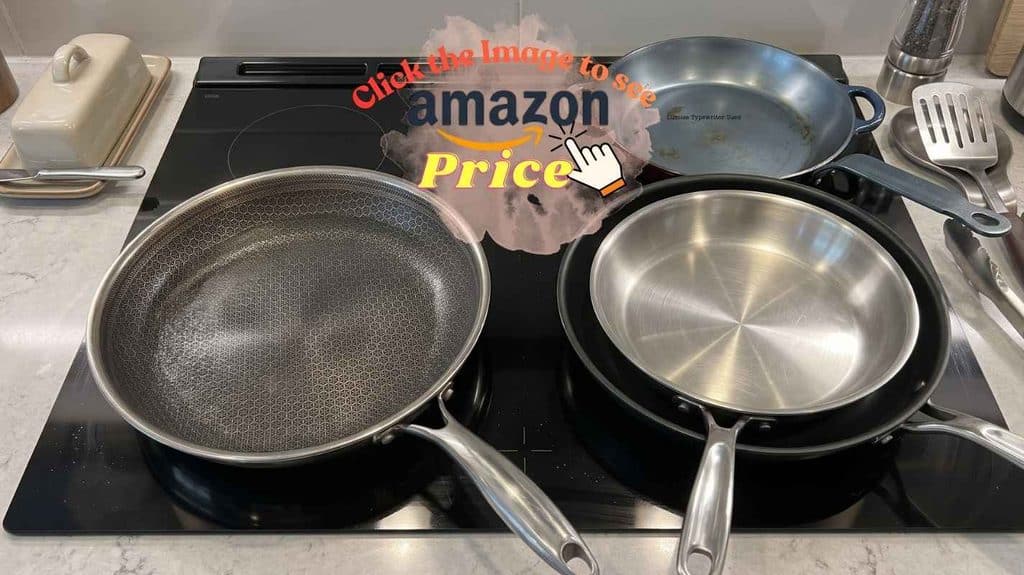
Both pans cost the same at the entry point ($149). But when you look at full sets and variety, Made In gives you more options. You can buy stainless, non-stick, carbon steel, or cast iron depending on what you cook. HexClad is one-size-fits-all hybrid. If you want to try different styles, Made In costs less overall and gives you flexibility. No middleman markup on either brand is good news.
7. Cleaning and Maintenance
| Aspect | HexClad | Made In |
|---|---|---|
| Dishwasher Safe | Yes | Most pieces yes |
| Easy Handwash | Okay (ridges trap debris) | Very easy (smooth surface) |
| Staining | Rare (dark non-stick) | More visible on stainless |
| Seasoning Required | Not required | Not required |
| Cleanup Time | 3-5 minutes | 2-3 minutes |
Winner: Made In
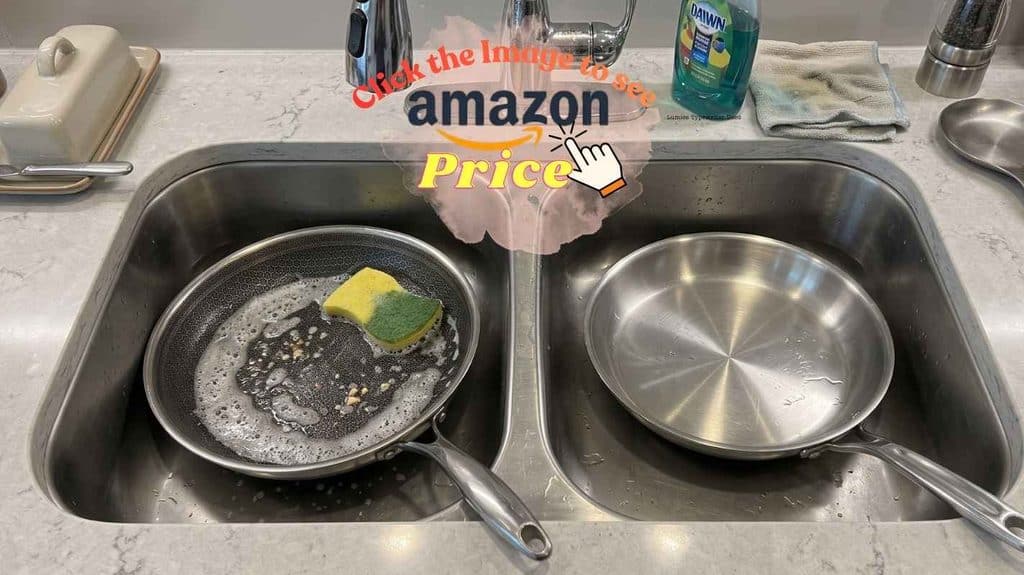
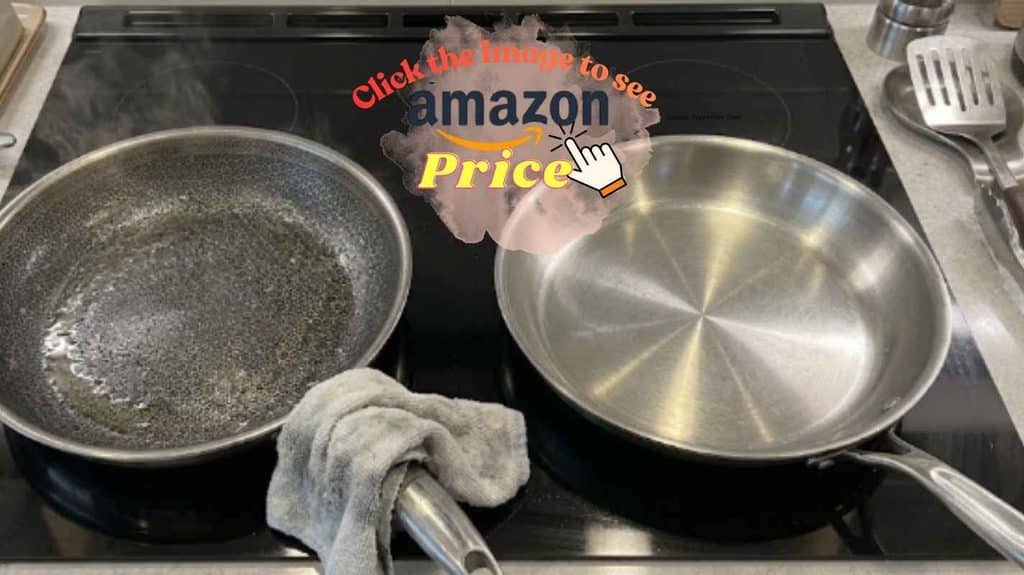
After cooking, I rinsed the HexClad pan and soap and water worked fine. But the raised hexagon ridges trapped tiny bits of food. I had to scrub or use a sponge carefully. With Made In’s smooth stainless or non-stick, cleanup was faster. One quick wipe and done. Over hundreds of uses, this time adds up. Cleaning is not exciting, but it matters in daily life.
8. Handle Comfort and Design
| Aspect | HexClad | Made In |
|---|---|---|
| Handle Shape | Rounded, smooth, polished | Flat top/bottom, rounded sides |
| Grip Security | Can rotate with towel | Secure grip with towel |
| Comfort for Long Cooking | Okay | Very comfortable |
| Weight Distribution | Handles heavier | Better balanced |
| Aesthetic | Modern, sleek | Professional chef-like |
Winner: Made In
I cooked for 30 minutes straight in both pans. The HexClad handle is rounded all the way, which feels nice but is slippery when you grip it with a damp towel. The handle can twist, which is risky when tilting hot pans. Made In’s handle is flat on top and bottom, so it does not spin. The sides are rounded for comfort. After hours of cooking, my hand felt less tired. The flat design gives you real control.
9. Oven Safety Temperature
| Aspect | HexClad | Made In |
|---|---|---|
| Oven Safe Temp | Up to 500°F | Up to 800°F |
| Handle Safety | Rounded, fine to 500°F | Flat handles, fine to 800°F |
| Pot Holder Needed | Yes, always | Yes, always |
| Baking and Finishing | Limited | More options |
| Bread Baking | Okay | Better option |
Winner: Made In
If you bake bread or finish dishes in the oven, Made In pans go much hotter (800°F vs 500°F). This opens up more cooking styles. HexClad stops at 500°F, which is fine for most tasks but limits you. Made In’s higher heat rating gives you flexibility for bread baking, roasting, and finishing meats. One pan, more possibilities.
10. Best Use Cases and Who Should Buy
| Aspect | HexClad | Made In |
|---|---|---|
| Best for One-Pan Cooking | Good choice | Very good choice |
| Best for Beginners | Okay (needs learning) | Better (more forgiving) |
| Best for Daily Cooking | Okay | Very good |
| Best for Fancy Dinner | Good | Better |
| Best for Tight Budgets | More expensive | Better value |
| Best for Variety | Limited options | Many options |
Winner: Made In for most home cooks
After using both brands, HexClad works if you want one hybrid pan and do not mind the learning curve. Made In works better for everyday cooking because it is faster, easier, and more flexible. If you cook eggs, you will prefer Made In. If you sear steaks, you will prefer Made In. If you bake bread, you will need Made In. HexClad shines only if you truly want one jack-of-all-trades pan and can afford it.
My Cooking Experience with HexClad and Made In
I first picked up a HexClad pan because I loved the idea of having one pan that could sear like stainless steel but clean up like non-stick. The promise was simple: the hexagon pattern gives you grip for searing, while the valleys stay non-stick. I tested it for months cooking steaks, omelets, sautéed vegetables, and fish. Then I got hands-on with Made In’s stainless steel fry pan, and honestly, the difference surprised me.
With HexClad, I noticed the hexagon ridges do protect the non-stick coating from metal utensils, which is clever. But when I tried to cook eggs or delicate fish, I had to use plenty of oil or butter. Without enough fat, food would stick to the raised steel parts. For searing a thick steak, it worked okay, but not as well as pure stainless steel where the meat gets full contact with a smooth, hot surface.
When I switched to Made In’s stainless steel pan, the experience was different. The heat came up faster than I expected. The surface was smooth and flat, so when I seared meat, it got a darker, more even crust. Omelets slid around easily without any sticking. The pan felt heavier and more professional in my hand. Over time, I realized Made In was faster for daily cooking because I did not have to second-guess whether the food would stick or not.
The choice between these two is really about what you value: Do you want one jack-of-all-trades pan (HexClad), or do you want a smooth, fast, reliable workhorse (Made In)? Let me show you exactly how they differ.
What I Like
HexClad Pros:
- Metal utensils safe due to raised hexagon pattern protecting the non-stick valleys
- Hybrid design means you can sear meat and then easily wipe clean
- Fairly durable with a long lifespan compared to traditional non-stick pans
- Handles are rounded and sleek looking
- Works on all stovetops including induction
- Oven safe up to 500°F
Made In Pros:
- Smooth cooking surface heats up faster and more evenly than HexClad
- Better searing power because meat sits flat on the hot surface
- Easier cleanup because the smooth surface has no ridges to trap food debris
- Five-ply construction delivers excellent heat retention
- Oven safe up to 800°F (much higher than HexClad)
- More product choices: stainless steel, non-stick, carbon steel, enameled cast iron, copper
- Better value for money with no middleman markup
- Designed with input from professional restaurant chefs
- Third-party tested for safety (no PFAS, heavy metals, or BPA)
What Could Be Better
HexClad Cons:
- Food sticks to the raised steel peaks if you do not use enough oil or butter
- More expensive than Made In for similar cooking tasks
- The hybrid design is not the best for eggs or delicate foods
- Round handles can rotate when you grip with a towel, making tilting tricky
- Only one collection (hybrid), so less variety
- Made in China, not the USA
- Mixed customer reviews about durability of the non-stick coating over time
- Lifetime warranty is vague about whether it covers the non-stick coating failure
- Recent change from PTFE to ceramic coating means older reviews may not apply
Made In Cons:
- Stainless steel shows water spots and fingerprints more easily
- Shallow slope on frying pan sidewalls makes splashing easier
- Only available direct from Made In (not through all retailers)
- Non-stick pans need proper preheating or food can stick initially
- Requires careful heat management in the beginning while you learn the pan
- Slightly heavier than some brands, which some people prefer but others find tiring
- No physical stores to test before buying
FAQ: Your Questions Answered
Is HexClad cookware really worth the high price?
HexClad is pricey for what it does. The hybrid design is clever, but it is not the best at searing (stainless is), not the best for eggs (non-stick is), and not the cheapest. You pay for the technology and durability. If you want one versatile pan and like the idea of using metal utensils, yes. Otherwise, Made In offers better performance for less money.
Does food really stick to HexClad pans?
Not if you use enough oil or butter. But yes, more than it should. The raised hexagon ridges trap food sometimes, especially eggs and delicate fish. This is the biggest complaint from real users. Many say they were disappointed after buying with high hopes.
Is Made In cookware safe and tested?
Yes, Made In cookware is third-party tested and certified free of PFAS, heavy metals, and BPA. The brand is transparent about safety. HexClad recently switched from PTFE to ceramic coating after legal issues, so older HexClad pans might be different from new ones.
How long do these pans actually last?
Made In pans last 10+ years with normal use based on real customer reports. HexClad pans typically last 5-10 years depending on how often you cook. Both brands offer lifetime warranties, but Made In’s terms are clearer. The non-stick coating on HexClad will degrade over time, no matter what, because it is still a coating.
Which is better for a small kitchen with limited space?
HexClad, because you get one hybrid pan that handles many tasks. But honestly, even better is a 3-piece Made In set (saucepan, skillet, sauté pan) which costs less and works better for daily cooking in most small kitchens.
Leave a Reply