
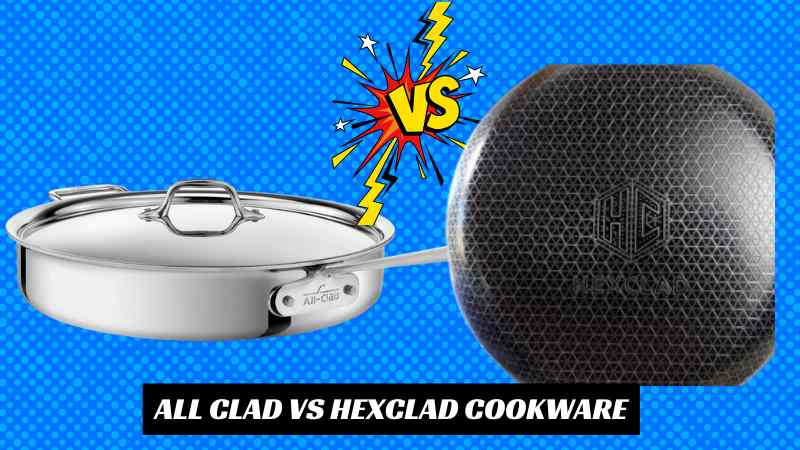
You want to buy cookware between All-Clad vs HexClad cookware. But you can not decide which one you should buy. You want to spend money on quality cookware. I want to share my personal experience with you so that you have the best cookware in your kitchen.
All Clad Cookware
I bought my first All-Clad from Amazon. When my pan was delivered to my home. I open the box with a curious mind. When I picked up the pan, it was literally too heavy to lift. The size of the skillet is almost 12 inches.
What I Like
Then I started to make pan-seared salmon for dinner that night. I preheated my All-Clad pan. I saw the heat spread evenly across the entire bottom of the pan. Then I laid down the salmon fillet. The pan seared my salmon fillet beautifully. One thing I notice when I used to sear with my old pan. I had to move around every 30 seconds looking for the hot spot of the pan. But All-Clad’s even heat distribution makes my cooking job easy. I do not have to move around now. After searing my salmon fillet, the fish is ready within 10 minutes. The quality of the cook was superb, like restaurant quality.
I have All Clad’s D3, D5 and HA1. D3 is superb at fast heating. It can raise the temperature so quickly. On the other hand, D5 rise the temperature a little slower. But once it heated perfectly, the heat became too high. The HA1 non-stick of the All-Clad is also perfect overall. I cook fried eggs with HA1 using very little oil every day. The does not stick on my apn. I get perfectly cooked eggs every time. Overall, All-Clad is a premium cookware providing consistent cooking performance.
- Even heat distribution across the entire pan—no hot spots, no cold corners.
- Superior searing performance that creates beautiful fond
- Non-stick HA1 collection releases eggs and fish with almost no oil
- Multiple collections for different cooking styles
- Handles with excellent leverage and control
- Proven durability that lasts decades.
- Fully-clad construction
- Made in the USA
What Could Be Better
When I grab the handles for the first time. I felt uncomfortable. The Pan is cup-shaped. Maybe they design it according to the processional chef. I did not feel comfortable for the first few weeks. One night, I was making pasta. I grabbed my All-Clad handle like any normal pan. Then I tilted to pour boiling water into the colander. The cup-shaped dug into my palm awkwardly. I felt clumsy compared to my old pans. Also, I have small hands. So, I prefer rounded handles. But after a few weeks, I got used to cup-shaped handles, and I do not feel uncomfortable now.
The beginning was horrible with me using All-Clad. When I first made scrambled eggs, I saw the eggs stuck terribly to the bottom of the pan. Then I was worrying about my money because I bought the pan at a high price. But the problem was that I had not preheated the pan long enough. I had to be patient before touching food with my spatula. Once I know the technique, I can now cook easily.
My neighbour told me that after years of using All-Clad, the water marks and discoloration appear, especially where the droplets dried. But the pan still performs well like new. Also, it’s better to do hand washing rather than throwing pans in a washing machine. A dishwasher’s high heat could affect the bonded layers of the pan. Although washing with hands may take time, I prefer to do it to get longer service.
- The handles feel uncomfortable at first because they’re cup-shaped
- Food sticks to stainless steel pans if you don’t use proper technique, like preheating
- Staining and discoloration happen over time on the cooking surface and requiring more frequent cleaning
- Hand-washing is recommended to prevent the bonded layers from being affected by high-temperature dishwashers.
- Premium pricing
- Exposed edges aren’t sealed
HexClad Cookware
I love the design of HexClad. It’s very unique compared to other pans. Hexclad pans feature a unique pattern on the surface. It resembles a beehive composed of tiny hexagons. The bumps are hard steel hills that stick out a little. Between those hills are non-stick valleys. Where food slides easily.
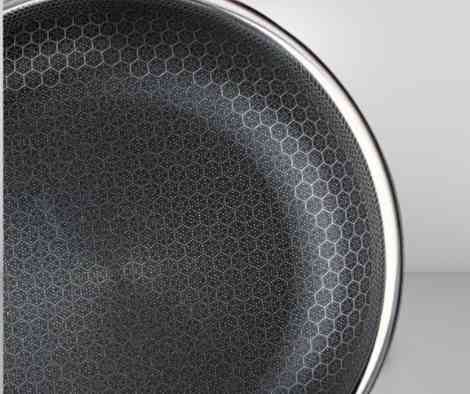
A laser machine carefully carves these hills. It’s like a painting with light. When I cook a steak. It sticks to the steel hills and turns crispy brown. When I cook an egg with oil. The eggs slide out of the valleys without sticking.
On a Saturday morning, I was cooking bacon so that I could test the heat retention and distribution. I gave tiny oil and did not preheat the pan for long enough. But still, my bacon cooked perfectly. The HexClad has a hybrid design. It results in even heat throughout the pan.
I was searing with HexClad so that I can compare with All-Clad. I seared a thick salmon fillet with HexClad just like I did with All-Clad. Oh, it was really superbly cooked. The crust was golden, and the color was beautiful. Those stainless steel peaks of the HexClad actually grip the food nicely and give me perfect browning.
When it comes to cleaning. It is very easy to clean HexClad. I cleaned it with warm soapy water. The pan was ridiculously clean. I did not see any stubborn seridue. Also, I did not have to soak.
What I Like
- Hybrid design lets you use metal utensils
- Cleans up incredibly easily
- Versatile enough for searing, sautéing, and everyday cooking
- Fast heat transfer gets water boiling quickly. The pan reaches cooking temperature faster than traditional stainless steel.
- Good heat retention keeps the pan hot when I add cold food
- Ceramic non-stick coating is PFOA and PTFE-free
- Lifetime warranty
- Lightweight compared to heavy all-clad
What Could Be Better
I tried to fry eggs without oil. Then, I heated my HexClad pan and cracked two eggs. I started to scramble the eggs. I saw the eggs were slid around beautifully. But as soon as I started stirring more vigorously. I saw the eggs sticking in those tiny grooves between the hexagon peaks. I did not like it. Then I tried to fix the problem. I added butter, and the eggs were fried nicely.
Another thing I feel uncomfortable with is the round handle. The handle sometimes rotates slightly in my hand. Although the design of the handle looks sleek, it’s a little short. I find it shorter than All-Clad.
My friend said, the HexClad does not last longer than All-Clad. You may have to replace it after 5 to 7 years of use. Where All Clad lasts longer.
Also, I saw that HexClad is made in China on the bottom. I prefer USA-manufactured pans. I was upset after seeing this. On the other hand, All-Clad is made in the USA. So, I have more trust in All-Clad than HexClad.
- Eggs and delicate foods still stick without adequate oil
- Seasoning is required before first use
- The round handle can slip and rotate
- Non-stick coating will eventually wear out over 5-7 years of regular use
- Made in China
- The high price is difficult to justify after knowing the coating will degrade. Especially compared to stainless steel, which lasts a lifetime.
- Hybrid surface requires ongoing maintenance
- Shorter handles
All-Clad vs HexClad Cookware Comparison
After cooking with both All-Clad and HexClad Cookware. Here is my side-by-side comparison below:
1. Heat Distribution & Performance
I filled cold water in HexClad and All Clad. All-Clad took two minutes and fifty-five seconds to reach a steady boil. HexClad only took two minutes and thirty seconds. So, HexClad heats spread faster than All-Clad. But All-Clad is too good at holding the heat longer time. I prefer using All-Clad for perfect browning and HexClad for boiling water for pasta, etc.
| Feature | All-Clad | HexClad | Winner |
|---|---|---|---|
| Boiling Speed | 2:55 minutes | 2:30 minutes | HexClad (faster) |
| Heat Spread | Very even across entire pan | Consistent but slightly less uniform | All-Clad (more even) |
| Hot Spots | Almost none | Almost none | Tie |
| Cooking Surface | Smooth stainless steel | Hybrid steel peaks + non-stick valleys | Depends on task |
| Temperature Control | Excellent for sauces | Good but needs attention | All-Clad (more precise) |
| Induction Compatible | Yes (most collections) | Yes (all cookware) | Tie |
2. Cooking Surface Material & Design
I love the tiny steel peaks with valleys between them of the HexClad. On the other hand, the All-Clad is smooth steel.
| Feature | All-Clad | HexClad | Winner |
|---|---|---|---|
| Surface Type | Pure stainless steel | Hybrid (steel + non-stick) | Depends on preference |
| Metal Utensils Safe | No (non-stick versions) | Yes (all versions) | HexClad (more freedom) |
| Searing Quality | Superior (full steel contact) | Good (30% steel coverage) | All-Clad (better sear) |
| Sticking Risk | Higher without oil | Lower (protected non-stick) | HexClad (less sticky) |
| Coating Type | PTFE or ceramic options | Ceramic TerraBond (PFOA-free) | HexClad (safer chemistry) |
| Visual Appeal | Classic and polished | Modern hexagon pattern | HexClad (looks cooler) |
3. Heat Retention & Recovery
I was searing two steaks in my All-Clad. Both of the steaks get the same beautiful crust. But when I tried to do the same thing with HexClad. The first steak was crusty well, but the second one did not crust well. Because the pan lost the heat a little faster.
| Feature | All-Clad | HexClad | Winner |
|---|---|---|---|
| Heat Retention (5 min off stove) | 111.6°F | 120.7°F | HexClad keeps more heat |
| Temperature Recovery After Food Added | Fast (stays hot) | Medium (drops some) | All-Clad (bounces back) |
| Searing Multiple Items | Excellent (heat doesn’t drop) | Good (handles one at a time) | All-Clad (crowd cooking) |
| Thickness | Heavier (more thermal mass) | Lighter (easier to lift) | Trade-off |
| Best For | Precision searing and control | Quick, light cooking | All-Clad wins for searing |
4. Non-Stick Performance & Durability
After five to seven years, HexClad does not provide better service. Like you are cooking eggs, but the eggs may stick if you do not use much oil. But All-Clad provide us with better service even after using thirty-plus years.
| Feature | All-Clad | HexClad | Winner |
|---|---|---|---|
| Non-Stick Without Oil (Eggs) | Requires butter | Works with minimal butter | HexClad (easier) |
| Non-Stick Durability | 5-8 years (HA1 line) | 5-7 years (valleys wear) | About equal |
| Metal Utensil Safety | No (scratches non-stick) | Yes (peaks protect valleys) | HexClad (worry-free) |
| Wear Pattern | Even degradation across surface | Valleys degrade first | HexClad wears unevenly |
| Longevity Before Replacement | 5-8 years for non-stick | 5-7 years for hybrid | All-Clad non-stick lasts longer |
| Expected Lifespan | Stainless: 30+ years | 5-10 years total | All-Clad stainless (forever) |
5. Oven Temperature Safety Limits
I can not heat HexClad more than 500 degrees. But with the All-Clad, I can heat up to 600 degrees. Almost a 100-degree difference.
| Feature | All-Clad Stainless | All-Clad Non-Stick | HexClad | Winner |
|---|---|---|---|---|
| Maximum Oven Temperature | 600°F | 500°F | 500°F | All-Clad stainless |
| Broiler Safe | Yes (stainless only) | No | No | All-Clad stainless |
| Finishing Steaks | Perfect with high heat | Not recommended | Not recommended | All-Clad stainless |
| Everyday Baking | Yes | Yes | Yes | Tie |
| Roasting Vegetables | Yes (any temp) | Yes (up to 500°F) | Yes (up to 500°F) | Tie for normal cooking |
| Oven Safety with Lids | Metal lids okay | Glass lids (400°F) | Glass lids (400°F) | All-Clad more versatile |
6. Handle Comfort & Design
If I have to cook for short periods, the round-shaped handle of HexClad gives me more comfort. But for a longer time, I prefer the All-Clad cup-shaped handle
| Feature | All-Clad | HexClad | Winner |
|---|---|---|---|
| Handle Shape | Cup-shaped for control | Round for comfort | HexClad (immediate comfort) |
| First-Time Feel | Uncomfortable | Very comfortable | HexClad (better first impression) |
| Extended Cooking (30+ mins) | Still uncomfortable for some | Stays comfortable | HexClad (long cooking) |
| Leverage for Tossing | Excellent (curved up) | Moderate (straight) | All-Clad (better control) |
| Slipping Risk | Low (locks in hand) | Medium (can rotate) | All-Clad (more secure) |
| Heat Transfer to Hand | Moderate | Moderate | Tie |
| Handle Length | 9 inches | 8 inches | All-Clad (slightly longer reach) |
7. Cleaning & Maintenance Effort
It’s better not to wash All-Clad in the dishwasher. But you can wash HexClad in a dishwasher. I prefer washing both with my hands.
| Feature | All-Clad Stainless | All-Clad Non-Stick | HexClad | Winner |
|---|---|---|---|---|
| Daily Cleanup Time | 5-10 minutes | 2-3 minutes | 1-2 minutes | HexClad (fastest) |
| Dishwasher Safe | No (damages finish) | Yes (but not ideal) | Yes (official) | HexClad (official yes) |
| Stubborn Food Stuck | Requires soaking + effort | Minor sticking | Rarely sticks badly | HexClad (easier) |
| Staining Issues | Yes (requires special cleaners) | Minimal | Minimal | HexClad (less staining) |
| Scratches from Cleaning | Visible but cosmetic | Can damage coating | Protected by steel peaks | HexClad (scratch-proof) |
| Maintenance Products Needed | Bar Keeper’s Friend, polish | Soft brushes | Soft brushes | All-Clad (more products) |
| Hand-Washing Recommended | Yes (for appearance) | Yes (for longevity) | Hand-wash ideal but not required | HexClad (most forgiving) |
8. Overall Durability & Expected Lifespan
As per my friend’s report, HexClad may last 5-10 years. Also, it’s a Chinese manufacturing product. But All-Clad can last decades and decades.
| Feature | All-Clad Stainless | All-Clad Non-Stick | HexClad | Winner |
|---|---|---|---|---|
| Expected Lifespan | 30+ years | 5-8 years | 5-10 years | All-Clad stainless (forever) |
| Structural Integrity | Lifetime, no degradation | Gradually wears | Gradually wears | All-Clad stainless |
| Performance Decline | No decline with age | Gradual non-stick loss | Gradual non-stick loss | All-Clad stainless |
| Metal Utensil Damage Risk | None (indestructible) | None (it’s hard-anodized) | Minimal (peaks protect valleys) | HexClad (worry-free metal utensils) |
| Handle Durability | Proven 40+ years | Proven 40+ years | Unknown (brand is young) | All-Clad (proven track record) |
| Warranty Coverage | Lifetime (real coverage) | Lifetime (real coverage) | Lifetime (but subjective for wear) | All-Clad (more certain) |
| Heirloom Quality | Yes (multi-generational) | No (replaceable) | No (temporary cookware) | All-Clad stainless (heirloom) |
9. Price Comparison & Long-Term Value
Both HexClad and All-Clad have almost the same price. If you prioritise longer service, go for All-Clad. But If you want a pan for a short time, then you want to change it later, go for HexClad.
| Item | All-Clad D3 | All-Clad D5 | All-Clad HA1 Non-Stick | HexClad | Winner |
|---|---|---|---|---|---|
| 10-inch Skillet Price | $100-150 | $150-200 | $80-120 | $100-150 | HexClad (matches D3) |
| 7-Piece Set Cost | $600-800 | $800-1200 | $400-600 | $700-900 | All-Clad HA1 (cheaper) |
| Cost Per Year (30-year lifespan) | ~$4-6/year | ~$5-8/year | ~$8-12/year* | ~$10-20/year* | All-Clad D3 (lifetime wins) |
| Cost Per Year (5-year lifespan) | N/A | N/A | ~$15-24/year* | ~$14-30/year | Roughly equal |
| Cheapest Entry Point | D3 Stainless | N/A | HA1 Non-Stick | HexClad | All-Clad HA1 |
| Best Long-Term Investment | D3/D5 Stainless | D5 Stainless | Copper Core | N/A | All-Clad stainless |
| Best For Budget Buyers | All-Clad HA1 | N/A | N/A | N/A | All-Clad HA1 |
10. Warranty, Support & Replacement Policy
When it comes to warranty, All-Clad is more trustworthy than HexClad. I find USA manufacturing pans has more longabilities than Chineses.
| Feature | All-Clad | HexClad | Winner |
|---|---|---|---|
| Warranty Length | Lifetime | Lifetime | Tie |
| Manufacturing Defect Coverage | Excellent (proven) | Excellent (but new brand) | All-Clad (proven) |
| Non-Stick Wear Coverage | Covered if proven defect | Subjective (may deny) | All-Clad (more certain) |
| Handle/Rivet Coverage | Yes (replacements available) | Limited information | All-Clad (proven) |
| Replacement Pan Policy | Warranty replacements available | Warranty replacements available | Tie |
| Customer Service Response | Long-established process | Newer/faster but less proven | Tie |
| Real-World Claim Success Rate | Very high (proven) | Unknown (brand is young) | All-Clad (proven track record) |
Which One Should YOU Buy?
Here is my final list after researching both All-Clad and HexClad for long time:
Choose All-Clad D3 or D5 Stainless If:
- You plan to cook for decades. You want your grandkids using your pans.
- You make pan sauces regularly. You want deep fond and precise control.
- You like steak with perfect crust. You want heat recovery that never quits.
- You’re okay learning cooking technique. The payoff is lifetime quality.
- You have time for proper maintenance. You enjoy caring for equipment.
Choose HexClad If:
- You want easy cleanup after cooking. You’re tired of scrubbing pans.
- You cook eggs constantly. You want them to release with minimal oil.
- You use metal utensils and don’t want to worry. Freedom matters to you.
- You upgrade your cookware every five to ten years anyway. You like modern design.
- You have a busy life where convenience is precious. Thirty seconds of cleanup matters.
My Personal Recommendation:
If you want to cook meals, sauces, etc and you need longer head, you should buy All-Clad. But if you want to cook eggs, boiling water and also you want to heat the foods faster, then go for HexClad.
Frequently Asked Questions
Which heats better, All Clad or HexClad cookware?
All-Clad spreads heat more evenly for perfect searing. HexClad boils water faster. Use All-Clad for steaks, HexClad for quick pasta.
Can you use metal utensils with HexClad vs All Clad cookware?
HexClad yes—steel peaks protect it. All-Clad stainless no, it scratches.
How long does All Clad vs HexClad cookware really last?
All-Clad stainless forever, almost 40 years. HexClad 5-10 years before non-stick fades. Lifetime value winner: All-Clad.
What’s easier to clean, All Clad or HexClad cookware?
HexClad wins—wipe and done. All-Clad needs soaking and scrubbing.