

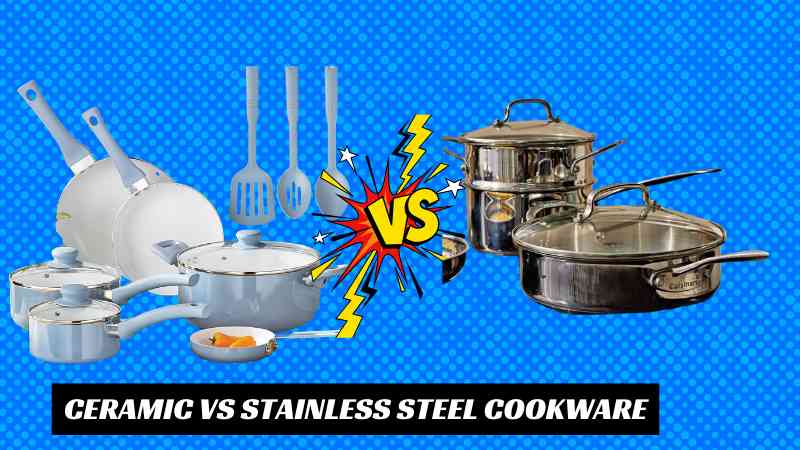
Picking the right pan for our meals is important. Some pans use clay, while others use steel. I cooked with both pans on my stove for ten years. Ceramic cookware gives you a slick non-stick surface. It makes daily cleanup fast and fun. Stainless steel cookware lasts for life. It sears meat well and takes high heat.
Winner: Stainless Steel Cookware (Overall best for lifelong durability, high heat, and versatility)
Best for Beginners & Quick Morning Meals: Ceramic Cookware (Effortless egg-flipping, non-toxic slick release, and quick 30-second wipe-down cleanups)
Best for Serious Home Cooks & High-Heat Searing: Stainless Steel Cookware (Deep browning, oven-and-broiler safety, metal-utensil durability, and rich pan sauces)
Ceramic vs Stainless Steel Cookware
I used them to cook each day. The Ceramic and stainless steel cookware are not the same. Here are the differences.
Durability & Lifespan:
| Durability Metric | Ceramic Cookware (e.g., Caraway, GreenPan) | Stainless Steel Cookware (e.g., All-Clad, Tramontina) | Winner |
| Typical Lifespan | 1–3 years (premium brands up to 4–5 years) | 25–50+ years with normal home care | Stainless Steel |
| Surface Build | Thin sol-gel mineral coating over aluminum | Solid 18/10 bare metal alloy | Stainless Steel |
| Coating Wear | Micro-pores break down at 6–12 months | No coating to wear, chip, or peel | Stainless Steel |
| Scratch Resistance | Low (metal spoons and stacked pans chip it) | High (surface scuffs do not hurt cooking) | Stainless Steel |
| DIY Recovery | None (worn non-stick loss is permanent) | High (restores like new with simple paste) | Stainless Steel |
| Warranty Terms | 1–5 years (excludes natural coating wear) | Lifetime warranty against warping or defects | Stainless Steel |
Winner: Stainless Steel Cookware (All-Clad D3, Tramontina Tri-Ply) wins by a mile over Ceramic Cookware (Caraway, GreenPan Valencia Pro). Stainless steel gives you a lifetime of tough cooking with zero coating to wear down.
I still recall the day I bought my first ceramic pan. It was sleek, bright, and felt like magic in my hands as eggs slid off like ice on glass. But day after day, high stove heat took a toll on the thin mineral coat. By year two, food stuck to the middle, and you cannot fix a worn coat.
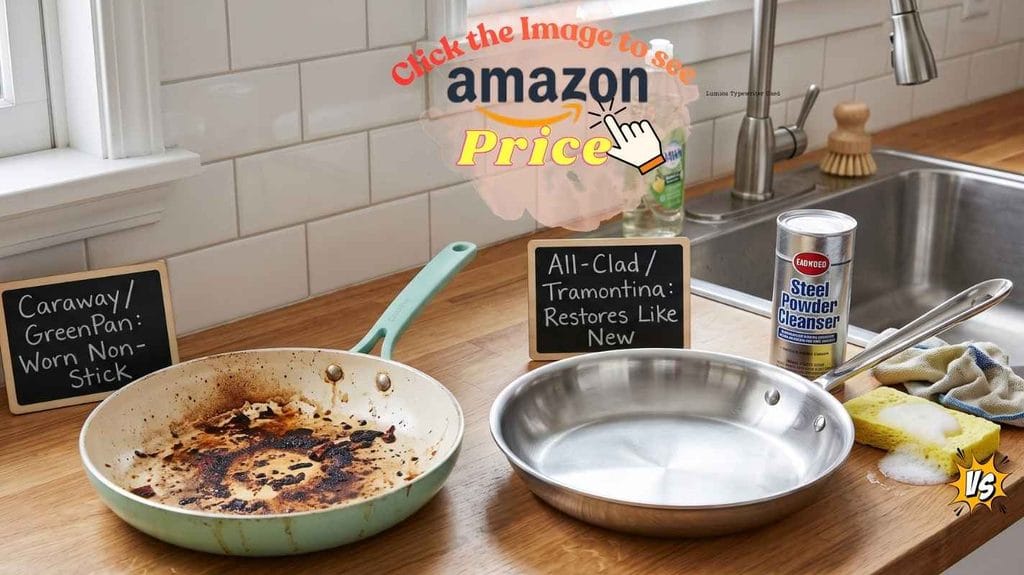
That was when I got a clad stainless steel pan. At first, I feared bare metal, but it cooked each meal with ease. Small scuffs from daily spoons did not hurt its cooking power at all. A quick wash brought back its bright shine just like new.
My Advice: Pick ceramic cookware if you want easy food release for two to three years. Just keep in mind that you must buy a new pan once the coat fades. But if you want a pan to keep for life, pick stainless steel cookware.
Heat Conductivity:
| Heat Metric | Ceramic Cookware (e.g., Caraway, GreenPan) | Stainless Steel (Tri-Ply) (e.g., All-Clad, Tramontina) | Winner |
| Time to Reach 350°F | 2–3 minutes on medium heat | 4–6 minutes on medium heat | Ceramic Cookware |
| Core Conductor | Cast or stamped aluminum base | Bonded aluminum or copper core | Tie |
| Heat Distribution | Centers over burner flame | Edge-to-edge even heat up side walls | Stainless Steel |
| Flame Control Response | Fast to cool down once removed from heat | Quick, precise response to flame changes | Stainless Steel |
| Warp Risk on High Heat | Medium (thin bases can bow on high heat) | Low (bonded multi-ply metal stays flat) | Stainless Steel |
Winner: Stainless Steel Cookware (All-Clad D3, Tramontina Tri-Ply) wins for even heat spread and stability, while Ceramic Cookware (GreenPan Valencia Pro, Caraway) wins for quick morning warm-ups.
One busy day, I tested both pans side by side. The ceramic pan got hot in just one minute. Its light base takes in heat fast from the flame. If you are in a rush to cook eggs, it saves you time.
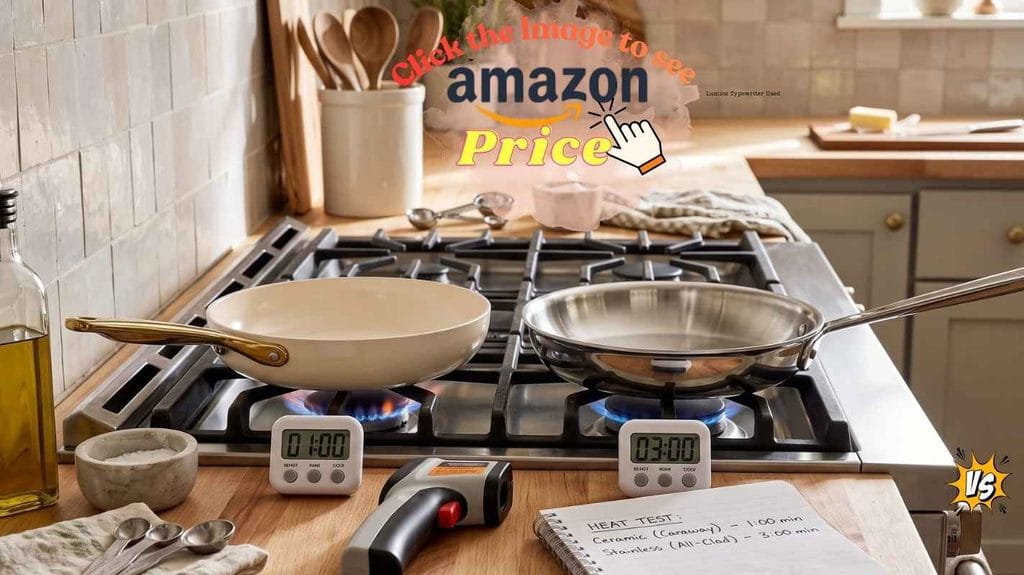
My tri-ply stainless steel pan took three full minutes to warm up. But once hot, the heat spreads well from edge to edge. You get no cold spots or burnt rings on the pan. It changes heat fast when you turn the flame down.
My Advice: Pick ceramic cookware if you want fast heat for quick food. Pick stainless steel cookware if you want even heat on the whole pan. It gives you great skill and control on the stove.
Non-Stick Performance:
| Cooking Task | Ceramic Cookware (e.g., GreenPan, Caraway) | Stainless Steel Cookware (e.g., All-Clad, Tramontina) | Winner |
| Fried & Scrambled Eggs | Glides with a drop of butter; zero sticking | Sticks easily unless preheated with extra oil | Ceramic Cookware |
| Delicate Fish Fillets | Skin lifts smoothly with no tearing or mess | Can tear soft skin before a crust forms | Ceramic Cookware |
| Searing Meat & Ground Beef | Struggles to brown deeply; steams juices | Sears deeply with rich browning and crust | Stainless Steel |
| Pan Sauces & Fond | Leaves no brown bits behind; sauces taste thin | Leaves rich brown bits (fond) for savory gravies | Stainless Steel |
| Cooking Oil Needed | Just a tiny dab (never use spray cans) | A full coat of warm oil to stop sticking | Ceramic Cookware |
Winner: Ceramic Cookware (GreenPan Valencia Pro, Caraway) wins for delicate morning eggs and easy food release, while Stainless Steel Cookware (All-Clad D3, Tramontina Tri-Ply) wins for browning meat and making savory pan sauces.
Cooking eggs in a new ceramic pan feels like pure joy. With just a tiny dab of butter, two fried eggs glide with no stick at all. Soft fish skin lifts right off the slick base without a tear. You need very little fat, so your meals feel light and clean.
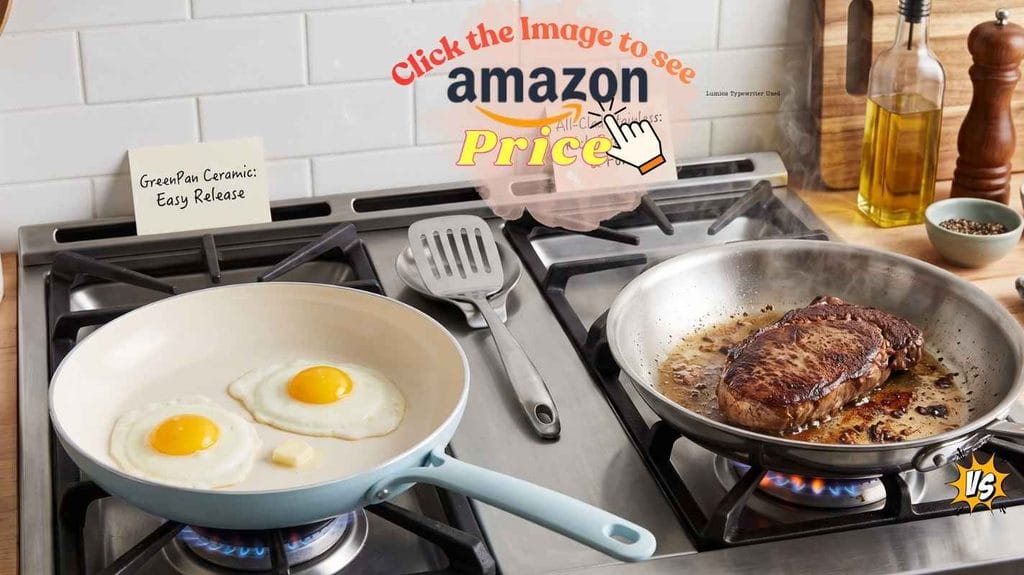
Stainless steel works in a very different way on the stove. Food will cling to the bare metal until a crisp crust forms on its own. While that grip ruins soft eggs, it is great for beef and steak. The brown bits left behind make the best pan sauces you will ever taste.
My Advice: Pick ceramic cookware if you want easy eggs and fast, oil-free food release. Pick stainless steel cookware if you want to sear beef and make rich pan sauce. Most cooks do best keeping one of each on their stove.
The Leidenfrost Effect:
| Preheating & Test Stage | Ceramic Cookware (e.g., Caraway, GreenPan) | Stainless Steel Cookware (e.g., All-Clad, Tramontina) | Winner |
| Water Droplet Test | Do not test dry (dry heat harms the slick coat) | Water forms rolling glass beads at ~380°F | Stainless Steel |
| Cooking Skill Needed | None (slick right out of the box on low heat) | Requires a 2–3 minute warm-up and test | Ceramic Cookware |
| Heat Window for Non-Stick | Works best at gentle low-to-medium heat | Acts non-stick once water rolls like a marble | Ceramic Cookware |
| Dry Heat Safety | High risk (dry heat burns the mineral finish) | Zero risk (bare metal takes dry heat with ease) | Stainless Steel |
| Long-Term Skill Value | Low (the coat still wears down in a few years) | High (master it once, cook stick-free for life) | Stainless Steel |
Winner: Stainless Steel Cookware (All-Clad D3, Tramontina Tri-Ply) harnesses the Leidenfrost Effect to create a natural, lasting non-stick surface, while Ceramic Cookware (Caraway, GreenPan Valencia Pro) wins for instant ease with zero learning curve.
For months, I yelled in my kitchen when eggs stuck hard to my steel pan. Then a chef friend shared the water drop trick with me. You warm the dry pan on medium heat for two minutes. When a drop of water rolls like a small glass bead, the pan is ready.
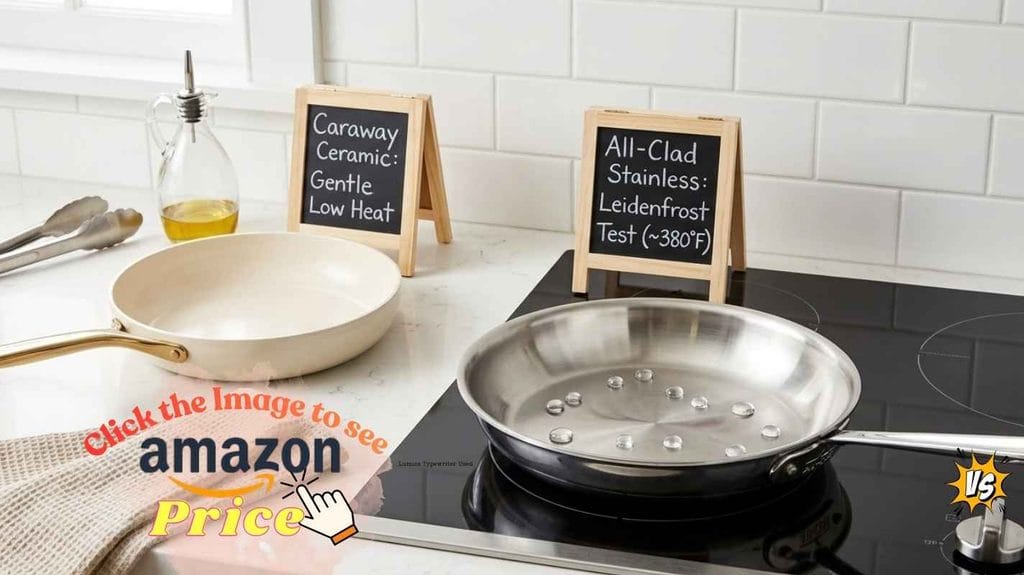
That rolling water bead proves a thin sheet of steam sits under the drop. Now wipe the pan, add your oil, and let it get warm. The hot oil seals the metal pores so food glides without a snag. But never do this high-heat test on a ceramic pan, or you will burn the slick coat.
My Advice: Pick ceramic cookware if you want non-stick ease right out of the box with no tricks. Pick stainless steel cookware if you want to learn this fun heat trick. Once you master it, your steel pan acts like a slick tool for life.
Heat Retention:
| Heat Retention Metric | Ceramic Cookware (e.g., Caraway, GreenPan) | Stainless Steel Cookware (e.g., All-Clad, Tramontina) | Winner |
| Metal Weight & Mass | Light aluminum base drops heat fast off flame | Thick, heavy layers of dense metal store heat | Stainless Steel |
| Reaction to Cold Meat | Temperature drops; meat steams in its juice | Holds high heat; locks in a crisp sear instantly | Stainless Steel |
| Table Warmth Retention | Cools down noticeably in 10–12 minutes | Stays piping hot for 20–25+ minutes | Stainless Steel |
| Slow Simmers & Curries | Needs steady stove heat; loses heat if turned off | Radiates deep, steady heat through thick sauces | Stainless Steel |
| 100% Pure Ceramic Note | Only heavy clay pots hold heat; non-stick pans do not | Clad metal holds steady heat in every pot and pan | Stainless Steel |
Winner: Stainless Steel Cookware (All-Clad D3, Tramontina Tri-Ply) wins for heat retention over Ceramic Cookware (Caraway, GreenPan Valencia Pro). Thick multi-clad stainless steel holds onto heat like an oven, preventing sudden temperature drops when cold food hits the pan.
I tested both pans to see how long they stay hot. Most ceramic pans use a light base, so they drop heat fast. When I set a cold steak into my hot ceramic pan, the sizzle died down at once. The meat began to steam in its own juice, and I lost that golden brown crust.
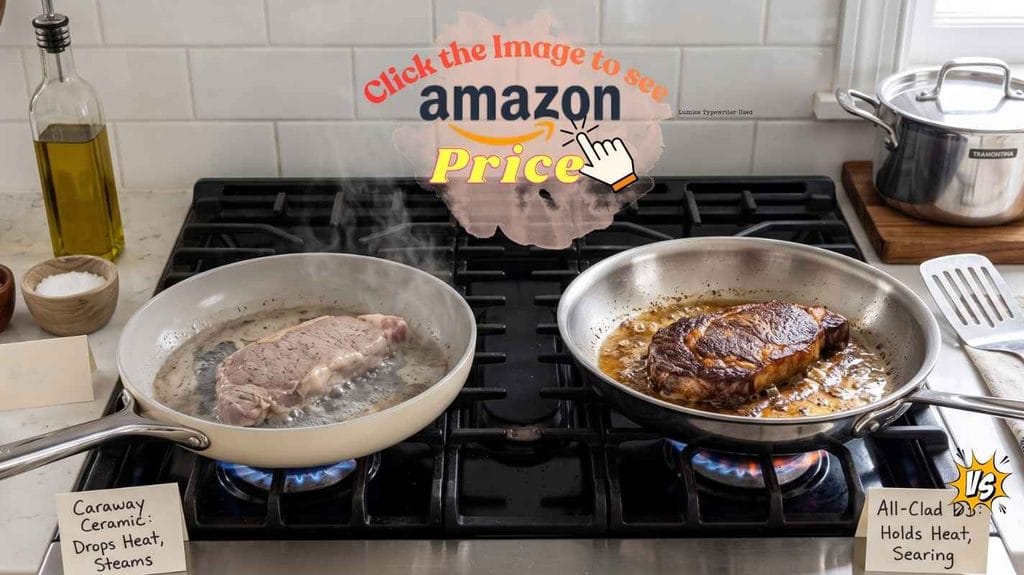
My clad stainless steel pan holds onto heat like a champ. Its thick layers of dense metal stay hot for a long time. When cold meat hits the steel, the pan keeps a loud sizzle. It also keeps your food warm on the table while you eat.
My Advice: Pick ceramic cookware if you want a pan that cools down fast after cooking. Pick stainless steel cookware if you want a pan that holds high heat to brown meat. It keeps your meal hot and fresh from stove to plate.
Oven & Broiler Safety:
| Oven & Broiler Task | Ceramic Cookware (e.g., Caraway, GreenPan) | Stainless Steel Cookware (e.g., All-Clad, Tramontina) | Winner |
| Baking at 350°F | Safe (great for gentle frittatas and dips) | Completely safe for any oven bake | Tie |
| Roasting at 400°F–500°F | Risky (coat breaks down above 450°F) | Completely safe up to 600°F | Stainless Steel |
| Broiler (Direct Top Flame) | Never safe (intense radiant heat ruins coat) | 100% broiler safe for crisping cheese | Stainless Steel |
| Stove-to-Oven Sear | Take care (fast heat jumps can warp base) | Moves easily from high stove sear into oven | Stainless Steel |
| Handle & Lid Limits | Often capped at 350°F due to glass lids | Riveted steel handles take high heat with ease | Stainless Steel |
Winner: Stainless Steel Cookware (All-Clad D3, Tramontina Tri-Ply) wins by a landslide over Ceramic Cookware (Caraway, GreenPan Valencia Pro). Stainless steel can live in high oven heat and under broiler flames up to 600°F, while delicate ceramic coatings blister above 450°F.
I broke a big rule with my oven one night. I put a ceramic pan under the top flame to melt cheese. That high heat burned the slick coat in five minutes. The middle turned chalk white, and food stuck there for good.
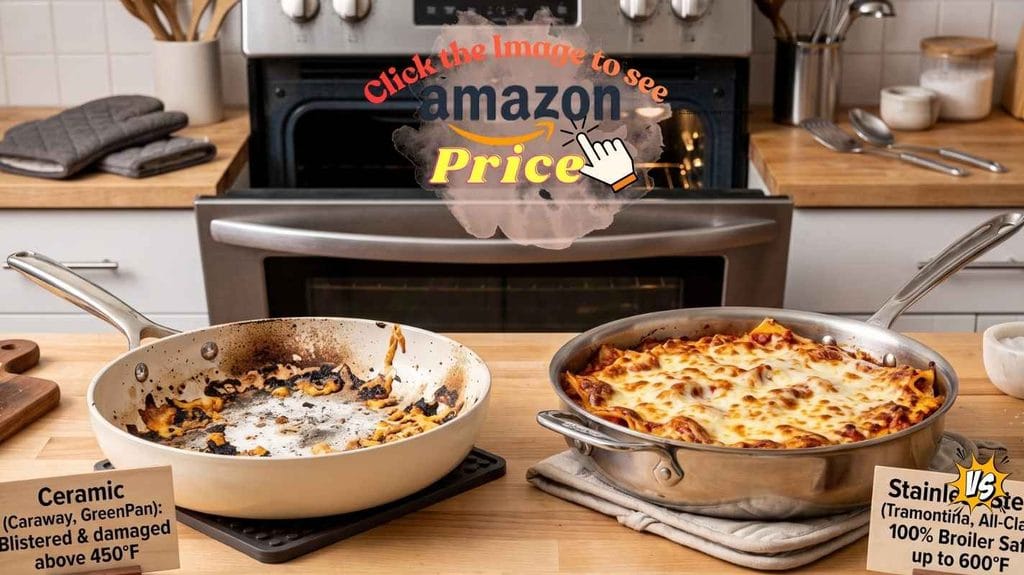
My clad stainless steel pan loves high oven heat. It can take great heat and never bends or cracks. You can sear steak on the stove and finish it in the oven. It goes under a hot top broiler with zero fear.
My Advice: Pick ceramic cookware if you only bake at low heat like warm eggs. Pick stainless steel cookware if you want to sear meat and broil cheese. It gives you total peace in any hot oven.
Maintenance & Cleaning:
| Cleaning Task | Ceramic Cookware (e.g., Caraway, GreenPan) | Stainless Steel Cookware (e.g., All-Clad, Tramontina) | Winner |
| Daily Hand Wash | Under 30 seconds with a soft cloth and soap | 2–3 minutes with warm soapy water and sponge | Ceramic Cookware |
| Dish Machine Safe | Hand wash only (machine soap strips slick coat) | 100% dish machine safe for easy cleanup | Stainless Steel |
| Stuck-On Food Fix | Soak in warm water with a mild baking soda paste | Boil water in the pan to deglaze stuck food | Tie |
| Removing Heat Marks | Not applicable (slick coat hides water stains) | Fast wipe with white vinegar restores mirror shine | Stainless Steel |
| Scrub Pad Limits | Soft sponge only (harsh pads scratch the coat) | Tough scour pads and brushes are safe to use | Stainless Steel |
Winner: Ceramic Cookware (Caraway, GreenPan Valencia Pro) wins for effortless 30-second daily rinses, while Stainless Steel Cookware (All-Clad D3, Tramontina Tri-Ply) wins for dishwasher safety and heavy-duty, scrub-proof durability.
Cleaning my ceramic pan is super fast. A soft cloth and warm water wipe food off in ten seconds. But keep this pan out of the dish machine. Harsh soap and hot steam will strip the slick coat.
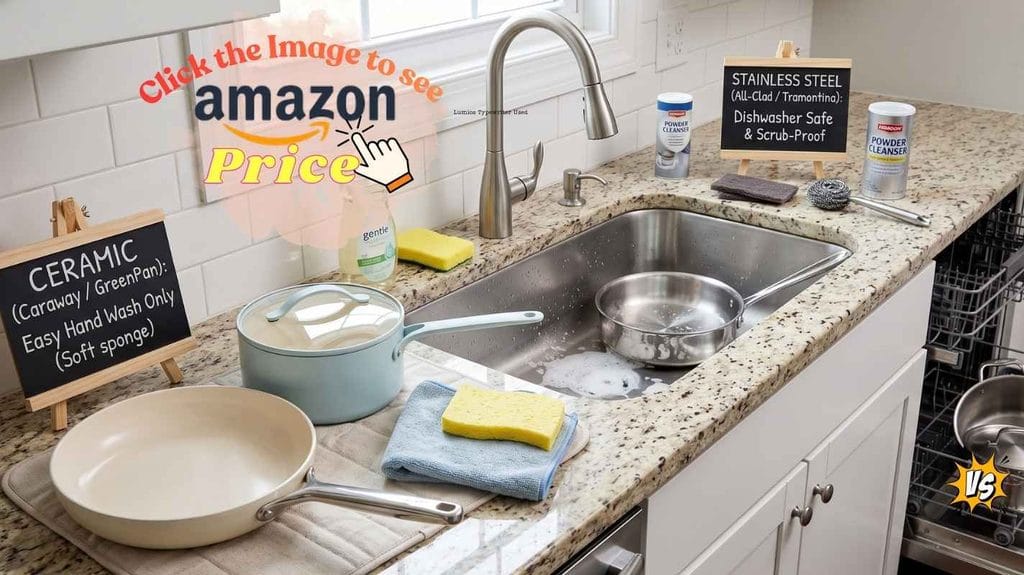
My clad steel pan takes a bit more work to wash. Stuck food lifts fast if you boil water in the warm pan. A quick rub with a powder cleaner brings back its bright shine. You can also run it in the dish machine with zero fear.
My Advice: Pick ceramic cookware if you want a fast wipe after eggs. Pick stainless steel cookware if you want a pan you can scrub with no fear. It takes hard work and stays like new.
Cost Comparison:
| Price & Value Factor | Ceramic Cookware (e.g., Caraway, GreenPan) | Stainless Steel Cookware (e.g., All-Clad, Tramontina) | Winner |
| Single Skillet (10-Inch) | $30–$40 (budget) to $95–$145 (designer) | $45–$65 (entry) to $120–$180 (heirloom) | Ceramic Cookware (upfront) |
| Complete Set (10-Piece) | $120–$250 (standard) to $395 (designer) | $250–$450 (mid-tier) to $700–$1,000+ | Ceramic Cookware (upfront) |
| Expected Lifespan | 1–3 years before food begins sticking | 25–50+ years with normal kitchen care | Stainless Steel |
| Cost Per Year of Use | $30–$60 per year (due to quick replacement) | $5–$15 per year (spread over decades) | Stainless Steel |
| 10-Year Total Expense | $300–$500+ (buying 3 to 5 pan sets) | $120–$350 (one set bought once for life) | Stainless Steel |
| Trash & Waste Impact | High (worn pans end up in the dump) | Zero waste (solid metal lasts generations) | Stainless Steel |
Winner: Stainless Steel Cookware (All-Clad D3, Tramontina Tri-Ply) wins for long-term value and true cost of ownership, while Ceramic Cookware (Caraway, GreenPan Valencia Pro) wins for low upfront out-of-pocket costs today.
Years ago, I bought a ceramic pan for forty bucks. It looked neat and felt cheap on day one. But two years later, it went in the trash when the coat died. Buying a new pan every two years costs a lot of cash.
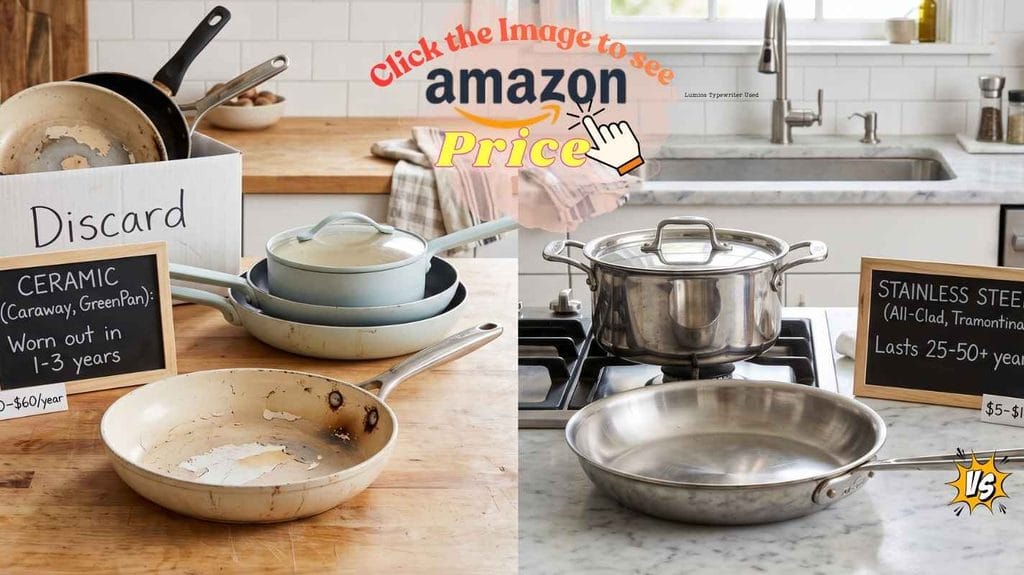
Next, I bought a clad stainless steel pan for one hundred bucks. That price felt steep for my budget that day. But ten years have gone by, and that same pan is still on my stove. It costs me less than ten bucks a year to own.
My Advice: Pick ceramic cookware if you want a low price today and do not mind a short life. Pick stainless steel cookware if you want the best long term deal. You buy it once, and you are set for life.
Chemical Safety & What’s Touching Your Food
| Safety & Health Factor | Ceramic Cookware (e.g., Caraway, GreenPan) | Stainless Steel Cookware (e.g., All-Clad, Tramontina) | Winner |
| PTFE, PFOA & PFAS Free | 100% free of forever chemicals and plastic | 100% free of synthetic coatings or plastic | Tie |
| Toxic Fumes at High Heat | None (sand-based coat does not off-gas fumes) | None (solid bare metal stays safe over 800°F) | Tie |
| Coating Flake Risk | Can chip or flake over time as coat wears thin | Zero coating to peel, chip, flake, or swallow | Stainless Steel |
| Heavy Metals & Lead | Safe when certified (look for Prop 65 label) | Pure food-grade 18/10 alloy protects meals | Tie |
| Nickel Allergy Safety | 100% nickel-free cooking surface | Contains 8%–10% nickel (choose 430-grade if allergic) | Ceramic Cookware |
Winner: Stainless Steel Cookware (All-Clad D3, Tramontina Tri-Ply) wins for lifetime inert safety with zero coatings to chip into food, while Ceramic Cookware (Caraway, GreenPan Valencia Pro) wins for home cooks with diagnosed nickel sensitivities.
I threw out my old black pans when I learned of bad fumes. That was why I bought my first ceramic pan. Its slick coat is made from sand and has zero bad chemicals. Even if it gets hot, no harsh fumes fill the room.
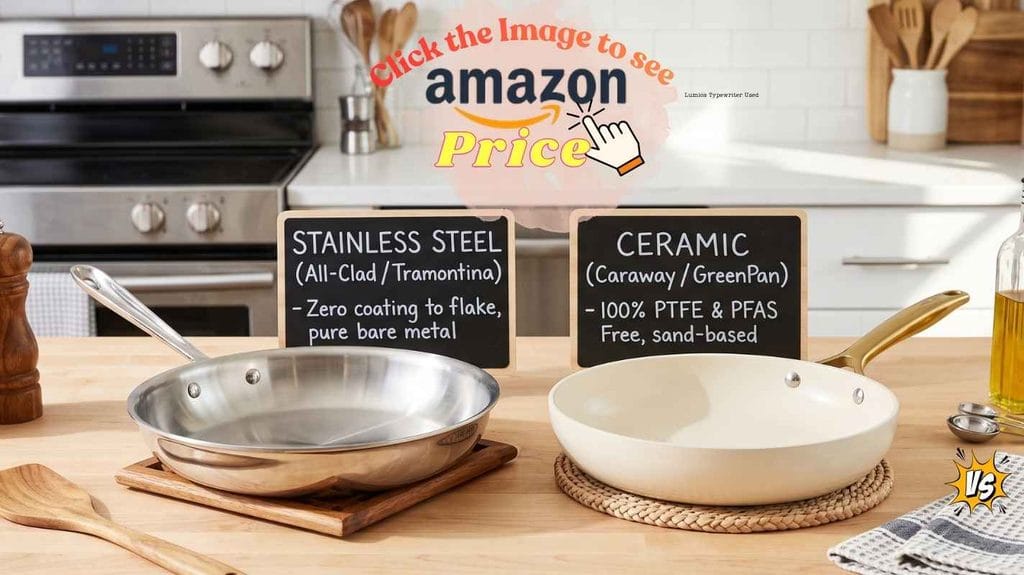
Bare stainless steel pans are just as safe for your meals. They have no top coat that can chip off in your soup. The plain metal is pure and stays tough for life. Only folks who react to nickel need to take care.
My Advice on clean and safe food: Pick ceramic cookware if you want a non-stick pan free of all bad fumes. Pick stainless steel cookware if you want pure bare metal that never flakes. Both pans keep your food clean, pure, and safe to eat.
Cooking Acidic Foods (Tomatoes, Lemon, Vinegar)
| Acidic Cooking Task | Ceramic Cookware (e.g., Caraway, GreenPan) | Stainless Steel Cookware (e.g., All-Clad, Tramontina) | Winner |
| Quick Acid Sauté (15 Min) | Pure flavor; zero sour taste or metal tang | Chromium oxide shield keeps food bright and clean | Tie |
| All-Day Tomato Simmer | Clean flavor, but acid can dull the slick coat | 100% non-reactive in 18/10 steel; perfect for long stews | Stainless Steel |
| Wine & Vinegar Deglaze | No brown bits stick, so wine leaves no rich sauce | Wine lifts browned bits into a rich, deep gravy | Stainless Steel |
| Overnight Fridge Storage | Safe to hold cold food without metal reaction | Do not store acid overnight (can cause tiny pit marks) | Ceramic Cookware |
| Surface Purity & Leaching | Sand-based shield stops acid from reaching metal | High-grade steel resists acid during normal cooking | Tie |
Winner: Stainless Steel Cookware (All-Clad D3, Tramontina Tri-Ply) wins for all-day tomato simmering and deglazing with wine, while Ceramic Cookware (Caraway, GreenPan Valencia Pro) wins for safe, zero-reaction cold food storage.
I love to cook red sauce on slow nights. In my ceramic pan, red sauce cooks down with zero sour tang. The slick sand coat stops acid from touching bare metal. But if you boil wine or lemon for hours, the slick shine can turn dull.
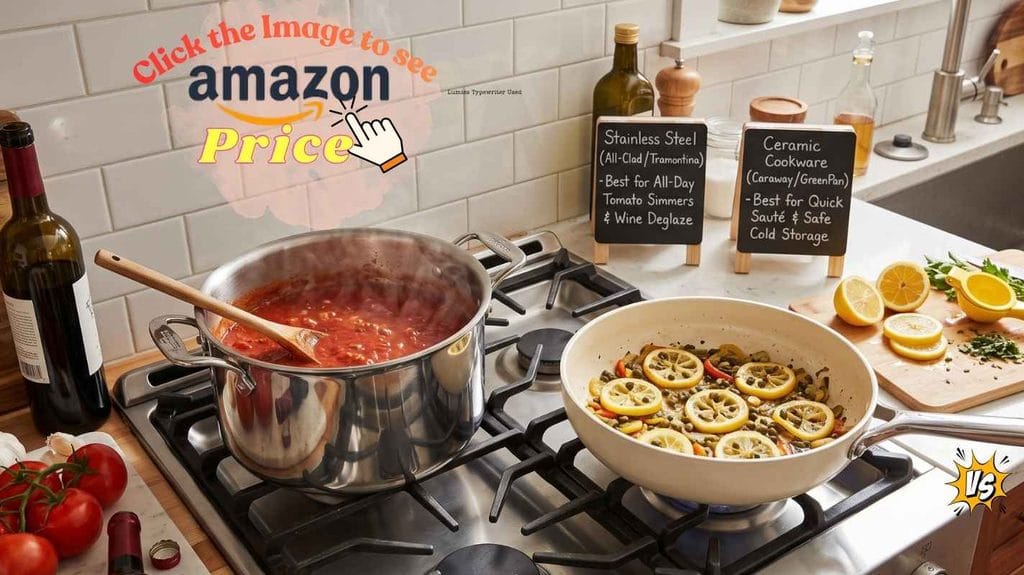
My clad steel pan is a true star for thick sauces. High-grade steel has a clear shield that keeps metal out of your food. A splash of red wine lifts all the brown meat bits with ease. Just do not store cold tomato soup in the pan overnight.
My advice on your sour foods: Pick ceramic cookware if you want pure taste for fish with lemon. Pick stainless steel cookware if you want to cook a rich red sauce. Both pans keep your meals fresh with no metal taste.
Weight & Ergonomics:
| Ergonomic Factor | Ceramic Cookware (e.g., Caraway, GreenPan) | Stainless Steel Cookware (e.g., All-Clad, Tramontina) | Winner |
| Weight of 10″–12″ Skillet | 2.0–3.0 lbs (light aluminum body) | 3.5–5.5 lbs (dense multi-layer clad metal) | Ceramic Cookware |
| One-Handed Tossing | Easy wrist flick; zero arm fatigue | Heavy; needs forearm strength when full of food | Ceramic Cookware |
| Stove Burner Stability | Can slide on grates if the handle is long | Sits flat and rock-solid when you stir fast | Stainless Steel |
| Handle Grip & Balance | Often smooth silicone or painted grips | Riveted steel handles plus helper loop on big pans | Stainless Steel |
| Elderly & Weak Wrist Use | Perfect pick to avoid wrist strain and pain | Can feel heavy; needs two hands to carry | Ceramic Cookware |
Winner: Ceramic Cookware (Caraway, GreenPan Valencia Pro) wins for lightweight comfort and effortless flipping, while Stainless Steel Cookware (All-Clad D3, Tramontina Tri-Ply) wins for rock-solid stability on the stove and secure helper handles.
Lifting a pan all day can tire out your wrist. My ceramic pan feels light as a feather on my stove. I can flip eggs and toss greens with just one quick flick of my hand. If your hands hurt or feel weak, this light feel is a true joy.
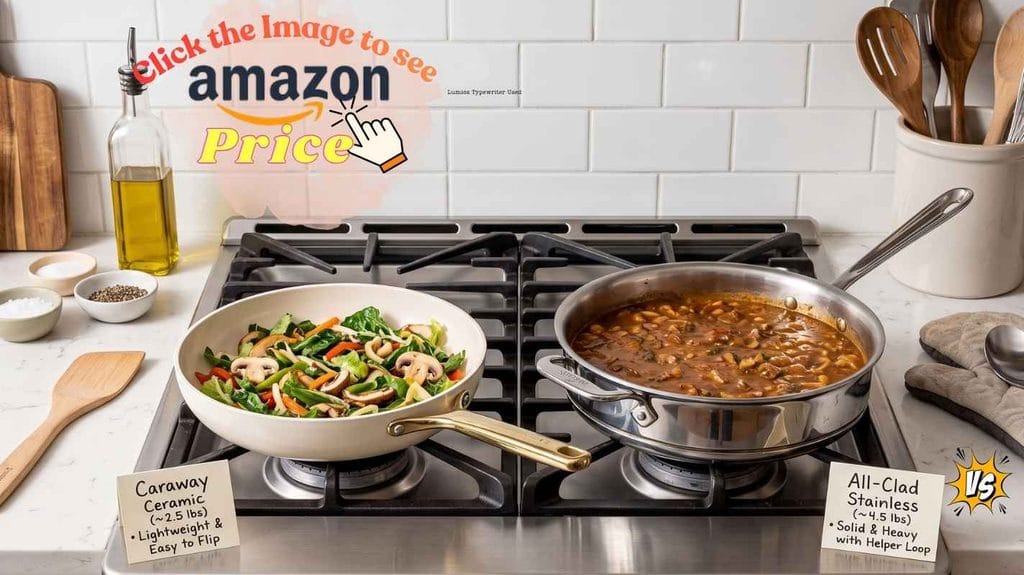
My clad steel pan is much heavier to pick up. But that extra heft keeps it rock steady on the fire when I stir a thick stew. You never have to worry that the pan will slide or tip on your stove. Good steel pans also have a second helper grip to lift hot meals.
My advice: Pick ceramic cookware if you want a light pan for weak wrists. Pick stainless steel cookware if you want a solid pan that sits flat. It stays in place and never slides on the stove.
My Cooking Experience Using Ceramic and Stainless Steel Cookware
When you choose a new pan, you pick between ease and life span. Most ceramic pans feel like magic at first. Food slides off the pan with ease. You can clean them in just a few seconds. However, this slick coat wears down fast. Most of these pans lose their non-stick power in two years or less. This can feel like a letdown if you want your tools to last a long time.
On the other hand, a steel pan is a tool for life. It does not have a coat that can peel or fade. It stays the same for years and years. While steel lasts longer, it is harder to use at first. Food may stick if the heat is not right. You must learn how to tell when the pan is ready. Once you learn this trick, the pan works great every time.
Stainless Steel and Induction Cooktops
Clad stainless steel pans are a dream on magnetic stoves. Their tough outer steel layer grabs the heat fast and stays flat. You will never hear a loud buzz or see hot spots on the metal. You can test any pan at home with a fridge magnet on the base. Check that your ceramic pan has a steel base plate. Pick stainless steel cookware if you want a pan that is made to last. It works on every kind of stove and heats with ease.
Top Ceramic Cookware Picks
- GreenPan Valencia Pro ($80 – $200)
- Best for: Daily cooking and magnetic glass stoves.
- Why I love it: It has a hard base and works on all stoves. Eggs slide off with ease. It lasts longer than cheap pans.
- Caraway Classic Skillet ($95 – $250)
- Best for: A sleek, modern kitchen look.
- Why I love it: The colors look great on the counter. It is very light and easy to lift. Cleanup takes ten seconds.
- Ninja Ceramic Pro ($70 – $170)
- Best for: Budget-friendly non-stick cooking.
- Why I love it: The thick base heats up fast. It handles daily food with no fuss. It is a smart buy for quick meals.
Top Stainless Steel Cookware Picks
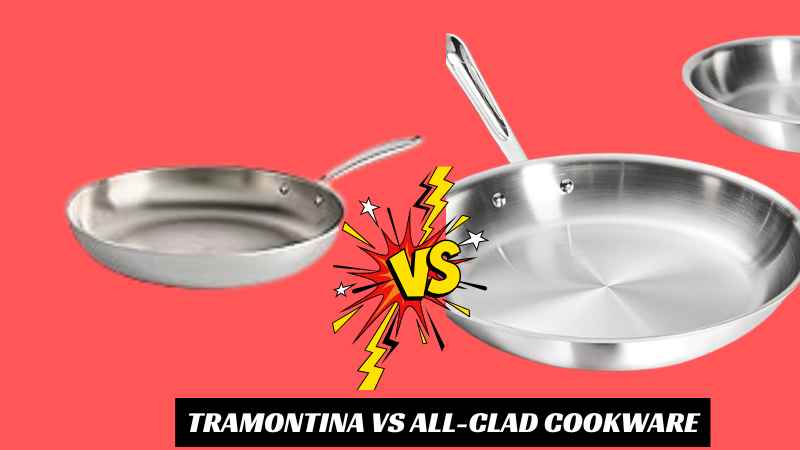
- Tramontina Tri-Ply Clad ($45 – $250)
- Best for: The best value steel on the market.
- Why I love it: It cooks just like pro pans for half the cash. The heat spreads edge to edge. It will last your whole life.
- All-Clad D3 Stainless ($120 – $800+)
- Best for: Top pro quality and serious home cooks.
- Why I love it: It is made in the USA and feels rock solid. It sears meat to golden perfection. It is a true heirloom tool.
- Made In Stainless Clad ($100 – $600)
- Best for: Great pan balance and comfortable grip.
- Why I love it: The handles feel great in your hand. It takes high oven heat with ease. It is a workhorse in any home.
FAQ
Is ceramic cookware safer than stainless steel?
- Answer: Both are safe, but in different ways. Ceramic nonstick is 100% free of PTFE, PFOA, and PFAS chemicals. Quality food-grade stainless steel (18/10 or 304/316) is inert, contains no coatings that can chip or off-gas, and will not degrade over time.
Why does my stainless steel pan stick no matter what I do?
- Answer: Food sticks to stainless steel when the pan is not properly preheated or when cold food is placed into cold oil. Always preheat the dry pan over medium heat for 2–3 minutes until water drops bead and skate across the surface (the Leidenfrost Effect), add room-temperature oil, and ensure meat is brought to room temperature before cooking.
Can you put ceramic frying pans in the dishwasher?
- Answer: Although some manufacturers claim their ceramic pans are dishwasher-safe, you should always hand-wash them. Dishwasher detergents contain abrasive salts and chemicals that strip the slick sol-gel finish, cutting the pan’s nonstick lifespan in half within months.
Does stainless steel scratch ceramic coatings?
- Answer: Yes. Stainless steel utensils (forks, metal spatulas, tongs) are much harder than sol-gel ceramic and will gouge the surface. Always use silicone, wood, or heat-resistant nylon utensils.
Which is better for cooking eggs and ground beef?
- Answer: Use ceramic for eggs (delicate, low-temperature cooking where food release is critical) and stainless steel for ground beef (better browning, caramelization, and fat rendering without damaging the pan).
What is the difference between ceramic-coated and 100% pure ceramic cookware?
- Answer: Ceramic-coated cookware consists of a metal pan (typically aluminum) sprayed with a sol-gel nonstick coating. Pure ceramic cookware (like Xtrema) is made from kiln-fired clay, water, and minerals throughout; it contains zero metal, is heavier, non-reactive, and naturally non-toxic, but heats more slowly and is breakable if dropped.
Leave a Reply