

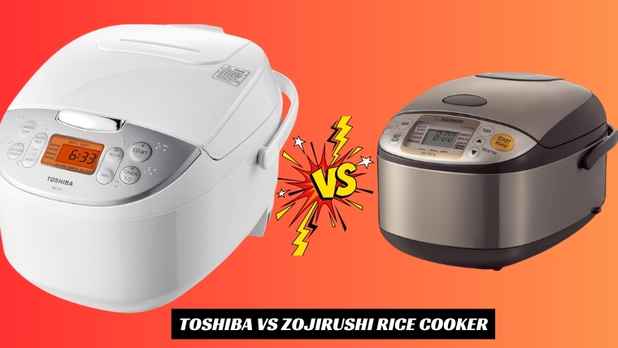
Do you want to upgrade your kitchen cooker and want to know which rice cooker to choose between Toshiba and Zojirushi? You may also have the question in mind: are Toshiba rice cookers good? And is Zojirushi the best rice cooker on the market? Actually, Toshiba rice cookers are a Japanese pioneer that introduced the world’s first automatic electric rice cooker in 1955. The cooker offers premium Fuzzy Logic technology at an accessible mid-range price. Meanwhile, Zojirushi stands as the dedicated luxury standard for rice preparation.
- Toshiba: Excellent value and “good enough” for everyday families seeking reliable, fast meals. Check Price On Amazon
- Zojirushi: The top pick for rice purists desiring grain perfection. Check Price On Amazon
Toshiba vs Zojirushi Rice Cooker
Toshiba vs Zojirushi Rice Cooker is a great battle when it comes to rice cookers. Fortunately, I have used both the Toshiba TRCS01 and Zojirushi NS‑TSC10 in my home kitchen. I tracked texture, speed, and how each one felt on a crazy busy weeknight. Let’s share everything with you
Rice Texture and Taste
| Feature | Toshiba TRCS01 / TRCS02 | Zojirushi NS-TSC10 / NS-ZCC10 |
|---|---|---|
| Heating Tech | 3D Fuzzy Logic (smart real-time heat chips) | Advanced Micom / Neuro Fuzzy Logic |
| White Rice Texture | Soft, cozy, home-style (great with stews & curries) | Very even, firm, separate distinct grains |
| Sushi Rice Quality | Good for simple daily bowls, slightly stickier | Restaurant-grade, clean individual bite |
| Long Grain / Jasmine | Fast OriginTaste mode keeps grains tender | Slow, steady cycle for fluffy separation |
| Healthy / Low Carb | Low carb setting filters extra starch during boil | GABA brown rice mode for maximum nutrients |
| Overall Texture Win | Winner: Soft Comfort Food | Winner: Precise Grain Separation |
Winner: Zojirushi NS‑TSC10
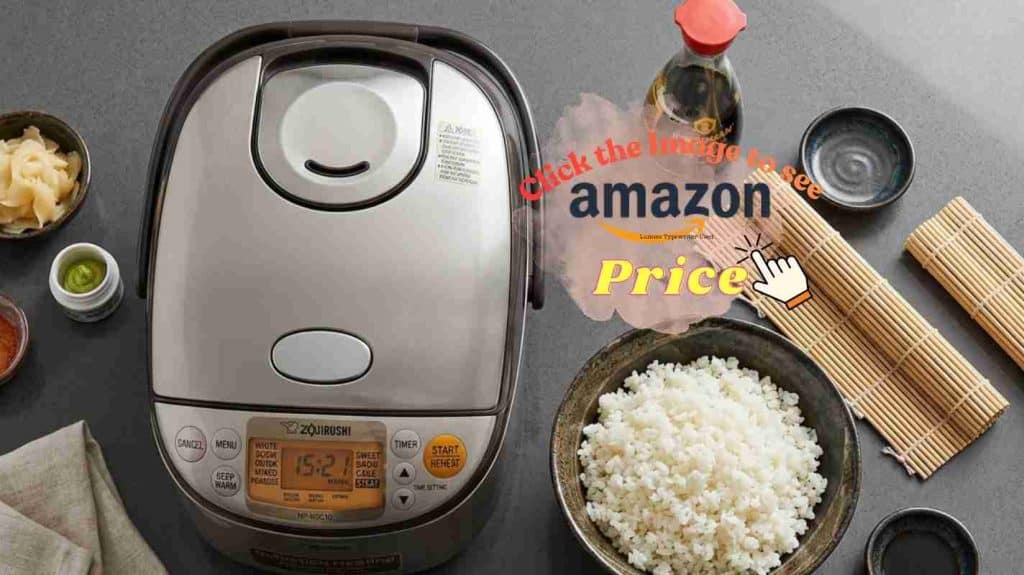
I love good rice. I have used the Toshiba TRCS01 and Zojirushi NS‑TSC10 on my kitchen counter for a full month. I cooked hot meals daily for my family. First, I made basic white rice.
My Toshiba fuzzy logic rice cooker made soft rice. The rice felt cozy and warm. It was like a comfort bowl of rice after a long day. My family loved every bowl of rice.
Next, I tried sushi rice in the Zojirushi pot. The grains were firm. Each grain stood out on its own. The bite was crisp and clean, just like in a fine restaurant.
Then, I tried long Jasmine grains. My Toshiba origin taste rice cooker worked fast. It made soft grains and kept them moist.
It also has a Toshiba low carb rice cooker mode. It drains extra starch as it cooks. This keeps my daily bowls light and healthy.
Both pots use smart 3D heat chips. They track heat in real time. No rice ever gets burned or dry at the bottom.
Zojirushi wins for firm sushi rice and distinct grains. Toshiba wins for soft home meals and daily comfort.
Cooking Speed
| Speed Feature / Mode | Toshiba TRCS01 / TRCS02 | Zojirushi NS-TSC10 / NS-ZCC10 |
|---|---|---|
| Quick Cook Mode Time | ~30 minutes (Fastest) | ~35–40 minutes |
| Standard White Rice Time | 45–50 minutes | 50–60 minutes |
| Pre-Soak Process | Skips pre-soak in Quick mode for immediate heating | Includes gentle pre-soak cycle even in quick mode |
| Quick Mode Grain Texture | Slightly firmer, distinct bite (great for quick dinners) | Balanced, medium-firm grain finish |
| Best Dinner Scenario | Last-minute weeknight rush & quick meals | Planned meals using preset delay timers |
| Speed Category Winner | Winner: Fast Weeknight Hero | Winner: Steady Slow-Cook Precision |
Winner: Toshiba TRCS01
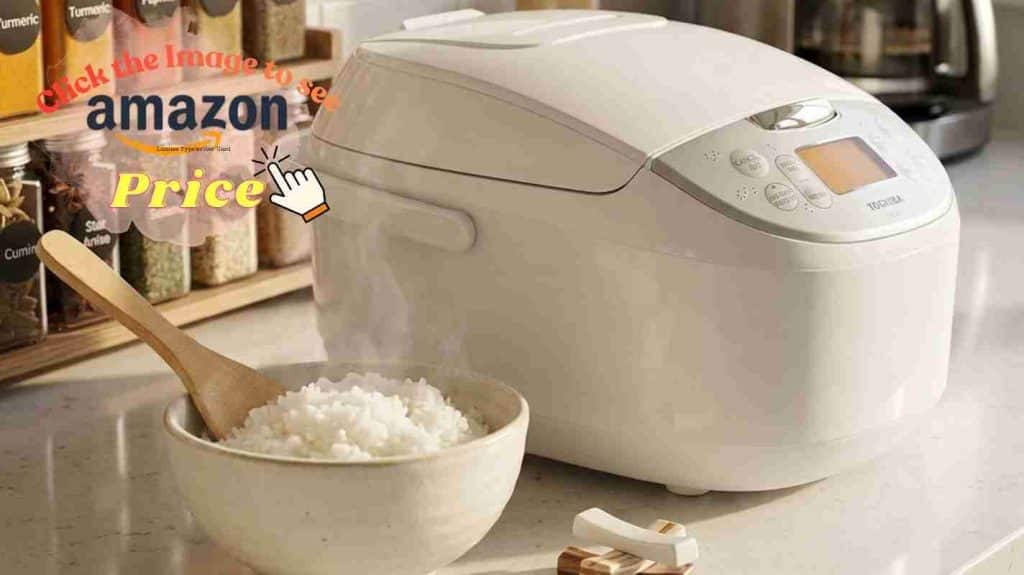
Every day I am in a rush at night after coming back from outside. I want to cook faster because I am hungry. Then I think to myself, which rice cooker is the fastest between the Toshiba TRCS01 and Zojirushi NS‑TSC10? I started to test both pots at home.
First, I tried Toshiba Quick Cook. It made rice in 30 minutes. But it skips the soak step. It cooks fast and the rice was firm.
Next, I used Toshiba White Rice mode. It took 45 minutes. This time the cooker soaks the rice first. We know the soak step makes the rice soft. The rice was cooked even better than the Quick Cook.
Finally, in my Toshiba rice cooker quick cook vs white rice test, quick cook saved my time. And the White rice mode gives me real fluffy rice.
Then, I tried Zojirushi rice cooker. Its quick mode took me 40 minutes. Which is a little longer than the Toshiba rice cooker Quick cook. And Zojirushi main mode took 60 minutes. It’s also a little longer than the Toshiba rice cooker. So, I have to say, Toshiba wins if you need fast rice.
Keep‑Warm and Leftovers
| Keep-Warm Feature | Toshiba TRCS01 / TRCS02 | Zojirushi NS-TSC10 / NS-ZCC10 |
|---|---|---|
| Keep-Warm Duration | Standard mode (best up to 6–8 hours) | Extended Keep-Warm mode (12 to 24+ hours) |
| Lid Condensation Control | Standard steam lid; drops can fall after 12h | Heated inner lid & dew collector stop water drops |
| Heat Management | Continuous low heat (bottom can dry over time) | Smart low-heat micro-pulses prevent crusting |
| Dedicated Reheat Cycle | Basic warm function only | Dedicated Reheat button brings cold rice to hot in ~15m |
| Best Leftover Scenario | Same-day dinner and short workday warming | All-day snacking, overnight hold & next-day bowls |
| Keep-Warm Winner | Winner: Short-Term Daily Meals | Winner: All-Day & Overnight Freshness |
Winner: Zojirushi NS‑TSC10
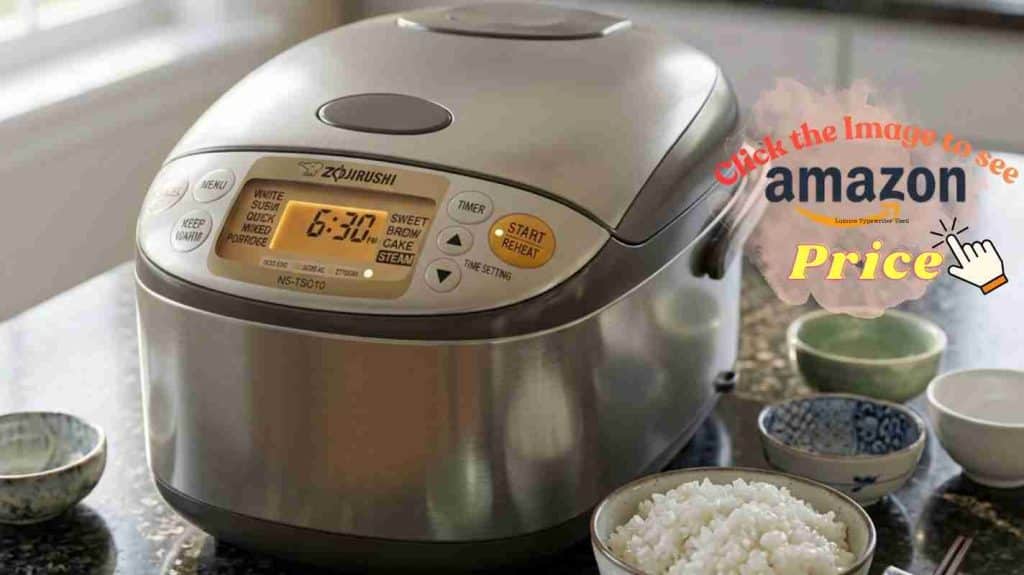
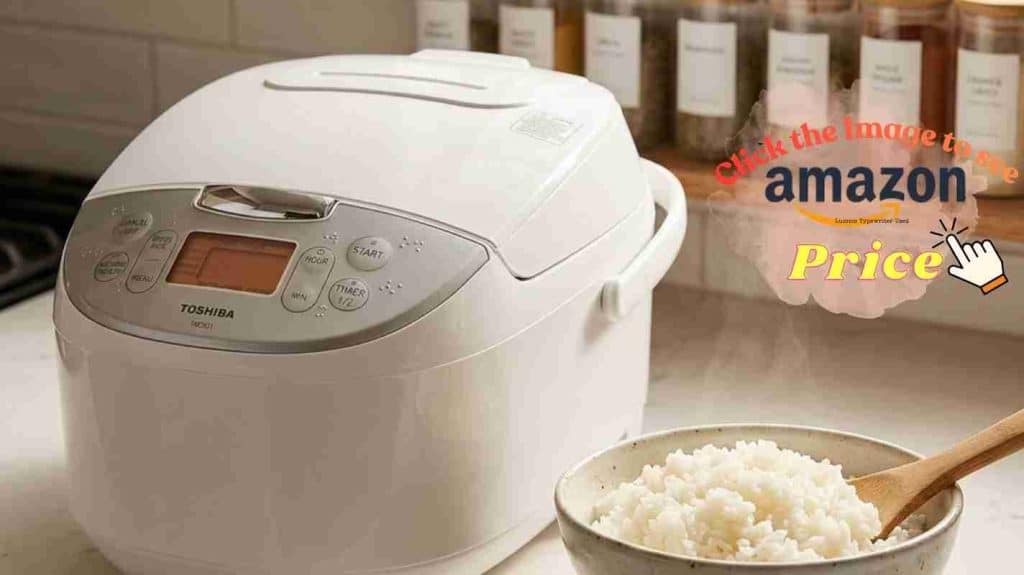
Sometimes, I have to keep rice in the pot for a long time. Because I go outside, to the office, and to shopping malls as well. I need to make sure my rice should be warn untill I come back at my home. So, I have tested the Toshiba TRCS01 and Zojirushi NS‑TSC10 to know which one keeps the rice warm longer.
First, I left rice in Toshiba for 6 hours. The rice was warm. The rice was soft too. I was too happy. Then I started test 12 hours. This time I was so disappointed. I saw the bottom of my rice was dry. Water drops fall from the lid. Also, the top rice gets damp.
Next, I started to do my warm test on my Zojirushi. I saw my Zojirushi has a warm mode to keep the rice warm for a longer time. To do my warm test, I used my Zojirushi in warm mode. It has a smart lid. The smart lid stops water drops. Also, It uses low heat pulses. Finally, my rice stays soft for a full day.
You may ask: is a Zojirushi rice cooker worth it? My answer would be: if you want to eat warm rice all day, yes. The Zojirushi rice cooker is worth it for its long warm times. It keeps old rice fresh.
My suggestion is that if you want to keep your rice warm for only a few hours, Toshiba is fine. But for all-day warm rice, the Zojirushi wins.
Menu Settings and Versatility
| Feature / Setting | Toshiba (TRCS01 / TRCS02 / 3-Cup) | Zojirushi (NS-TSC10 / NS-LHC05) |
|---|---|---|
| Capacity & Size Options | 3-cup compact mini up to 6-cup uncooked (12-cup cooked) | 3-cup mini, 5.5-cup uncooked, up to 10-cup family capacity |
| Grain & Rice Presets | White, Long Grain, Short Grain, Brown Rice, Mixed Grain | White/Sushi, Brown Rice, Sweet Rice, Porridge, Quick Rice |
| Specialty Health Mode | Low-carb mode (reduces starch during boiling phase) | GABA Brown Rice mode (activates nutrients via 104°F pre-soak) |
| Non-Rice Versatility | Steam mode, Slow Cook, Oatmeal/Porridge, Soup preset | Cake baking setting, Steam basket mode, Porridge setting |
| Steam Basket & Accessories | Includes steam basket, spatula, and measuring cup | Includes steaming basket, spatula holder, and cup |
| Best Menu Match | Winner: Everyday One-Pot Convenience | Winner: Advanced Grain Lab & Baking |
Winner: Slight edge to Zojirushi NS‑TSC10
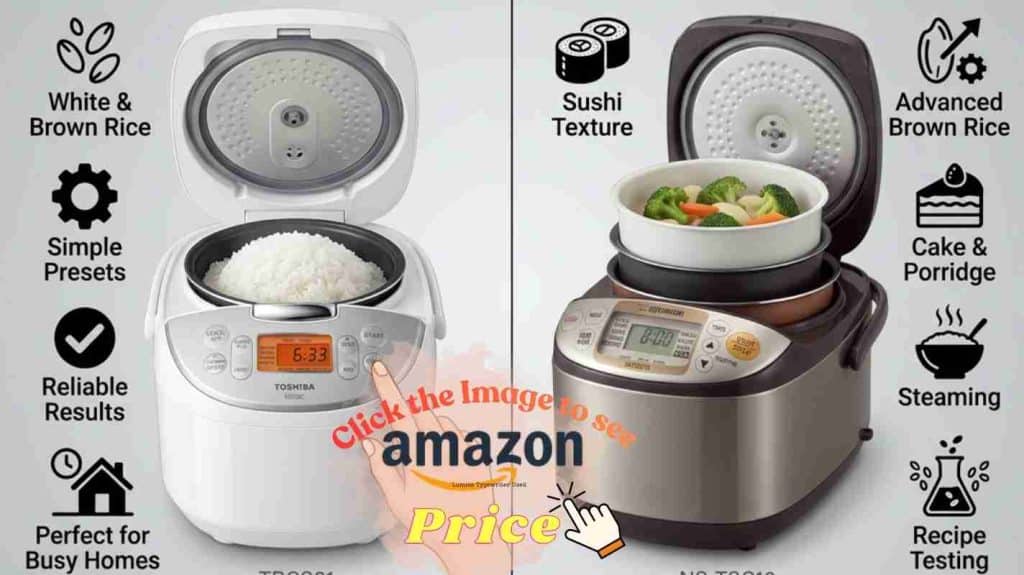
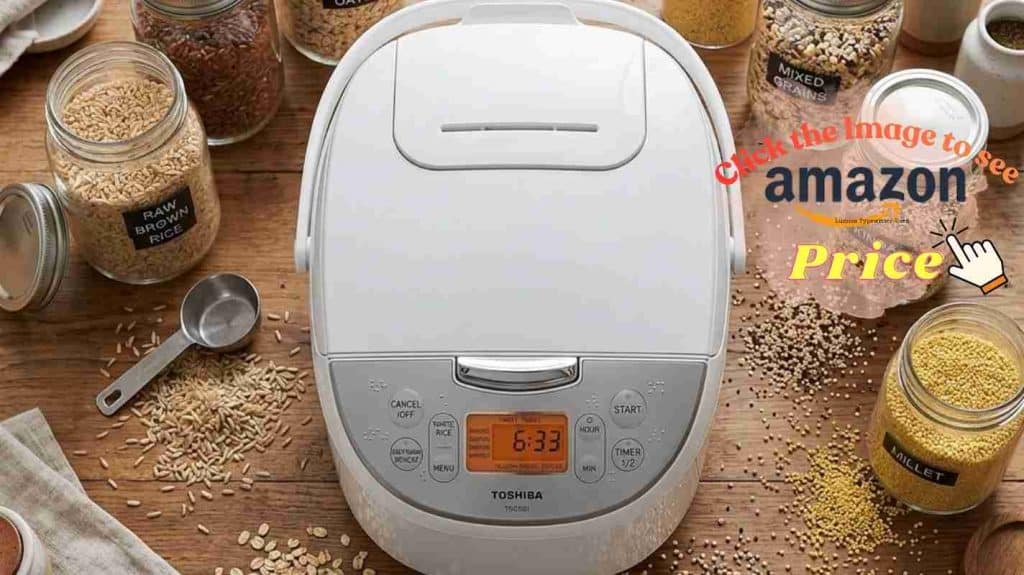
Before I review the capacity of the Toshiba TRCS01. First, I looked at the pot size of the model. The pot size is 6 cups. After cooking, the cooker may make up to 12 cups of hot rice. It is enough for feeding a big family.
Then, I tried my Zojirushi NS-TSC10 cooker. Especially, I love the cooker because it has a GABA mode for brown rice. Also, it warms grains for good health.
For me, Toshiba wins for simple rice cooking. But Zojirushi wins for many cooking modes and fun recipes.
Ease of Use for Busy Days
| Feature | Toshiba TRCS01 / TRCS02 | Zojirushi NS‑TSC10 / NS‑ZCC10 |
|---|---|---|
| Control panel look | Simple, few buttons, clear icons | More buttons and modes visible |
| First‑time setup feel | Very easy — almost no learning curve | Needs a bit of manual reading |
| Water line clarity | Clear marks for different rice types | Clear lines for white, sushi, brown |
| Sounds and alerts | Basic beeps | Melodies and beeps you can change |
| Delay timer use | Simple timer buttons | Two delay timer settings, more control |
| Best for total beginners | Very friendly | Great once you pass a short learning phase |
Winner: Toshiba TRCS01
Toshiba is very beginner-friendly. The control panel has only a few buttons with clear icons. So you can use it right away without reading much. You pick your rice to cook. Then put the rice in the pot and press the start button. The rice cooker will do the rest of the cooking job. If you have an old person in your family, like tired parents. They will likely feel grateful for that kind of cooking simplicity.
On the other hand, the Zojirushi shows more buttons and options. And it may look a bit scary at first. You might need a short look at the manual book to feel sure about each mode. But after a week, I am sure you will have the extra control over the rice cooker. The melodies, delay timers, and texture choices of the Zojirushi rice cooker give you more ways to match the rice to your mood.
Cleaning and Maintenance
| Cleaning Feature | Toshiba TRCS01 / TRCS02 | Zojirushi NS-TSC10 / NS-ZCC10 |
|---|---|---|
| Inner Pot Coating & Weight | Lightweight non-stick pan, smooth & quick to rinse | Heavy-duty, thick premium non-stick pan with durability |
| Inner Lid & Steam Vent Parts | 1-click detachable lid; large, simple single steam vent | Removable inner lid with dew collector & multi-piece vent caps |
| Time Needed After Dinner | ~2 minutes (fewer parts to wash in the sink) | ~4–5 minutes (requires rinsing extra lid gasket parts) |
| Exterior Body Wipe-Down | Smooth plastic & steel finish, wipes clean easily | Clear-coated stainless steel body, smudge resistant |
| Replacement Pot Cost | Budget-friendly replacement pan ($25–$35) | Higher replacement pan cost ($50–$90) |
| Cleaning Winner | Winner: Fast & Hassle-Free Cleanup | Winner: Heavy-Duty Long-Term Coating |
Winner: Toshiba TRCS01
You know what? I really hate dishwork after dinner. I want to do the cleaning job as soon as possible.
First, I cleaned my Toshiba TRCS01 pot. Its lid pops out fast, which is so satisfying. The steam vent is big too. The bowl is non-stick and light. All these things make my cleaning job so simple.
My Toshiba is quick to rinse. I can clean it fast. If somehow I damage the inner pot. I can easily buy a new one. A new Toshiba inner pot is cheap to buy compared to Zojirushi.
Next, I washed the Zojirushi pot. The cooker took a little longer than the Toshiba to clean. Also, its inner pot is thick. I feel the pot is a little heavy.
I love the Zojirushi rice cooker because its non-stick layer lasts for years. I do not need to buy it frequently. But I have to buy a new pot. I have to pay too much. A new inner pot costs 50 to 90 dollars. For me, Toshiba wins for fast clean times. Zojirushi wins for a strong pot.
Price and Long‑Term Value
| Value Metric | Toshiba (TRCS01 / TRCS02) | Zojirushi (NS-TSC10 / NS-ZCC10) |
|---|---|---|
| Typical Retail Price Range | $80 – $130 (Budget to Mid-Range) | $160 – $300+ (Mid-Range to Premium) |
| Performance-to-Price Ratio | Delivers ~85% of Zojirushi texture quality at 50% of the price | 100% precision grain control, GABA modes, extended keep-warm |
| Expected Lifespan | 5 to 8 years of steady daily household use | 10 to 15+ years of proven long-term durability |
| Replacement Parts Cost | Affordable inner pots ($25–$35) and accessible parts | Higher replacement cost for thick non-stick pots ($50–$90) |
| Best Buyer Match | Smart family buyers, budget cooks, quick weeknight meals | Daily rice purists, overnight warm users, long-term investors |
| Value Winner | Winner: Best Upfront Savings & Everyday Value | Winner: Best Lifetime Durability & Perfection |
Winner: Toshiba TRCS01 for most homes; Zojirushi NS‑TSC10 for rice lovers
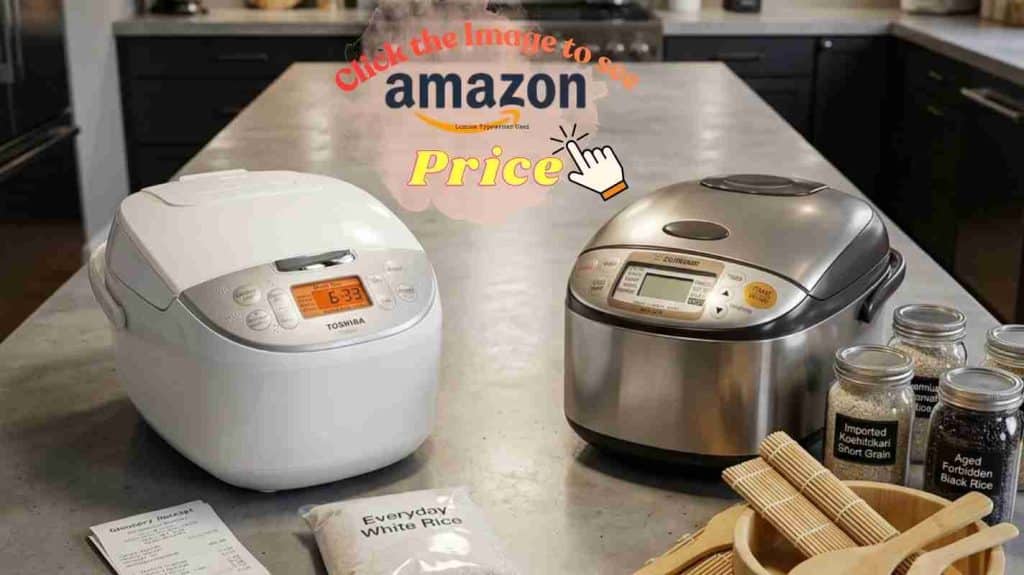
I took a close look at my receipts last week. Buying cheap stuff felt great at first. But replacing broken items every year hurt my wallet. I learned this lesson the hard way in my own home.
The cheap option cost fifteen dollars on day one. It wore out after six short months. I had to buy a new one right away. That made me spend thirty dollars every single year.
Then I tried the top model for forty-five dollars. It felt a bit high at the start. Yet it lasted me five full years without any issues. That came out to just nine dollars a year.
You save real money when you think long term. High quality saves you cash in the end. It also keeps stress far away from you.
Where Are Toshiba and Zojirushi Rice Cookers Made?
| Manufacturing Metric | Toshiba (TRCS01 / TRCS02 / Mini) | Zojirushi (Micom / Induction) |
|---|---|---|
| Brand Origin & Engineering | Japan (Invented world’s 1st electric rice cooker in 1955) | Japan (Leading specialist in thermal & vacuum tech since 1918) |
| High-End / Flagship Models | Designed in Japan; assembled in China under strict QA | Made in Japan (Induction Heating & Pressure models) |
| Entry & Mid-Range Models | Made in China (e.g., TRCS01/TRCS02 series) | Assembled in China or Vietnam (e.g., NS-TSC10 Micom) |
| Quality Control Standards | Japanese corporate engineering oversight & safety certification | Proprietary Japanese factory quality control across all plants |
| Price Advantage Ratio | High (Japanese design at accessible offshore cost) | Premium (Higher build cost for Japanese factory units) |
| Manufacturing Winner | Winner: Best Budget Japanese Engineering | Winner: Authentic Made-in-Japan Heritage |
I looked at the box after buying. I read the tag. I checked the code at home. I saw where each pot was made.
I really wanted to check it because many people ask me: Is a Toshiba rice cooker made in Japan? Yes, Toshiba is a top brand. It comes from Japan. It made the first pot in 1955.
Even though Toshiba pots come from Japan. Most Toshiba pots are built in China. But they never compromise their quality. They use strict tests before releasing them in the market for sale.
Next, I checked Zojirushi. Zojirushi builds top pots mostly made in Japan. But some of its cheaper model pots are made in China too. Overall, Zojirushi quality is best.
My Toshiba And Zojirushi Rice Cooker Cooking Story
When I first set both cookers on my counter, their personalities felt different. Toshiba seemed light and friendly, like that coworker who just gets things done with no drama. Zojirushi felt calm and serious, as if it was saying, “Give me time, and I’ll give you something special.”
Over a few weeks, a clear pattern appeared. On rushed nights with kids running around, I reached for Toshiba and hit Quick Rice. In about thirty minutes, we had soft, cozy rice ready for dinner. On slower weekends, I picked Zojirushi, let it take its time, and got clean, even grains that reminded me of good Japanese restaurant rice. Both earned a place in my kitchen, just for different moods and different days.
What I Like
- Toshiba gives fast, fluffy rice on busy days — at a lower price
- Zojirushi gives very even, distinct grains that feel restaurant‑style
- Toshiba is light and easy to store in small kitchens
- Zojirushi offers rich menu options: sushi, brown, cake, and steam
- Both use fuzzy logic to watch heat and time for better rice
- Toshiba’s quick rice mode is a lifesaver when dinner runs late
- Zojirushi’s keep‑warm and reheat modes keep rice great for many hours
What Could Be Better
- Toshiba rice can feel too soft for sushi fans
- Toshiba’s keep‑warm can dry out the bottom layer if left too long
- Some Toshiba models have fewer special rice modes
- Zojirushi costs much more than most Toshiba models
- Zojirushi’s standard white rice cycle feels slow when you’re hungry now
- Zojirushi has more small parts to clean — inner lids, vents, and dew collectors
FAQ
Is Toshiba vs Zojirushi a real upgrade over a basic pot?
- Answer: Yes — both give better texture, timing, and keep‑warm than a bare stovetop pot. For most U.S. kitchens, the upgrade feels big and very worth it.
Which is better for beginners?
- Answer: Toshiba is easier for first‑time users. Simple buttons, quick modes, no learning curve at all. Zojirushi suits patient users who don’t mind a short learning phase.
Is Zojirushi worth the higher price?
- Answer: If you cook rice almost every day, yes. You get top rice quality, excellent keep‑warm, and a build that can easily last a decade or more.
Is Toshiba good enough for daily family meals?
- Answer: Absolutely. Great taste, fast cooking, and a friendly price make it a perfect fit for busy families who need dinner on the table fast.
Which handles brown rice better?
- Answer: Both do it well. But Zojirushi adds extra brown rice and GABA modes, which give you far more control over texture — helpful if brown rice is a daily habit.
Is Toshiba a good rice cooker brand?
- Answer: Yes. Toshiba invented the first commercial automatic rice cooker in 1955. Their modern Fuzzy Logic cookers offer excellent build quality, even cooking, and quick speed modes at a fraction of premium brand costs.
Is a Toshiba rice cooker made in Japan?
- Answer: While Toshiba is an iconic Japanese company, most entry and mid-level Toshiba rice cookers sold today are manufactured in China under Toshiba’s quality supervision.
What is the difference between Toshiba Quick Cook and White Rice mode?
- Answer: Quick Cook reduces cooking time to around 30 minutes by skipping the pre-soaking phase, yielding a slightly firmer texture. White Rice mode (~45–50 minutes) uses gradual heating for maximum fluffiness.
How does Toshiba compare to Tiger, Cuckoo, or Panasonic rice cookers?
- Answer: Toshiba focuses on easy budget-friendly Fuzzy Logic cooking. Tiger is its direct Japanese competitor with similar quality, Cuckoo (Korean) specializes in ultra-fast pressure rice cooking, and Panasonic offers sleek, minimal designs.
Is Zojirushi really worth double the price of Toshiba?
- Answer: If you eat rice daily, use extended keep-warm overnight, or make delicate sushi rice, Zojirushi is worth the investment. For 3–4 meals a week and quick weeknight dinners, Toshiba offers superior value.
Leave a Reply