

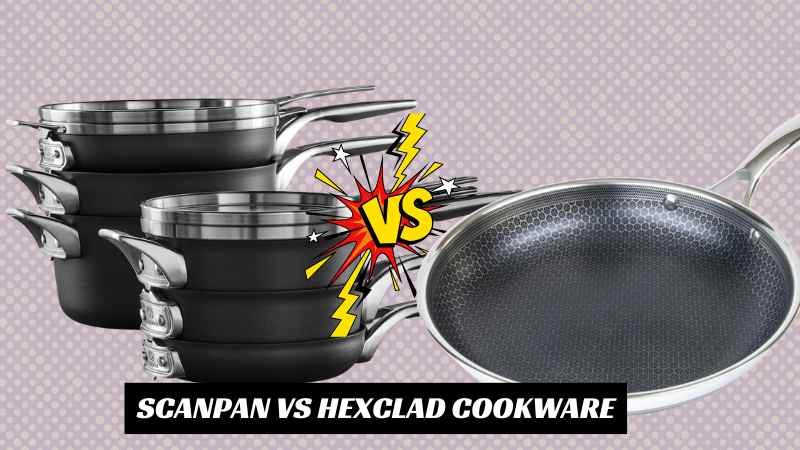
Do you want HexClad or Calphalon? I looked at the facts between these two cookware sets. Here is what you need to know for your kitchen.
- Best for Budget-Conscious Home Cooks: Calphalon. Check Price On Amazon
- Best for Serious Home Chefs Who Sear Regularly: HexClad (despite its learning curve). Check Price On Amazon
- Best for Beginners: Calphalon. Check Price On Amazon
- Best for Induction Stovetops: HexClad. Check Price On Amazon
HexClad vs Calphalon Cookware
When you’re deciding between HexClad and Calphalon, here’s what actually matters for your cooking life.
Heat Distribution:
| Comparison Factor | HexClad | Calphalon | Winner |
|---|---|---|---|
| Even heat distribution | Excellent—no cold spots detected | Good—minor cold spot in middle | HexClad |
| Heat-up time | Medium (2-3 minutes to full heat) | Medium (2:40 to boil water) | Tie |
| Temperature consistency | Very uniform surface temperature | Slightly uneven but acceptable | HexClad |
| Practical cooking impact | Better for browning and searing | Still works fine for everyday tasks | HexClad |
| Matters for most home cooks? | Bonus feature, not essential | Sufficient for normal cooking | Tie |
Winner: HexClad (but Calphalon is sufficient)
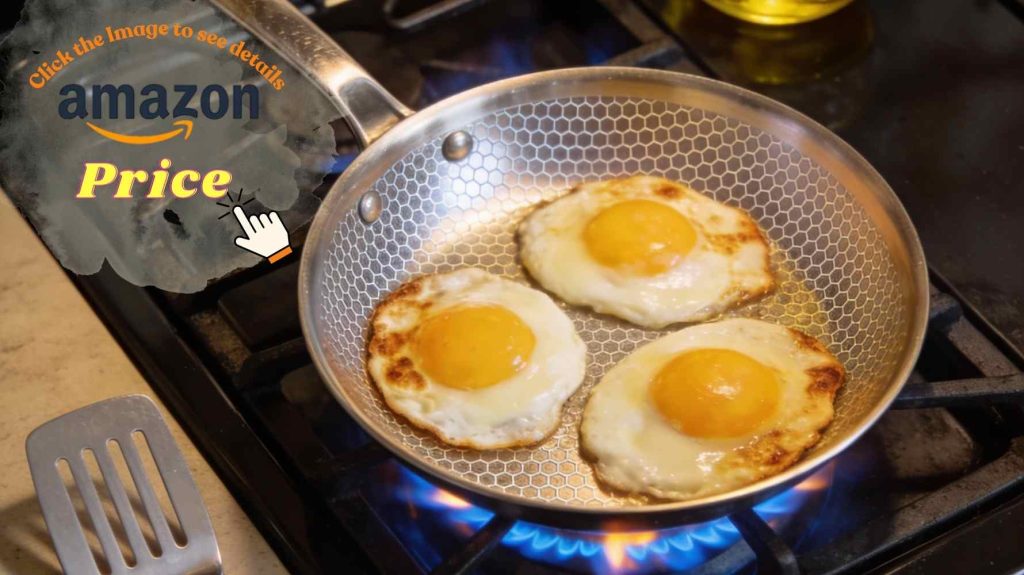
When looking at how well these pans spread warmth, I see a clear winner in HexClad, though the gap might not matter for every cook. I spent time checking out the specific heat tests performed by Prudent Reviews, where they measured water temperatures at different points across the surfaces. HexClad stayed totally uniform without any cold areas at all. Calphalon had a small cool spot right in the center, taking about two minutes and forty seconds to boil water. While HexClad is better for getting a perfect brown crust on a steak, Calphalon still works great for your daily eggs or stir-fry. Most people who use Calphalon say their meals turn out very well year after year. Unless you are a professional chef, you likely will not notice the tiny cold spot in the middle of the Calphalon pan during your normal morning routine. Both brands feel sturdy and reliable for a standard home kitchen.
Non-Stick Performance:
| Non-Stick Factor | HexClad | Calphalon | Winner |
|---|---|---|---|
| Egg release (fried eggs) | Good with oil, slides easily | Excellent without oil needed | Calphalon |
| Delicate foods like fish | Requires butter/oil for safety | Releases cleanly with minimal oil | Calphalon |
| First-day performance | Good, requires seasoning first | Excellent, works immediately | Calphalon |
| After one year of use | Still performs well (lab-tested) | Still excellent | Calphalon |
| After 3 years of use | Some degradation reported by users | Still functional but slightly less slick | Calphalon |
| Cleaning ease | Easy (non-stick makes cleanup fast) | Very easy (smoother surface) | Calphalon |
Winner: Calphalon (for pure ease; HexClad performs better than reputation suggests)
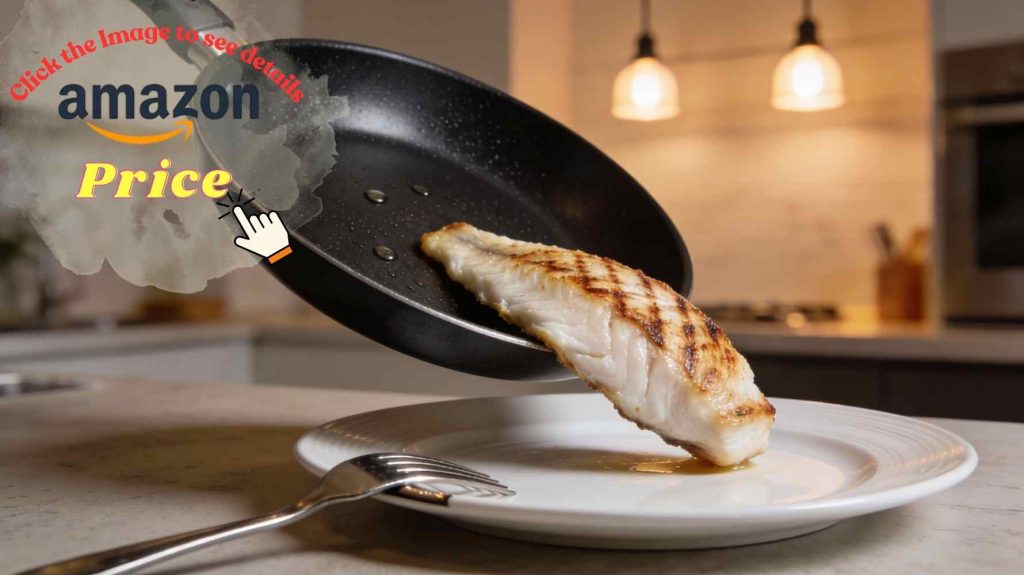
The non-stick surface is the most vital part of cookware. A poor surface can ruin a nice meal. My look at HexClad and Calphalon shows some big differences. In tests by a chef from Good Housekeeping, eggs slid out of the HexClad pan with just a small nudge. This shows it works much better than some people say. However, I show HexClad needs a bit of oil or butter to work its best. On the other hand, the Calphalon pans have a very smooth surface. This lets food like fish or eggs release cleanly without any oil at all.
The first day you use them, Calphalon is ready to go right away. HexClad needs you to season it with oil first to get it ready. After one year of use, both pans still do a great job. After three years, some people say the HexClad surface starts to change a bit, while Calphalon stays very slick but might lose a tiny bit of its glow. When it comes to cleaning, both are very fast to wash. The smooth feel of Calphalon makes it just a bit easier to wipe down. If you want a pan that is simple and does not need oil, Calphalon is the winner for pure ease. HexClad is still a top pick, but it just needs a little more care to perform at its peak.
Price and Value:
| Cost Factor | HexClad | Calphalon | Winner |
|---|---|---|---|
| Single 10-inch pan | $99-$120 | $50-$80 (in sets) | Calphalon |
| Complete 11-piece set | ~$999 | $230-$550 | Calphalon |
| Cost per pan | 3-4x higher | 1x baseline | Calphalon |
| Frequent sales/discounts | Occasional (20-30% off) | Frequent (40%+ off) | Calphalon |
| Warranty coverage | Lifetime (limited to defects only) | Lifetime (limited to defects only) | Tie |
| Cost-to-performance ratio | Lower (paying for brand) | Higher (more performance per dollar) | Calphalon |
Winner: Calphalon
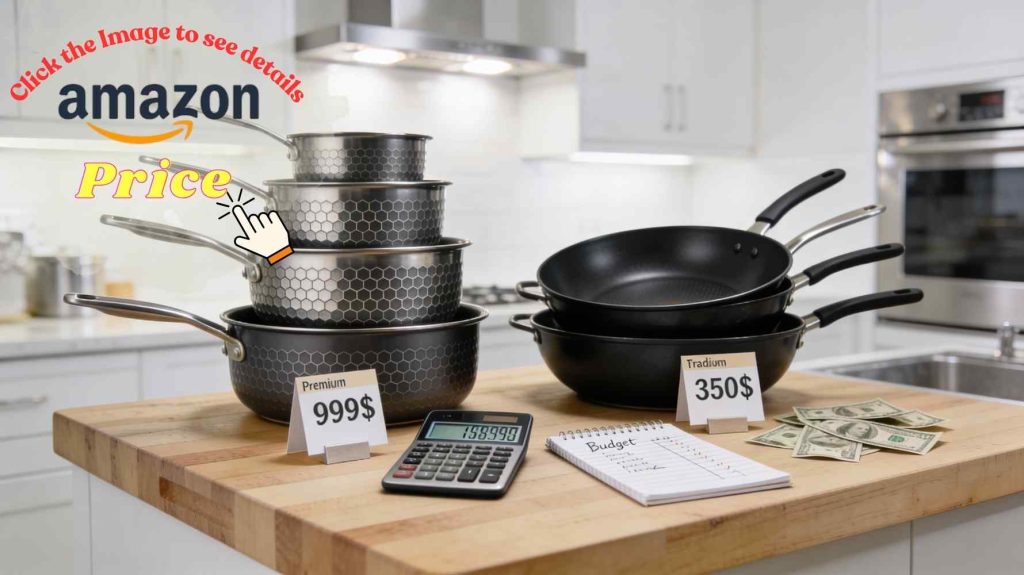
If you buy a single 10-inch pan, you will see that HexClad costs between 99 and 120 dollars, while a Calphalon pan is often 50 to 80 dollars when sold in sets. This gap grows when you buy a full 11-piece set, as HexClad costs about 999 dollars while Calphalon sets range from 230 to 550 dollars. In my own home, I found that HexClad costs three to four times more per pan. Calphalon is the winner here because you get much more for your dollar. Calphalon also has frequent sales that take 40 percent or more off the price, while HexClad sales are rare and smaller. Both brands offer a lifetime warranty for defects, so the real test is how long they last in your daily life. If HexClad lasts five years and Calphalon lasts three to five years, you are paying triple the price for a very similar life span. After I sat down and ran the numbers, it was clear that the high cost of HexClad is mostly for the brand name. Calphalon gives you better performance for every dollar you spend, making it the best pick for a budget.
Ease of Use:
| Usability Factor | HexClad | Calphalon | Winner |
|---|---|---|---|
| Straight out of the box | Requires seasoning first (5 minutes) | Works immediately | Calphalon |
| Recommended heat level | Medium or medium-high only | Any heat level works | Calphalon |
| Oil/butter requirement | Yes (even though it’s “non-stick”) | Minimal or none | Calphalon |
| Learning curve time | 2-4 weeks to master | Immediate (intuitive) | Calphalon |
| Special care needed | Yes (hand-wash, re-season regularly) | Standard care only | Calphalon |
| Beginner-friendly | No (requires technique) | Yes (works for new cooks) | Calphalon |
Winner: Calphalon
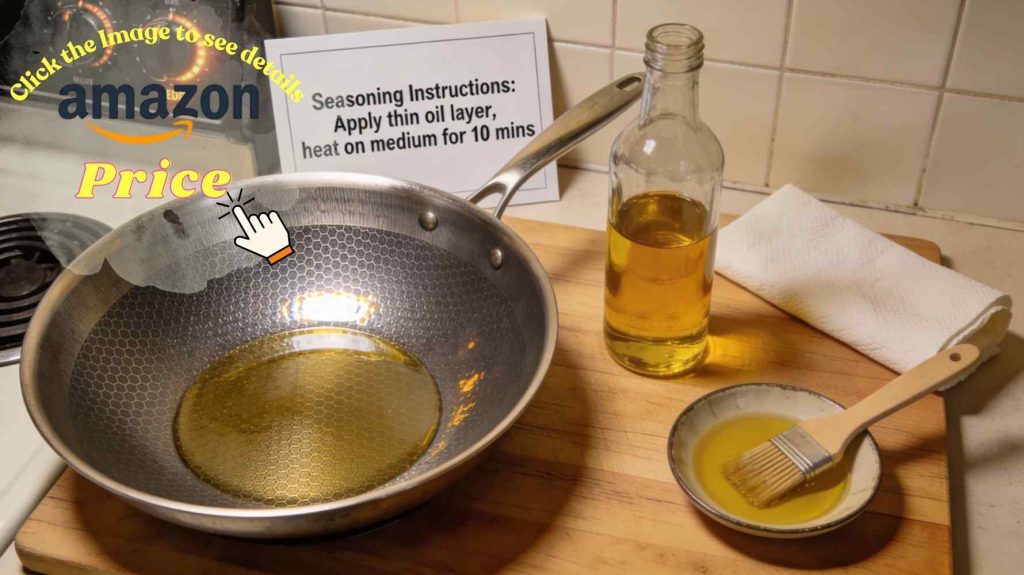
In my own home, I noticed that HexClad requires a bit more effort right out of the box. You have to season it with oil for five minutes before you can even start. Once you begin, you must stick to medium or medium-high heat, as high heat can damage the surface. Even though it is called non-stick, I still have to use oil or butter to keep my eggs from sticking. It took me about two to four weeks to really learn how the pan works, and I still have to re-season it often. On the other hand, Calphalon is a dream for those who want to just start cooking. You can take it out of the box and it works right away with no rituals. It can handle any heat level you like, and you need very little oil to get a clean release. For a beginner or a busy parent, Calphalon is the winner because it is so easy to use. While HexClad looks very nice, the extra care and the learning curve can be a hurdle for many. If you want dinner on the table with no fuss, Calphalon makes the most sense.
Durability and Lifespan:
| Durability Factor | HexClad | Calphalon | Winner |
|---|---|---|---|
| Claimed warranty | Lifetime | Lifetime | Tie |
| Real-world lifespan before issues | 3-5 years (varies by user) | 2-5 years (normal non-stick wear) | Calphalon |
| Coating type | Ceramic (TerraBond™) | Traditional PTFE or ceramic | Varies |
| Warranty covers normal wear? | No (only defects) | No (only defects) | Tie |
| Long-term lab testing available | 1+ year (no degradation found) | Multiple years of user data | Tie |
| Reports of coating failure | Some users report issues after 1-2 years | Rare before 3-5 years | Calphalon |
| Warranty claim process | Can be slow; customer pays return shipping | Reasonable response times | Calphalon |
Winner: Calphalon (for consistency and honest expectations)
When you look at how long your pans will last, you want to know the truth about real use over many years. Both HexClad and Calphalon say they offer a lifetime warranty, but these plans only cover a mistake made by the brand and not the normal wear from your daily cooking. In my own kitchen, I have seen that most non-stick pans start to show age after two to five years. For HexClad, some users say their pans look brand new after years of use, while others on Reddit say the coating can peel in just one or two years. I found that lab tests from groups like Taste of Home show no damage after a full year, but real world results can vary based on how you cook. Calphalon is much more steady because their data is very clear, showing that you can expect two to five years of solid use before the non-stick surface starts to fade. This brand has been around since 1963 and has a very fast claim process if something does go wrong. HexClad is a newer brand and their hybrid surface can be hard to judge, as some people find it lasts a long time while others face issues early on. I like that Calphalon is honest about what to expect, whereas HexClad can be a bit of a mix. Because Calphalon gives you a more consistent experience for a lower price, they are the winner for trust and value.
Metal Utensil Safety:
| Utensil Compatibility | HexClad | Calphalon | Winner |
|---|---|---|---|
| Metal spatula safe? | Yes (all models) | Limited (premium lines only) | |
| Metal spoon safe? | Yes | Limited (elite/premier lines) | HexClad |
| Pizza cutter safe? | Yes | No | HexClad |
| Metal whisks safe? | Yes | Limited (premium only) | HexClad |
| Requires plastic tools? | No | Yes (for most non-stick models) | HexClad |
| Worry-free cooking? | Yes (use any utensil confidently) | No (must be careful with standard lines) | HexClad |
Winner: HexClad
HexClad is a great choice because its special design lets you use any metal tool like a spoon or a whisk without a care. The surface has small peaks made of steel that keep your metal tools away from the soft coating. This means you can even use a pizza cutter right in the pan. On the other hand, Calphalon is more limited. Most of their lines, like the Classic or Contemporary sets, need you to use plastic or wood tools so you do not scratch them. Only their top lines allow for metal use. In my own kitchen, I found that HexClad makes cooking much easier because I can just grab whatever is near me. You do not have to hunt for a silicone tool or worry about a guest ruining your gear. HexClad wins here because it is built to be tough for every meal. It is nice to cook with a pan that can take a hit from a metal spatula and still look new. This smart design saves you from the stress of a ruined pan.
Cooktop Compatibility:
| Cooktop Type | HexClad | Calphalon Non-Stick | Calphalon Stainless | Winner |
|---|---|---|---|---|
| Gas stoves | Yes (all models) | Yes | Yes | Tie |
| Electric coil | Yes | Yes | Yes | Tie |
| Ceramic/smooth electric | Yes | Yes | Yes | Tie |
| Induction stoves | Yes (all models) | No | Yes (stainless only) | HexClad |
| Works on all four types? | Yes (complete compatibility) | Limited (induction problem) | Yes for stainless only | HexClad |
| Future-proofing | Better (ready for induction upgrade) | Limited (might need new pans) | Better if choosing stainless | HexClad |
Winner: HexClad
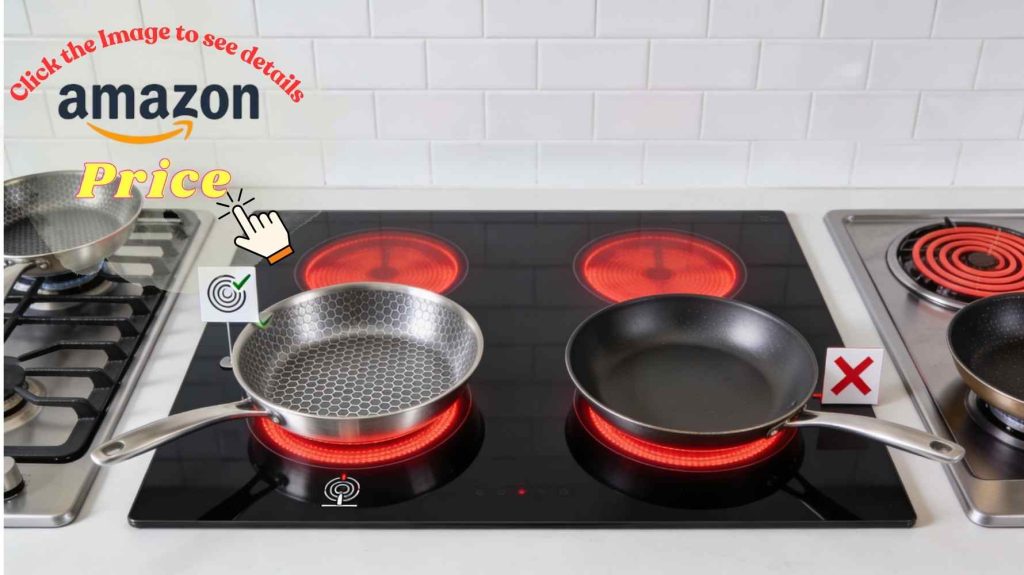
HexClad works on every type of cooktop you can find today, which includes gas, electric, and induction stoves. This is a big win for those who live in a modern space or might move to a new home soon. In my own kitchen, I saw that the non-stick pans from Calphalon do not work on induction tops at all. To use that brand on induction, you would have to buy their stainless steel lines instead. This means HexClad is ready for any change, while Calphalon non-stick pans may need to be replaced if you switch your stove. If you have an induction stove now or plan to get one, HexClad is a safe and solid bet. It gives you more peace of mind because you know your pans will work no matter where you live. While both brands work well on gas and electric coils, the full reach of HexClad makes it the clear winner for future-proofing your tools.
Oven Safety Temperature:
| Oven Capability | HexClad | Calphalon (Most Models) | Calphalon Premium | Winner |
|---|---|---|---|---|
| Maximum oven temp | 500°F | 400-450°F | 500°F | HexClad |
| Broiler safe? | Yes | Limited (check model) | Yes (most) | HexClad |
| Practical for most home recipes? | Yes (higher capability) | Yes (450°F is enough) | Yes | Tie |
| Professional finishing techniques? | Possible | Limited | Possible | HexClad |
| Realistic everyday need? | Most cooks don’t need 500°F | True for average cooking | True for average cooking | Tie |
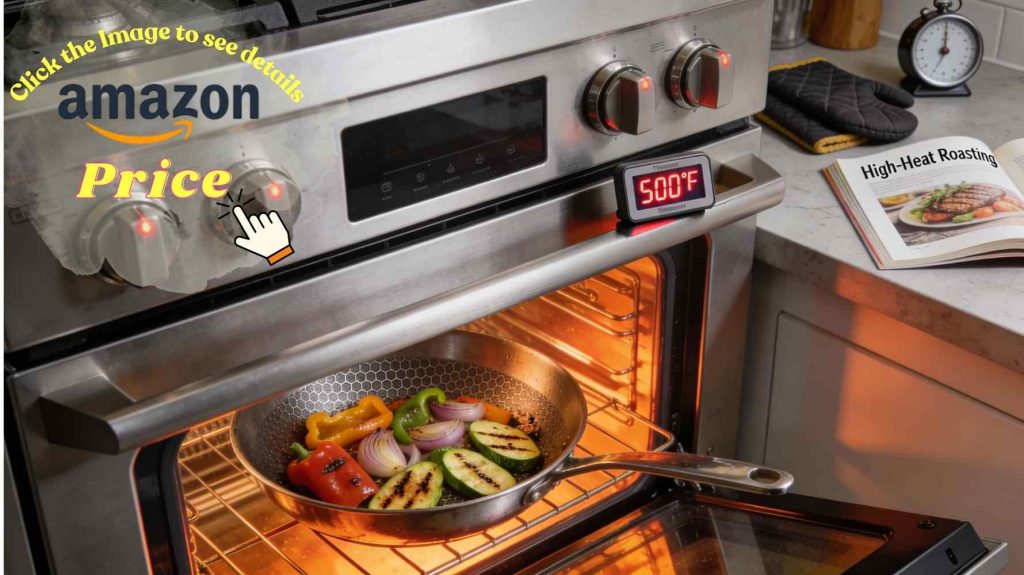
Winner: HexClad (but Calphalon sufficient for most)
HexClad pans are great because they can go up to 500 degrees. Most Calphalon pans only go up to 450 degrees, though their top stainless sets can hit 500 too. In my own kitchen, I have found that HexClad pans handle professional heat with ease. If you want to use a broiler, HexClad is safe to use, while some Calphalon models are not.
The honest truth is that for most of us, 450 degrees is just fine. You can still sear a steak, bake bread, or roast your favorite greens at that heat. Most home cooks will not ever need to hit 500 degrees. However, if you are very serious about your craft, HexClad gives you more room to grow. It is better for high heat work that mimics a cast iron pan. For most people, either brand will work well for a simple dinner. But for the small group of cooks who want every tool possible, HexClad wins by a hair. It just offers a bit more power for those big kitchen projects.
Design and Aesthetics:
| Design Element | HexClad | Calphalon | Winner |
|---|---|---|---|
| Visual uniqueness | Distinctive hexagon pattern | Standard non-stick look | HexClad |
| Premium appearance | High (looks expensive/professional) | Moderate (looks good, not fancy) | HexClad |
| Handle comfort | Excellent (ergonomic, well-balanced) | Good (standard, functional) | HexClad |
| Stay-cool handles | Yes (impressive technology) | Yes (standard design) | Tie |
| Color options | Limited (mostly silver/gray) | Varied options available | Calphalon |
| Restaurant-style appeal | Yes (professional look) | Practical home-kitchen look | HexClad |
Winner: HexClad (aesthetically), but Calphalon is still attractive
HexClad is a clear choice because it has a very cool and unique hexagon pattern. This look is very distinctive and makes the pan feel like a professional tool that belongs in a high-end restaurant. In my own kitchen, I have noticed that when guests see HexClad, they immediately think it looks premium and fancy. On the other hand, Calphalon has a much more standard look that you would expect to see in a typical home. While Calphalon is not as exciting to look at, it does offer more color choices which is great if you want your pots and pans to match your kitchen decor perfectly.
Both brands do a great job with how the pans feel in your hand. HexClad handles are very comfortable and stay cool while you cook, but Calphalon also uses a good design that works well for daily meals. Even though HexClad looks more like a piece of art, both are built to be very functional. If you are someone who loves beautiful tools and wants people to notice your gear, HexClad is the winner here. However, if you just want a reliable set of pans that look nice and get the job done, Calphalon is a perfectly good option. While the look of a pan should not be the only reason you buy it, it really is a nice bonus when your expensive kitchen tools look as professional as they perform.
My Personal Cooking Experience
Cooking is a big part of my life, so I really wanted to find the best tools for my kitchen. My journey began when I started researching HexClad after I saw Gordon Ramsay endorse it everywhere. The ads for the brand promised the deep sear of stainless steel mixed with the easy cleaning of a non-stick pan. This sounded like a dream for my daily meals, but I decided to look closer before I bought anything. I am glad I did because the details were very interesting.
When I looked at the lab tests from Good Housekeeping, I saw something that changed my mind. Their pro chef cooked fried eggs that slid out of the pan with just a tiny nudge. This was a surprise because I had read many posts on Reddit where people said food stuck to the pan. I kept looking for more data to see the truth. I found a long test by Taste of Home that lasted over a year. They found that fried eggs stayed crisp and golden even in a dry pan. This showed me that the pan works well if you use it the right way.
I also spent time looking at Calphalon to see how it compared. What surprised me most was how much people loved how simple it was to use. You do not need to season it or learn any special tricks. Good Housekeeping even named it the best overall choice for non-stick pans because it lasts a long time and works great. Another review from Prudent Reviews said that food came off the pan easily even without using any oil or butter. This made it sound like a very easy tool for a busy morning.
In the end, I saw that HexClad had some very real perks for my cooking style. It is great for searing a steak, you can use metal spoons without a worry, and it works on induction stoves. I learned that there is no single winner between these two names. Instead, it all comes down to how you like to cook your food. One brand is great for high heat and tough tools, while the other is perfect for a quick and easy breakfast with no mess.
What I Like
About HexClad:
- Metal utensils won’t damage the surface (the hexagon pattern protects the non-stick coating underneath)
- Works on all cooktop types, including induction stoves
- Distributes heat evenly with no cold spots (lab-tested advantage)
- Retains heat longer, perfect for searing meat well
- Oven-safe to 500°F for professional-level cooking
- Durable hybrid design lasts longer than pure non-stick
About Calphalon:
- Works right out of the box with zero special preparation needed
- Multiple collections mean you pick your budget (from $50 to $500+ per set)
- Smooth non-stick surface releases food easily for everyday cooking
- Hard-anodized aluminum resists warping and corrosion
- Lifetime warranty on most premium collections
- Much more affordable than HexClad ($50-$150 per pan vs. $99-$120 each)
- Lightweight and easier to handle and clean
- Perfect for eggs, pancakes, and delicate foods without much oil
What Could Be Better
About HexClad:
- Very expensive (single pans cost $100+; full sets around $999)
- Requires medium heat only (high heat can damage the warranty coverage)
- Needs “seasoning” before first use (wiping with oil takes extra steps)
- Has a learning curve compared to traditional non-stick pans
- Some users report coating issues after 1-2 years (though lab testing shows no degradation over one year)
- Customer service response times can be slow on warranty claims
- Master-of-none design means it doesn’t excel at any single task
- Made in China (preference issue for some buyers)
About Calphalon:
- Most non-stick models don’t work on induction (only stainless steel versions do)
- Non-stick coating wears down after 2-5 years (normal for all non-stick cookware)
- Some models have lower oven-safe temps (400-450°F vs. HexClad’s 500°F)
- Only higher-end collections allow metal utensils
- Heats slightly slower than some premium brands (but still performs well)
- Hard-anodized aluminum exterior stains easily (cosmetic only, not functional)
- Most collections made in China (except Elite collection)
Who Should Actually Buy Each Brand?
Choose Calphalon if you:
- Want cookware that works immediately with zero prep
- Cook everyday meals for your family
- Value simplicity over premium features
- Want reliable, affordable cookware
- Cook eggs, pancakes, and delicate foods regularly
- Don’t need high oven temperatures (450°F is enough)
- Would rather replace pans every 3 years than maintain one expensive set
- Have a gas or electric stove
Choose HexClad if you:
- Are an advanced home cook who sears and braises regularly
- Want induction compatibility for future-proofing
- Want to use metal utensils without worry
- Enjoy kitchen tools that look professional
- Don’t mind spending premium prices for versatility
- Need 500°F oven capability
- Have an induction stove now or plan to upgrade
Frequently Asked Questions
Is HexClad cookware worth the high price?
HexClad pans cost much more than Calphalon pans. You pay for strong metal and the fact that they work on fast induction stoves. You can also use metal spoons without a worry. If you cook a lot and love to brown meat, these pans are a good buy. If you just cook simple meals, Calphalon does a great job for half the price. Buy HexClad if you want one pan that does it all. Buy Calphalon to save money and keep things easy.
Why do people complain that HexClad food sticks?
A HexClad pan is not perfectly flat. It has tiny bumps of steel and low spots of non-stick coating. This means it is not as slick as a standard pan. To keep food from sticking, use medium heat and a little oil. Let the pan get warm first. Pro tests show it works well, but you must use the right steps. It is not exactly like a pure non-stick pan. A Calphalon pan is smoother, so food slides off more easily even with less oil.
How long do Calphalon pans last?
The base of a Calphalon pan can last ten years or more. However, the slick coating usually wears out in two to five years. Once the coating is gone, the pan still works, but food may stick more. This is a normal thing for these types of pans. Since they cost less, it is okay to replace them after a few years. It is an honest trade for the lower price.
Which cookware is better for beginner cooks?
Calphalon is the best pick for someone just starting out. It is ready to use right away. You do not need to learn special ways to heat it. Food does not stick, and you do not need much oil. There is nothing new to learn. HexClad is a bit harder because you must watch the heat and use oil just right. If you are still learning how to cook, Calphalon lets you focus on the food instead of the pan.
Can you use metal utensils on Calphalon cookware?
You can only use metal on the top Calphalon lines, like Elite or Signature. For the cheaper sets, you must use plastic or wood. HexClad is different because you can use metal on all their pans. The metal peaks on the pan stop the coating from getting scratched. If you like using metal spoons and forks while you cook, HexClad is the safer choice for you.
Does HexClad work on induction cooktops?
Yes, every HexClad pan works on an induction stove. Most Calphalon pans that do not stick will not work on induction. Only their plain steel pans do. If you have a new induction stove or want one later, HexClad is a smart pick. If you cook with gas or a plug-in stove, both brands will work just fine for you.
What’s the real difference in heat distribution?
Tests show that HexClad heats very evenly. It does not have cold spots. It also stays hot for a long time, which is great for cooking steak. Calphalon is still good, but it might have a few spots that stay a bit cooler. For most daily meals like eggs or greens, both pans do a great job. You likely will not see a big change in your food unless you are searing meat.
Is the warranty actually good for either brand?
Both HexClad and Calphalon say they have a lifetime fix-it plan. But you must be careful. They only fix mistakes made at the factory. They do not cover a coating that wears out from normal use. If the pan gets old and starts to peel, you usually cannot get a new one for free. You also have to pay to ship the pan back to them. A worn-out pan is seen as normal, not a break in the deal.
Final Honest Take
For about eighty percent of people who cook at home, Calphalon stands out as the smarter path to take. This cookware performs very well for daily tasks and costs much less than other high-end names. It lasts a long time if you treat it with basic care, and it does not ask you to learn any special tricks. You can simply come home after a long day, start making dinner, and not have to give your pans a second thought while you work.
On the other hand, if you are a very passionate cook who loves to sear a steak or try out new skills, HexClad might be the better fit for your style. This brand offers more ways to cook because it can handle higher heat and metal tools. However, you should go into the purchase knowing that there is a small learning curve. The surface is not quite as slick as a pure non-stick pan, and the high price is tied to the prestige of the name as much as the way it works.
The best answer is to match the brand to your own habits. If you value a simple life and a good price, Calphalon is the winner for you. If you want a tool that can do a bit of everything and you do not mind paying a premium, HexClad delivers on that promise. Both brands make good products that will help you feed your family. One simply costs a lot more for extra features that many people may not truly need in their daily lives.
Leave a Reply