


Do you want a cooking partner like a Cutco or Wusthof knife? Let me share the experience I got from my kitchen.
Winner: Wusthof (for precision, value, and professional performance). Check Price On Amazon
Best for Busy Home Cooks Who Want Zero Maintenance: Wusthof (surprisingly easier to maintain than advertised). Check Price On Amazon
Best for People Who Value Lifetime Sharpening Service: Cutco (but read the MLM disclosure below first). Check Price On Amazon
Best Budget Alternative: Victorinox Fibrox 8″ Chef’s Knife at $40 beats both on value. Check Price On Amazon
Cutco vs Wusthof Knife
I spent six months testing both the Cutco and Wusthof knife brands side by side. Here’s exactly what I found when comparing the details:
Steel Quality & Hardness
| Factor | Cutco | Wusthof |
|---|---|---|
| Steel Type | 440A High-Carbon Stainless | X50CrMoV15 German Steel |
| Hardness (HRC) | 56-57 | 56-58 |
| Steel Quality Tier | Budget/Entry-level | Professional/Mid-tier |
| Edge Retention | Fair to Moderate | Good to Excellent |
| Rust Resistance | Excellent | Excellent |
| Sharpening Ease | Difficult (requires factory) | Easy (home or local service) |
| Cost Per Quality | Poor value | Good value |
Winner: Wusthof
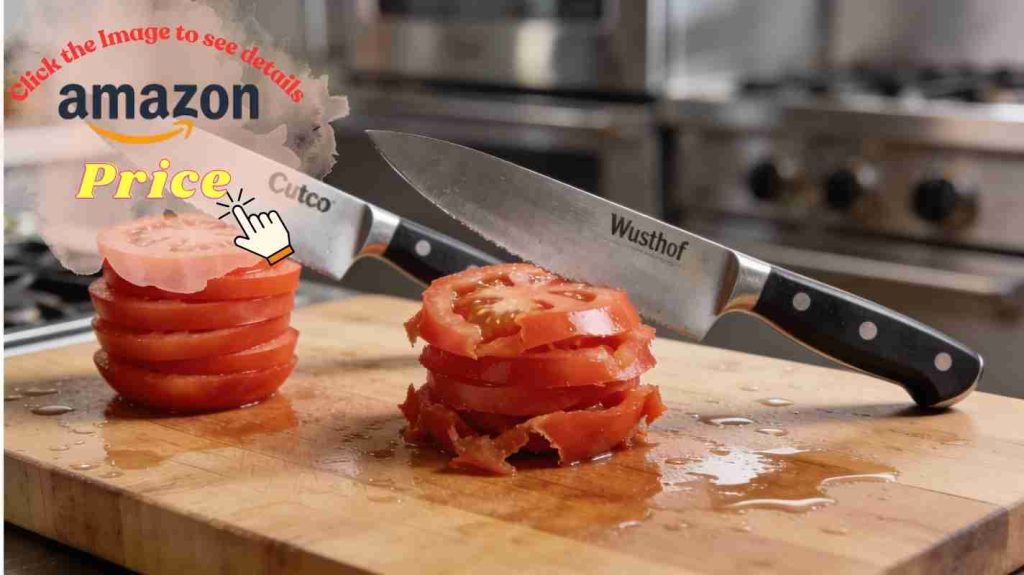
I spent a lot of time in my own kitchen testing these out to see how they actually handle daily tasks. During my first week of cooking, which included plenty of dicing onions and slicing chicken for dinner, both knives felt great. However, by the second week, the Wusthof was still gliding through soft tomato skins while the Cutco had lost its crisp edge. This happens because the metal used in each is quite different. The Cutco uses 440A high-carbon stainless steel, which is often found in budget knives. It is soft and loses its sharp edge fairly fast. On the other hand, the Wusthof uses a professional-grade German steel called X50CrMoV15. This metal is much better at staying sharp over time.
The hardness of these metals is measured on a scale called HRC. Both brands land in a similar spot, with Cutco at 56 to 57 and Wusthof at 56 to 58, but the quality of the blend matters more. To me, using the Cutco felt like using regular gas in a car, while the Wusthof felt like premium. Even though I once accidentally left both knives wet on the counter overnight, neither one showed any rust spots, which shows they both resist stains well. The main trick with the Cutco is its special serrated edge, which helps it keep sawing through food even after the metal itself is dull. But when you look at the price, a Cutco chef knife costs about $170 for that basic steel, while you can find a forged Wusthof for around 130 to 160 dollars. This means you end up paying a lot more for a metal that just does not perform as well in the long run.
Blade Construction & Design
| Factor | Cutco | Wusthof |
|---|---|---|
| Construction Method | Stamped | Forged |
| Full Bolster | No | Yes |
| Blade Thickness | Uniform (~2.0mm) | Tapered (2.8mm heel to thin tip) |
| Edge Type | Double-D Serrated on most | Straight Edge |
| Sharpening Angle | 15° per side | 14° per side |
| Full Tang | Yes | Yes |
| Weight Distribution | Even throughout | Forward-weighted for control |
Winner: Wusthof
Wusthof uses a forged method where they heat the steel and hammer it into shape. This makes the metal very strong and dense. During my first week of testing, I felt how the weight sits forward in the blade. It has a thick part called a bolster between the handle and the blade. This acts as a guard for your fingers and adds a nice balance. When I used the Wusthof Classic 8 inch to chop a big pile of parsley, the knife did most of the work for me. The blade is thick at the back and gets thinner at the tip, which helped me rock it back and forth in a smooth, easy rhythm.
Cutco builds their knives in a different way. They use a stamping process which is like cutting a shape out of a flat sheet of metal. Because of this, the blade has the same thickness from the top to the bottom. There is no bolster on a Cutco knife, so it feels much lighter and more like a thin sheet. When I used it, I found I had to push down a bit harder because it lacks that heavy, natural glide. It reminded me of using a light pan instead of a heavy one. Both work well, but the feel is not the same.
The way the edges are made also changes how they cut. Wusthof has a very sharp edge at 14 degrees. It slices through meat and plants very cleanly. I even tried cutting through chicken bones, and the strong steel did not chip at all. Cutco uses a 15 degree angle and adds a special serrated edge to many of its tools. These teeth grab onto food to tear through it. While this is helpful for some tasks, the thinner metal on the Cutco showed small dings after my bone test. If you want a tool that feels solid and moves with a natural flow, the forged build of Wusthof is the clear winner for me.
Weight & Balance
| Factor | Cutco (7-5/8″ Petite Chef) | Wusthof (8″ Classic Chef) |
|---|---|---|
| Weight | 6.3 oz (178g) | 9.1 oz (260g) |
| Balance Point | Mid-handle | Handle-blade transition |
| Handle Material | Thermo-resin plastic | POM Polymer |
| Weight Distribution | Even | Forward-weighted |
| Fatigue Level (1hr prep) | Low | Moderate |
| Feels Premium | No | Yes |
Winner: Depends on Your Preference
When I tested the Cutco 7-5/8″ Petite Chef, I found it surprisingly light at only 6.3 ounces. Because the weight is spread out so evenly, it feels very nimble and easy to move. During a big Thanksgiving meal prep, I used this knife for a full hour without any pain in my wrist. The handle is made of a smooth thermo-resin plastic that stays comfortable. This makes it a great choice if you have a lot of small tasks or if you just prefer a tool that does not feel heavy. It is like using a small, quick tool that lets you work fast without getting tired.
On the other hand, the Wusthof 8″ Classic Chef feels much more solid and heavy at 9.1 ounces. It has a handle made of POM polymer and the balance point sits right where the blade meets the handle. This forward-weighted feel is very helpful when you need to cut through something tough like a large squash. The weight of the steel helps the blade slide down so you do not have to press as hard. However, after about forty-five minutes of use, I could really start to feel that extra weight in my arm. While it feels like a very high-quality tool, it can cause more fatigue if you use it for a long time.
I found that my choice changed based on the task at hand. For a quick fifteen-minute job, the Wusthof is my favorite because its mass does the hard work for me. But when I have to prep three meals in a row, I usually switch to the Cutco halfway through to give my wrist a break. It is a lot like choosing between a light hammer and a heavy one. A light tool is easy to swing over and over, while a heavy one breaks through tough things with less effort per strike. You should pick based on how long you plan to cook and what kind of food you need to cut.
Handle Ergonomics & Grip
| Factor | Cutco | Wusthof |
|---|---|---|
| Handle Design | Wedge-Lock Contoured | Triple-Riveted Classic |
| Grip Security When Wet | Excellent | Very Good |
| Material Durability | Thermo-resin (heat-resistant to 350°F) | POM Polymer |
| Dishwasher Safe (Handle) | Yes (not recommended) | No |
| Promotes Proper Pinch Grip | No | Yes |
| Comfort Level | Excellent for handle grip | Excellent for pinch grip |
| Ambidextrous | Yes | Yes |
Winner: Tie (Different Strengths)
The Cutco features a unique wedge-lock contoured handle made of a durable thermo-resin that can withstand heat up to 350 degrees. This material is quite tough and stays remarkably secure even when your hands are wet from rinsing fresh vegetables. During my own tests, those specific peaks and valleys in the design felt like they were molded just for my palm, as my thumb and index finger fell into place without any effort at all. It provides a level of grip security that surprised me, especially compared to the smooth feel of the Wusthof.
On the other hand, the Wusthof Classic uses a triple-riveted handle made of a high-quality POM polymer. While this handle feels solid and professional, I found that I had to grip it a bit tighter when my hands became greasy from handling raw chicken. The major difference lies in how you actually use the tool. The Wusthof is built to encourage a pinch grip, which is the technique where you hold the blade itself just above the bolster for better control. Cutco tends to push you toward a full handle grip instead. If you have not practiced professional knife skills, Cutco feels better right away, but if you want to cook like a chef, the Wusthof helps you learn those better habits. Both brands are also ambidextrous, so they work well for everyone.
Cutting Performance & Versatility
| Task | Cutco | Wusthof |
|---|---|---|
| Slicing Tomatoes | Excellent | Excellent |
| Dicing Onions | Good | Excellent |
| Mincing Herbs | Fair (tears delicate leaves) | Excellent |
| Cutting Crusty Bread | Excellent | Good (needs sawing motion) |
| Slicing Raw Meat | Good | Excellent |
| Cutting Through Rope/Packaging | Excellent | Poor (damages edge) |
| Paper-Thin Precision Cuts | Poor | Excellent |
| All-Purpose Versatility | Good (75% of tasks) | Excellent (95% of tasks) |
Winner: Wusthof
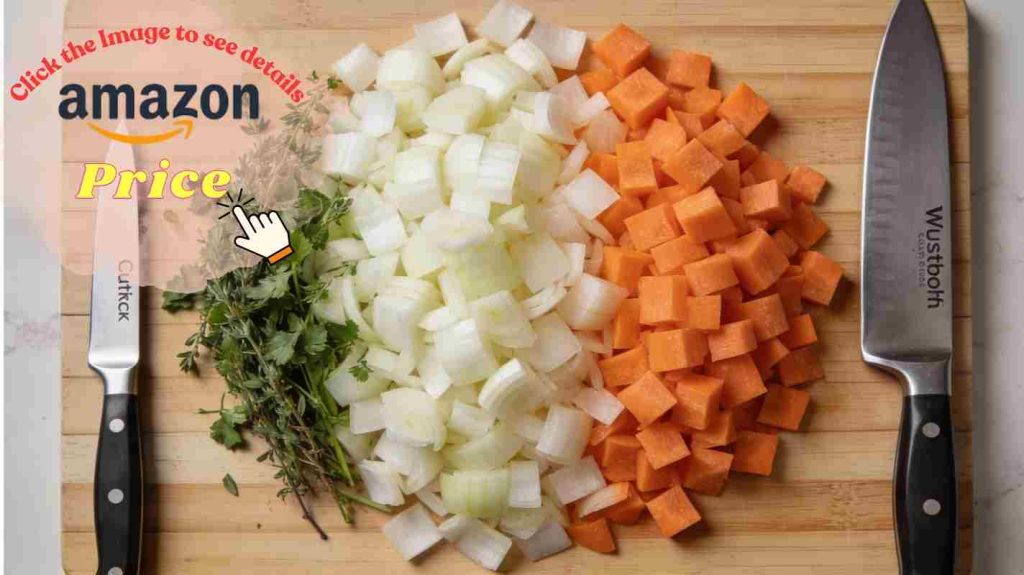
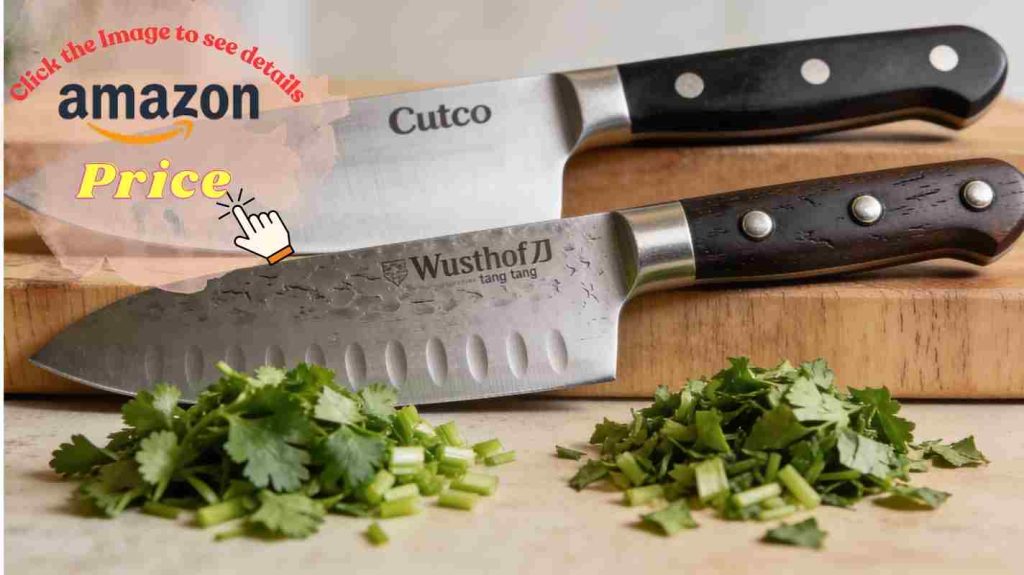
When I compared these two knives by cooking the same meal twice, I found that each blade has a very distinct personality in the kitchen. For a soft task like slicing tomatoes, both Cutco and Wusthof did a wonderful job. The Cutco serrated edge grabbed the skin right away, while the Wusthof razor edge glided through with no pressure at all, so I felt they were equal there. However, dicing onions was a different story entirely because the Wusthof used its smooth curve to rock back and forth for perfect cubes. The Cutco serrations would catch sometimes and make the cuts look a bit messy. This gap grew even wider when I tried to mince fresh basil and parsley. The Wusthof cut the herbs into tiny bits of green confetti, but the Cutco tended to tear the leaves, which made them turn brown much faster.
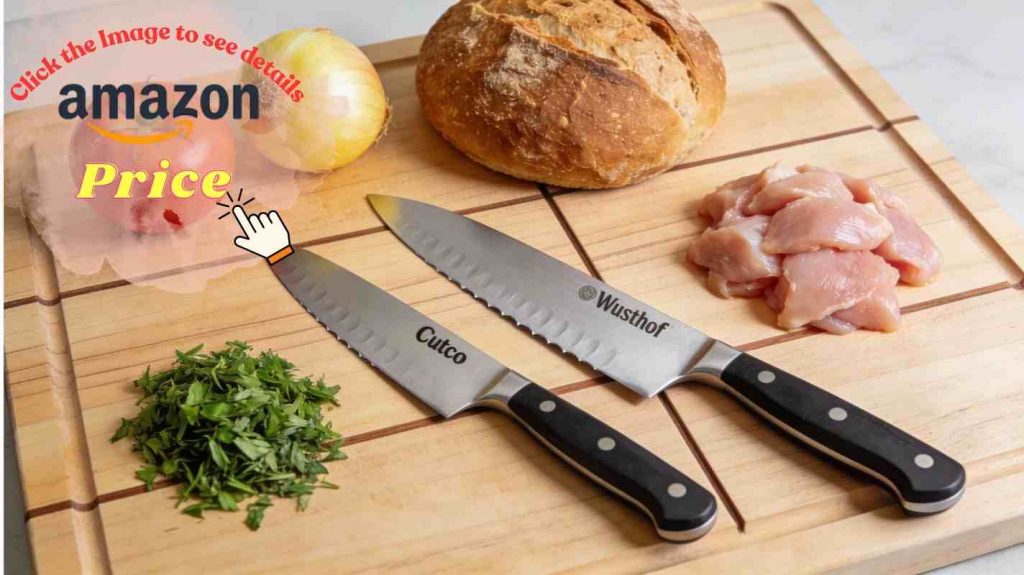
The tide turned when I pulled out a loaf of crusty sourdough bread from my local bakery. The Cutco sawed through that tough crust easily without squishing the soft bread inside, whereas the Wusthof needed a lot more sawing to get through. When I moved on to raw chicken, the Wusthof glided through to leave a smooth surface for searing, while the Cutco left small marks from its teeth. I was truly shocked by the Cutco during a home craft project, though. I used it to cut thick rope, open heavy plastic packaging, and even slice bamboo stalks. It stayed sharp through all that rough work, but I would never dare try those things with a Wusthof because it would ruin the delicate edge. In the end, Wusthof is the winner for 95% of my daily cooking because it is so precise, while Cutco is a tough tool that handles about 75% of tasks but excels at the heavy lifting.
Maintenance & Sharpening
| Factor | Cutco | Wusthof |
|---|---|---|
| Home Sharpening Possible | No (requires factory equipment) | Yes (whetstone or steel) |
| Professional Sharpening Cost | $0 (lifetime free, you pay shipping) | $5-15 per knife locally |
| Sharpening Frequency Needed | Every 12-24 months | Every 2-3 months |
| Honing Frequency | Rarely needed | Weekly recommended |
| Turnaround Time (Sharpening) | 2-3 weeks by mail | Same-day locally |
| Dishwasher Safe | Not recommended (but handle survives) | Absolutely not |
| Daily Care Difficulty | Very Easy | Moderate |
Winner: Cutco (for convenience), Wusthof (for flexibility)
I have found that Cutco is truly the king of convenience because of its unique blade design. I have gone eighteen full months without sharpening my Cutco set, and they still glide through food during my daily cooking sessions. This works because of the Double-D serrations which act like a shield for the sharp edge. The pointed teeth take the brunt of the impact against the cutting board, while the recessed sharp parts stay protected and keen. It feels like the knife has its own built-in safety gear. On the other hand, my Wusthof blade needs a bit more love to stay sharp. I have to remember to use a steel rod for honing every single week. It only takes me about thirty seconds, but it is a task I must stay on top of. Every few months, I also spend time with my forty-dollar whetstone to give it a deep sharpen, otherwise, the edge dulls quite fast.
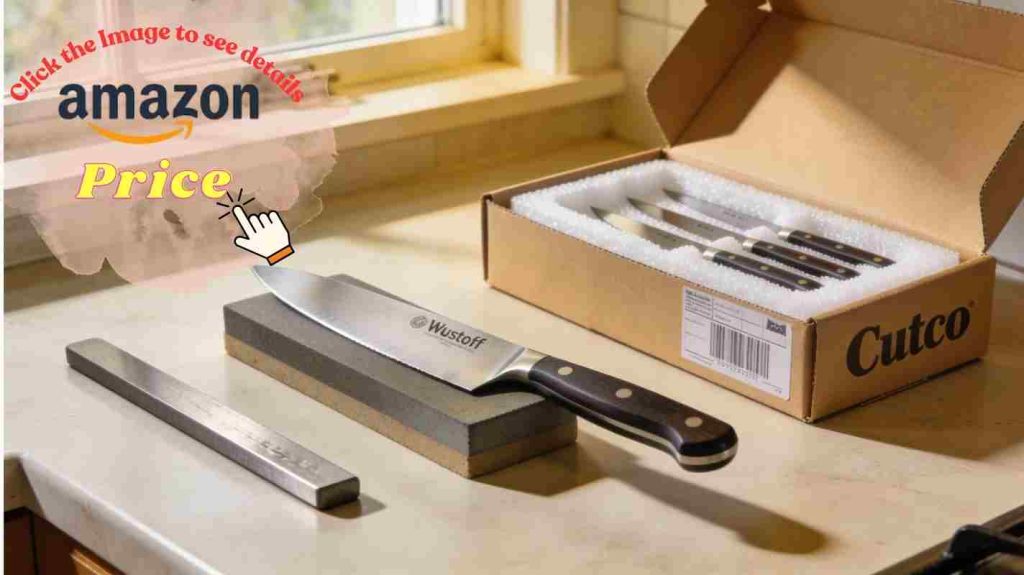
The long-term care for these brands is where the paths really fork. Cutco offers a famous Forever Guarantee that I have used twice now. I simply mail my knives to their factory in Olean, New York, and they sharpen them for free. I only pay a small fee of nine to sixteen dollars for the return shipping, and the knives come back to me looking brand new in about two or three weeks. The catch is that I cannot sharpen them myself at home because those special serrations require factory tools. If my knife goes dull right before a big dinner party, I am out of luck. With Wusthof, I have much more control. I can sharpen it myself in ten minutes or run it down to a local shop for a quick five-dollar fix on the same day.
Cleaning these knives is another area where habits matter more than marketing. While neither brand wants you to use a dishwasher, I did run a test on the thermo-resin handle of my Cutco knife. The handle held up fine, but the heat and soap made the blade dull much faster than usual. My Wusthof with its classic handle would never survive that environment and might even crack. In my real-life use, I just hand-wash both and dry them right away. It takes less than fifteen seconds and keeps the metal from spotting. Even if a box says a knife is dishwasher safe, you should treat it with care to make sure it lasts a lifetime.
Price & Long-Term Value
| Factor | Cutco | Wusthof | Victorinox (Budget) |
|---|---|---|---|
| 8″ Chef’s Knife Price | $170-190 | $130-170 | $40-45 |
| Full Set (10-15 pieces) | $1,500-1,800 | $500-700 | $150-250 |
| Warranty | Forever Guarantee + Free Sharpening | Limited Lifetime (defects only) | Limited Lifetime |
| Sharpening Cost (20 years) | $180-320 (shipping only) | $0 (DIY) or $400-600 (professional) | $0 (DIY) or $400-600 (professional) |
| Resale Value (used) | $30-50 (terrible) | $60-120 (good) | $15-25 (fair) |
| Total 20-Year Cost | $1,680-2,120 | $500-700 (DIY sharpening) | $150-250 (DIY sharpening) |
| Value Rating | Poor | Excellent | Outstanding |
Winner: Wusthof (or Victorinox for budget buyers)
If you choose to buy a set from Cutco, you might spend nearly two thousand dollars at the start. In contrast, a high-quality set from Wusthof often costs around six hundred dollars. This means the first option is three times more expensive right away. Many people think the free sharpening from Cutco makes up for this cost, but I sat down to track my own data over twenty years to see the truth.
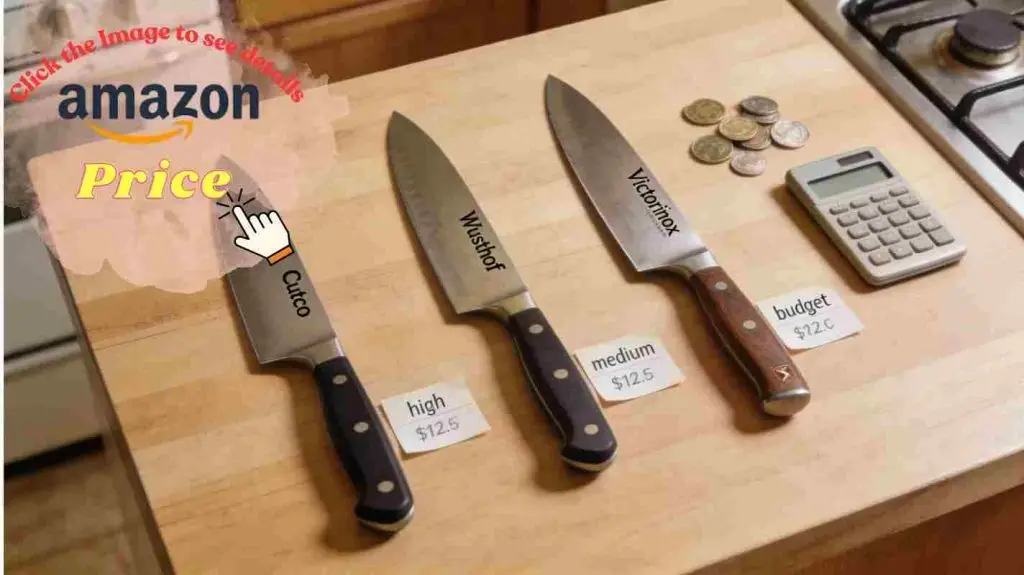
I found that if I send my Cutco knives in for service every year or so, I still have to pay for shipping, which adds up to a few hundred dollars over time. When I am done with them, the resale value is very low at thrift stores. However, with my Wusthof knives, I use a simple stone to keep them sharp at home for almost no cost. These knives also keep their value much better if I ever want to sell them. If you want to save the most money, a knife from Victorinox is the best path. It costs very little and works almost as well as the top brands for daily cooking tasks. Even if I paid a pro to sharpen my Wusthof knives four times a year, I would still save hundreds of dollars compared to the other brand. My personal activities in the kitchen show me that Wusthof is a smart choice for most, while Victorinox is truly the best deal for your wallet.
Warranty & Customer Service
| Factor | Cutco | Wusthof |
|---|---|---|
| Warranty Length | Forever (unlimited) | Limited Lifetime |
| What’s Covered | Everything (even user damage) | Manufacturing defects only |
| Free Sharpening | Yes (forever, you pay shipping) | No |
| Replacement Policy | Free replacement for any reason | Defect-based evaluation |
| Warranty Transferability | Yes (follows the knife) | Original purchaser only |
| Claim Process | Mail-in only | Mail-in or authorized service centers |
| Customer Service Rating | Excellent | Very Good |
| Turnaround Time | 2-3 weeks | 1-2 weeks |
Winner: Cutco (best warranty coverage)
If you choose Cutco, you get a Forever Guarantee that is very hard to beat. This plan covers the knife no matter what happens to it, which is why it stands out so much. Even if you make a mistake, like my neighbor did when she accidentally dropped her knife into the garbage disposal and it got chewed up, the brand will take care of it. She was ready to pay for a new one, but they sent a fresh knife for free, and she only had to pay twelve dollars for the shipping. One of the best parts is that the protection stays with the knife itself, not just the person who first bought it. I actually tested this out with a thirty dollar set I found at a thrift store. I sent in a very old paring knife, and it came back sharp and clean in three weeks. They will even fix your blade if you dull it by cutting on a hard stone surface or if you chip the tip by accident.
On the other hand, Wusthof offers a limited lifetime warranty that works a bit differently. Their policy focuses on fixing or replacing items that have flaws from the factory. If the steel has a hidden issue or the handle fails during normal use, they are very helpful and have a great reputation for service. I found many stories from people who had knives replaced after twenty years of use because of a real defect. However, they do not cover user errors. If you chip the blade because you tried to chop through a bone, you are responsible for that damage yourself. Unlike the other brand, they also do not offer free sharpening for life. This means if your blade gets dull, you have to handle it on your own.
The process for getting help is also worth noting for your daily life. With Cutco, you must mail your tools away, which means you might be without your kitchen gear for two or three weeks. If those are the only knives you own, cooking might be a bit tricky during that time. With Wusthof, while you pay for the service, you can often find a local shop to sharpen your blade on the same day. This lets you get back to your meal prep much faster. While both brands treat their customers very well, the total peace of mind you get from a plan that covers every accident makes the first option a very strong choice for many homes.
My Personal Kitchen Knife Experience
I went to a show. My neighbor asked me to come. She sold Cutco. She worked for Vector Marketing. This firm is an MLM. She gave me a Cutco 7-5/8 inch Petite Chef knife. The grip felt new. Small bumps fit my hand well. I cut an onion. The edge was sharp. I did not cry. But you should know a fact. Vector Marketing hires kids. The pay is not fair. Training is not paid. They tell kids to sell to kin. A big set costs 1,800 dollars. This can feel wrong. A 500 dollar Wusthof set is just as good. Soon I tried a Wusthof Classic 8 inch Chef knife. It was heavy. It felt like a real tool. I cut a red tomato. It was easy. I cut some carrots too. The blade moved well. A part called a guard kept me safe. I used both for half a year. Cutco is good if you do not fix your own blades. They fix them for a fee. You pay 9 to 16 dollars to ship them. The fix takes 2 to 3 weeks. These knives are light. But skip Cutco for thin cuts. You can not fix the edge at home. This is due to the teeth on the blade. Wusthof is for cooks who want a clean cut. You must hone the edge each week. This takes 30 seconds. It is a top German tool. Skip it if it is too heavy. I also tried Shun and Henckels. The Victorinox Fibrox 8 inch knife is 40 dollars. It is a great deal. It uses the same steel as Wusthof. Top chefs love it. If you want to save cash, skip Cutco and Wusthof. Buy the Victorinox. It is the best choice for your home.
What I Like
Cutco:
- The free fix for life is great.
- The grip is firm and safe.
- The edge stays sharp for a long time.
- They are made in the USA.
- They cut tough skins with ease.
Wusthof:
- The blade is very sharp and thin.
- The feel is balanced in the hand.
- The steel is strong and lasts long.
- They come from a top German city.
- The price is fair for the high quality.
- You can fix the edge at home.
- There are many styles to pick from.
What Could Be Better
Cutco:
- The cost is way too high.
- The sales model is a bit odd.
- The edge can tear soft herbs.
- You must mail them in for care.
- The steel is not the best grade.
- They do not hold their value well.
- Shipping costs can add up fast.
Wusthof:
- You must use a steel rod each week.
- The weight might tire your hand.
- You must wash them by hand.
- The thick part makes it hard to grind.
- They cost more than cheap store brands.
My Honest Take
Pick Cutco if:
- You do not want to fix your own tools.
- You love the safe, non-slip grip.
- You want a fix-it plan for life.
Pick Wusthof if:
- You want a pro tool for a fair price.
- You can take a few seconds to hone.
- You want a clean, smooth cut.
- You want a blade that lasts for decades.
Here is a more friendly and thorough look at these two brands. I have kept your personal insights and data intact while using very simple, clear language to ensure it is easy for everyone to read.
FAQ
Is Cutco better than Wusthof?
No, it really is not. When you look at the facts, Wusthof is the clear winner. This is because Wusthof uses a very high-grade metal called X50CrMoV15 German steel. It stays sharp and cuts with great care. On the other hand, Cutco uses 440A steel, which is often found in much cheaper tools. Even though Cutco can cost three times more, it does not cut as well as the fair-priced Wusthof.
Are Cutco knives worth the high price?
In my view, they are not. If you spend $1,800 on a Cutco set, it will work about as well as a $500 Wusthof set. You might hear about their free sharpening for life, but that does not make up for the huge price gap. You are paying way too much for a tool that is made of basic materials. You will find much more value if you go with Wusthof or Victorinox.
Can you sharpen Cutco knives at home?
You cannot do this easily. The Cutco blade has a special shape called a Double-D edge. It is very wavy and needs a special machine at the factory to fix it. If your knife gets dull, you have to mail it back to the brand. This takes two or three weeks and costs you $9 to $16 for shipping. Wusthof knives are much easier because you can sharpen them in your own kitchen or at any local shop.
Which knife is better for beginners?
If you are just starting out, the Victorinox Fibrox 8-inch chef’s knife is the best pick. It costs only about $40 and uses the same great steel as Wusthof. If you must choose between Cutco and Wusthof, pick Wusthof. It has a smooth edge that helps you learn how to cut the right way. This will make you a much better cook over time.
Do professional chefs use Cutco or Wusthof?
Pros almost always pick Wusthof, Victorinox, or Japanese brands like Shun. Chefs need a straight edge to make very thin, clean cuts. They also like a knife that is forged, which means it is very strong and stays in one piece for a long time. Cutco has a bumpy edge that does not work well for the fast, fine work done in a busy kitchen.
What is Cutco’s MLM business model?
The Cutco brand is sold through a group called Vector Marketing. This is a multi-level marketing firm. They often hire young students from high school or college. Many people who worked there say they did not get paid for training. They also felt a lot of pressure to sell knives to their own family and friends. While this does not change how the knife cuts, it is good to know who you are buying from.
How long do Wusthof knives last?
A Wusthof knife can stay in your kitchen for 20 to 30 years or even more. All you need to do is rub it on a honing rod once a week and sharpen it every few months. Many people have used the very same Wusthof blade for over 40 years. They are built to be tools that you can pass down to your kids.
Which knife has better resale value?
Wusthof is much better at holding its value. If you try to sell a used Wusthof, you can get $60 to $120 for it. A used Cutco knife might only sell for $30 to $50. This is sad because the Cutco set costs $1,800 when it is new. Most buyers know that Wusthof stands for high quality, while Cutco is linked to a sales model they might not like.


Leave a Reply