

Do you want to choose a German knife between Wusthof Classic and Wusthof Classic Ikon? This article helps you to find the best between them.
Pick the Classic if you have small hands. It costs less. It is light and cuts well. It is hard to sharpen at home. Check Price On Amazon
Pick the Ikon if your hands are big. It costs more but feels great. It is very easy to sharpen. Check Price On Amazon
Wusthof Classic vs Classic Ikon
I used both Wusthof Classic and Wusthof Classic Ikon knives side by side for months. Let me break down exactly what matters between them.
Blade Steel & Sharpness
| Feature | Wusthof Classic | Classic Ikon |
|---|---|---|
| Steel Type | X50CrMoV15 | X50CrMoV15 |
| Hardness | 58 HRC | 58 HRC |
| Sharpening Method | PETec forged | PETec forged |
| Edge Retention Timeline | 3-4 weeks with honing | 3-4 weeks with honing |
| Can Hold Fine Edge | Yes | Yes |
| Corrosion Resistant | Excellent | Excellent |
Winner: TIE — The blades are completely identical.
The blade steel and the level of sharpness between these two lines, you will find that they are actually the same. Both the Wusthof Classic and the Wusthof Classic Ikon use a steel type called X50CrMoV15. This steel has a hardness of 58 HRC. This means they both resist rust very well. They both use a special forging process called PETec to create the edge. When I tested both knives by cutting food every day for a full week, I could not feel any difference at all. Both blades sliced through soft tomato skin without any crushing. They both chopped herbs with ease. They both cut through hard carrots with a smooth glide. By the third week of my test, both blades lost the same amount of edge. I had to hone them both on a steel at the same time. The quality of the blade is just the same.

A big point to know is that you do not pay more to get a sharper Ikon blade. You pay for the handle and how it feels to sharpen it. Many people think the Ikon must be a better tool because it has a higher price. This is not true. The steel and the edge shape are the same. Both knives come from the factory with a total angle of 28 degrees. This means each side has a 14 degree angle. If you sharpen them at home, it is best to use an angle of 17 to 20 degrees per side. This helps the steel stay strong while staying sharp. If you try to make the edge too thin, like under 15 degrees, the metal might fold or roll while you cook. This is a key tip because a very thin edge can make the blade weak rather than better. The choice between them is about your hand, not the steel.
Handle Comfort & Which Knife Fits Your Hand
| Feature | Wusthof Classic | Classic Ikon |
|---|---|---|
| Handle Width | 16.7mm (narrow) | 20mm (wide) |
| Handle Material | POM plastic | POM plastic |
| Curve Design | Flat sides with edges | Rounded curves |
| Handle Length | Standard | Quarter inch longer |
| Best For Hand Size | Small-medium | Medium-large |
| Grip Fatigue (30+ min) | Lower | Varies by user |
Winner: Depends on your hand size — Different tools for different hands.
The Wusthof Classic has a handle that is 16.7mm wide. This narrow shape is flat on the sides. It works well if you have small hands. I have medium hands, and when I used it for a long time, it felt a bit tight. My fingers wrapped all the way around it. It felt like I was holding a pen too hard. After forty-five minutes of work, my hand felt a bit tired. It is a very precise tool, but it lacks the extra room some might need.

The Wusthof Classic Ikon is quite different. The handle is 20mm wide and a bit longer too. That extra 3.3mm of width makes a big change. When I held it, the round curves filled up my palm. There were no sharp edges to press into my skin. My wrist felt loose and calm. If you have large hands, this is the one for you. A friend with very large hands felt that the first knife was too small. He said the Ikon was just right.
To find your fit, you can use a simple test. Take a soft tape and wrap it around your hand just below your knuckles. If the loop is less than eight inches, you should pick the Classic. If it is more than ten inches, the Ikon will be the best choice for you. Those in the middle can use both, but the rounder grip of the Ikon is often more kind during a long day of cooking.
The Bolster Problem
| Feature | Wusthof Classic | Classic Ikon |
|---|---|---|
| Bolster Type | Full bolster | Half bolster |
| Bolster Blocks Whetstone | Yes, at heel | No, completely open |
| Can Sharpen Full Edge | About 95% | 100% |
| Sharpening Ease | Frustrating | Easy and smooth |
| DIY Sharpener Challenge | High | Minimal |
| Professional Sharpening | No issue | No issue |
Winner: Classic Ikon — If you sharpen at home, this is a game-changer.
The Wusthof Classic has a thick metal part that goes all the way down to the edge. This is a big problem if you like to sharpen your own knives at home. When I used my stone to sharpen the Classic, I ran into a wall. The metal part at the end of the blade stopped my stone from reaching the heel. This means I could not get the whole edge sharp. I had to skip the last inch of the blade or try a weird angle that did not work well. It was very annoying and made my work feel messy.

On the other hand, the Wusthof Classic Ikon has a half bolster. This small change makes a world of difference for a DIY fan. When I sharpened it, the stone slid right past the heel with no bumps or blocks. I was able to sharpen from the tip to the end in one smooth slide. If you sharpen your knives every month like I do, you will feel much happier with the Ikon. It feels easy and fast.
There is one big thing to keep in mind, though. This issue only matters if you do the work yourself. If you pay a pro to sharpen your knives for five or ten dollars, they can fix any blade. Pros have tools that handle full bolsters with no stress at all. If you plan to send your knives out, the bolster does not matter for your edge. In that case, you should just pick the handle that feels best in your hand. But for those of us who love the feel of a stone at home, the Ikon is the clear winner for a smooth and simple life.
Weight & Balance:
| Feature | Wusthof Classic | Classic Ikon |
|---|---|---|
| Total Weight (8-inch) | 9.1 oz | 9.8 oz |
| Weight Difference | Baseline | +0.7 oz (+7.7%) |
| Balance Point | Center at bolster | Toward handle |
| Feel For Pinch Grip | Blade-responsive | Handle-heavy |
| Feel For Handle Grip | Less optimal | Powers rocking motion |
| Arm Fatigue After 30 Min | Less likely | More if unaccustomed |
Winner: Depends on grip style — Neither is objectively better.
When I compared the Wusthof Classic and the Wusthof Classic Ikon, the differences in weight and balance were subtle but clear. The Classic weighs about 9.1 oz, while the Ikon is slightly heavier at 9.8 oz. This small gap of 0.7 oz might seem like nothing, but it changes how each knife moves. The Classic has its balance point right at the center. Because I like to use a pinch grip where my fingers sit right where the blade meets the handle, the Classic felt light and easy to control. It felt like it was floating in my hand, and my wrist did not get tired even after thirty minutes of prep work. The knife was very responsive and moved exactly how I wanted it to.
On the other hand, the Ikon has a different feel because the weight sits more toward the handle. At first, I found this a bit awkward since the back of the knife felt heavy. However, after I used it for two weeks, I started to see the perks. That extra weight helps create momentum. When I did a rocking motion to chop herbs, the weight of the handle did some of the work for me. My dad, who has larger hands and prefers to hold the knife just by the handle, loved the Ikon right away. He felt the back-heavy balance was a big plus for his style. In the end, the extra weight is about the same as a few paperclips. It does not make one knife better than the other. If you hold the blade, you will likely love the balance of the Classic. If you prefer to hold the handle, the Ikon will probably feel just right for you.
Sharpening Angle & How To Maintain These Knives
| Feature | Wusthof Classic | Classic Ikon |
|---|---|---|
| Factory Edge Angle | 14° per side | 14° per side |
| Recommended Home Sharpening | 17-20° per side | 17-20° per side |
| Honing Steel Use | Weekly | Weekly |
| Full Sharpening Frequency | Every 3-4 weeks | Every 3-4 weeks |
| Edge Rolls If Too Thin | Yes (under 15°) | Yes (under 15°) |
| Microbevel Recommended | Yes, at 20-22° | Yes, at 20-22° |
Winner: TIE — Maintenance needs are identical.
When you look at your Wusthof Classic and Classic Ikon knives, you might notice they arrive with a factory edge of 14 degrees on each side. While this makes them feel incredibly sharp right out of the box, it is often a bit too thin for the rigors of a busy home kitchen. Because the steel used in these knives has a hardness rating of 58 HRC, a helpful rule of thumb for durability is to subtract that hardness from 75, which gives you a more stable starting angle of 17 degrees. For my own cooking routine, I find that sharpening at 18 to 20 degrees per side provides the best balance of a keen edge and long-lasting strength. If you try to keep them at that factory 14-degree angle, the thin metal will likely roll or dull much faster than you would like.
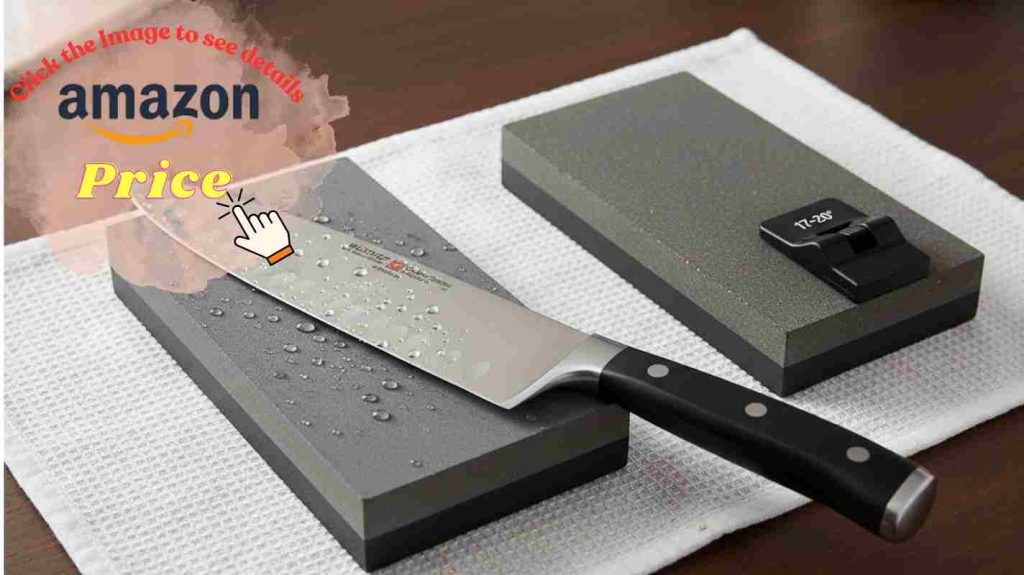
To keep these blades in top shape without constant grinding, I make it a habit to use a honing steel once a week to realign the edge. About every three to four weeks, I perform a full sharpening to reset the bevel. The best trick I have found for getting a professional result is to add a microbevel. After I finish sharpening at my usual 17 or 18 degrees, I do one light stroke at 20 or 22 degrees. This small adjustment creates a tiny secondary edge that adds a lot of toughness without making the knife feel dull. It might sound like a lot of steps at first, but once you get into the rhythm of maintaining your Wusthof tools this way, it becomes a simple and satisfying part of your kitchen care.
Warranty:
| Feature | Wusthof Classic | Classic Ikon |
|---|---|---|
| Lifetime Warranty | Yes | Yes |
| Covers Chipped Blade | NO | NO |
| Covers Bent Tip | NO | NO |
| Covers Edge Dullness | NO | NO |
| Covers Misuse Damage | NO | NO |
| Covers Accidents | NO | NO |
| What IS Covered | Manufacturing defects only | Manufacturing defects only |
Winner: TIE — Both have identical warranty coverage.
Both the Classic and the Ikon series come with a lifetime warranty, but this is a specific promise about quality rather than a plan for every accident. This warranty means the brand will replace a knife if it has a flaw from the factory, such as a crack in the steel or a mistake in the heat treatment. It acts as a stamp of approval on their own work and craftsmanship.

However, this coverage does not work like an insurance policy for daily life. If I chip the blade while I am sharpening it at home, or if a friend bends the tip by trying to pry open a jar, those moments are not covered. Even common issues like a dull edge from heavy use or a handle that cracks after being left in a sink are seen as wear and tear or improper care. The brand is essentially saying they will fix any error they made, but the day-to-day safety of the knife is in your hands once it leaves the box. Whether you choose the Classic or the Ikon, you are getting the same solid promise that the tool is made well, though you still need to treat it with a lot of care to keep it in top shape for years.
POM Handle Material:
| Feature | Wusthof Classic | Classic Ikon |
|---|---|---|
| Handle Material | POM (plastic) | POM (plastic) |
| Fading Resistance | Excellent | Excellent |
| Water Resistance | High | High |
| Warping Risk | Minimal | Minimal |
| Staining | Won’t stain | Won’t stain |
| Durability vs Wood | Superior | Superior |
| Maintenance | Hand-wash, dry | Hand-wash, dry |
Winner: TIE — Both use identical POM material.
When you look at the handle of a Wusthof Classic or a Wusthof Classic Ikon, you are touching a material called polyoxymethylene, or POM for short. This is a very tough type of plastic that engineers love to use. It is so strong that people use it to make ski bindings and eyeglass frames. In my own kitchen, I have used both of these knives for two years now. I try to be good and hand-wash them right away, but I will admit that I have left them in a wet sink overnight more than a few times. I also make sure to hone the blades every week to keep them sharp. Even with all that use, the handles still look brand new. They do not fade, they do not crack, and they do not warp at all.
The best part about POM is how well it handles water. Unlike wood, this material does not soak up moisture. Wood handles can swell up or shrink when they get wet, which leads to cracks over time. You also have to rub oil into wood to keep it healthy. With POM, you do not have to do any of that work. It is all about function. It will not stain if you get food on it, and it stays smooth in your hand. While some people think wood looks prettier or more natural, POM is the better pick for a busy cook who wants a tool that just works. You can wash it, dry it, and put it away without any worry. It is a simple, black, and very sturdy choice for any home.
Price Reality:
| Item | Wusthof Classic | Classic Ikon |
|---|---|---|
| 8-inch Chef’s Knife | $160-170 | $200-210 |
| Blade Quality | Identical | Identical |
| Performance | Identical | Identical |
| Professional Sharpening Cost | $10-15 per blade | $10-15 per blade |
| Annual Sharpening Cost | $40-60 | $40-60 |
| Resale Value | Excellent | Excellent |
Winner: Classic — Best raw value if blade quality is identical.
Both the Wusthof Classic and the Wusthof Classic Ikon 8-inch chef’s knives use the exact same high-quality blade. Since the blade quality and cutting performance are identical, the Classic is the clear winner for raw value. A Classic costs about 160 to 170 dollars, while the Ikon runs between 200 and 210 dollars. This 30 to 50 dollar difference is not small for a home cook. You should buy the Classic if you have small hands, like to pinch the blade, have a tight budget, or send your knives to a pro for sharpening. You get the same performance for less money.
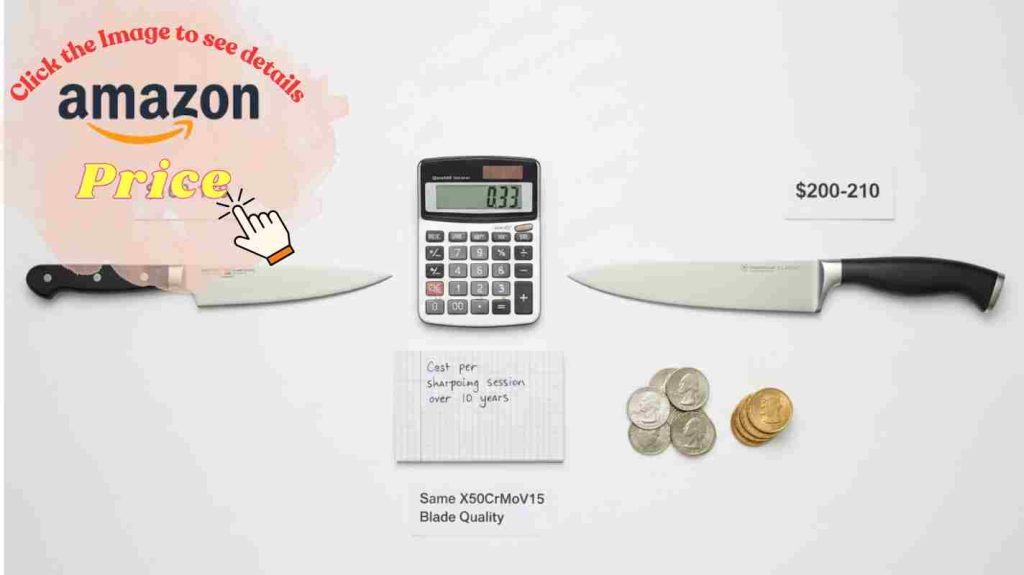
On the other hand, you should buy the Ikon if you have larger hands and sharpen your own tools at home. The Ikon lacks the heavy bolster at the heel of the blade, which makes it much easier to sharpen the entire edge. Even though the Ikon costs more, the real math over ten years shows that the extra 40 dollars adds less than 4 dollars per year to your cost. If you sharpen your knife twelve times a year, you are only spending 33 cents more per session for a much better grip. Professional sharpening costs about 10 to 15 dollars per blade for both styles, and both hold their resale value well. If better comfort saves you just two minutes of frustration, the extra cost is a very reasonable choice for your kitchen.
My Personal Chef’s Knife Experience
Getting a Wusthof Classic two years ago was a big step for me because the knife felt so solid in my hand. I loved how the heavy weight helped me mince garlic by doing most of the work for me. However, after six months of cooking, I ran into a real problem when it was time to sharpen it. The full bolster at the bottom of the blade blocked my stone and made it hard to reach the heel. I had to skip that part or hold the stone at a strange angle, which felt very clumsy. This frustration led me to try the Wusthof Classic Ikon to see if it worked any better.

As soon as I held the Ikon, I could feel that the weight had shifted back toward the handle. The wider grip filled my palm in a way that felt very steady and nice. When I finally sharpened it, the process was so much better because there was no metal block in my way. I could slide the whole blade across the stone in one easy move from start to finish. It made maintenance feel like a joy rather than a chore.
What really surprised me was that both knives used the same X50CrMoV15 steel and had the same 58 HRC hardness. When I spent a day dicing onions and potatoes, the blades cut exactly the same way. The only real change was how the handle felt and how simple it was to keep the edge sharp. The original knife is great if you like a light feel and a lower price, but the upgrade is worth it if you want more comfort and a much easier time at the sharpening stone.
The Best Knife for You
Wusthof Classic Strengths
- It is light. Your arm will not get tired.
- It fits small hands well.
- The price is low. You save cash.
- The blade is strong. It stays sharp.
- The grip feels warm in your hand.
- It is a top tool for the cost.
Wusthof Classic Ikon Strengths
- The handle is wide. It fills your palm.
- It is easy to sharpen. No metal gets in the way.
- The shape is smooth. It has nice curves.
- It feels good when you chop.
- It looks sleek and new.
- The weight helps you cut fast.
Wusthof Classic Cons
- The thick heel makes it hard to sharpen.
- A small part of the edge is hard to use.
- The handle is thin. Large hands may feel tight.
- The old style may feel stiff.
Wusthof Classic Ikon Cons
- It costs more. You pay for the feel.
- It is a bit heavy.
- Small hands may find it too big.
- The back weight takes time to learn.
Pick the Classic If:
- You have small hands.
- You pinch the blade.
- You want to save money.
- You like a light tool.
- A pro sharpens your gear.
Pick the Ikon If:
- You have large hands.
- You hold the handle.
- You sharpen at home.
- You like a curved grip.
- You can spend a bit more.
FAQ
Q: What is the main difference between Wusthof Classic and Classic Ikon?
A: Both use the same steel and have the same hardness. They cut the same way. The real change is the handle. Wusthof Classic Ikon has a wider handle at 20mm. Wusthof Classic is thinner at 16.7mm. The Ikon lacks a full guard at the heel. This makes it easier to sharpen. You pay $40 more for that ease and a new feel.
Q: Is the Wusthof Classic Ikon worth the extra $40?
A: It is worth it if you have large hands. It is also worth it if you sharpen your own tools once a month. The half guard saves you from a lot of stress. It is not worth it if you have small hands. It is also not worth it if a pro sharpens your gear. The blade metal is the same on both.
Q: Which knife is better for small hands?
A: Wusthof Classic is the best pick here. The handle is 16.7mm wide. This fits a small palm well. The 20mm grip on the Ikon may feel too big or bulky. Your hand size matters more than the name on the box.
Q: Can I sharpen the Wusthof Classic easily at home?
A: It is harder to do. The thick guard near the heel blocks your stone. You cannot hit the whole edge with ease. Wusthof Classic Ikon does not have this block. If you like to DIY your sharpening, get the Ikon. If you pay a pro to do it, both are fine.
Q: How long do both knives stay sharp?
A: Both stay sharp for about 3 to 4 weeks. This assumes you use a steel rod once a week. Both have the same metal. They hold an edge for the same time. How you care for them matters most.
Q: Which knife is lighter for long cooking sessions?
A: Wusthof Classic is lighter. It weighs 9.1 oz. Wusthof Classic Ikon weighs 9.8 oz. The 0.7 oz gap is small but you can feel it after an hour. The lighter Classic helps your arm stay fresh. How you hold the knife matters as much as the weight.
Q: Do both knives come with a real warranty?
A: Yes. Both have a limited life warranty. It covers flaws from the factory. It does not cover a chipped edge or a bent tip. It does not cover a dull blade or drops. It is not a plan for accidents.
Q: What grip style works best with each knife?
A: Wusthof Classic is great if you pinch the blade. It feels fast and light at the tip. Wusthof Classic Ikon is best if you hold just the handle. It has more weight in the back. This helps when you rock the blade to chop. Use the one that fits how you hold a knife.
Q: Is the Wusthof Classic Ikon better for professional chefs?
A: Both are used by pros. Some like the Classic because it is light and fast. Others like the Ikon for 12-hour days. It feels good in the hand for a long time. Pros pick what fits their own style.
Q: Should I buy Wusthof Classic or Ikon if I am new to quality knives?
A: Buy Wusthof Classic if you want to save money. You still get a top-tier blade. Buy Wusthof Classic Ikon if you have the cash and big hands. It is a great long-term tool. Both will show you what a real knife can do.


Leave a Reply