

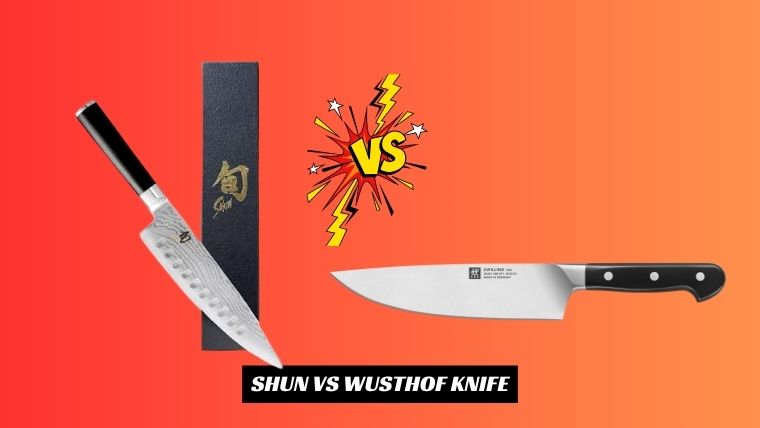
Do you want to choose between the Shun and the Wüsthof knives? Personally, I love both brands, but they have some differences you must acknowledge.
Shun brings thin, light steel from Japan that glides like a laser through soft food. However, its hard edge can chip on bone. Wüsthof builds thick, heavy blades in Germany that cut through hard squash with ease. However, the knife needs more frequent rod care.
- Winner: Shun Premier 8-Inch Chef’s Knife (for sharp cuts and free care for life) / Wüsthof Classic 8-Inch Chef’s Knife (for tough daily use)
- Best for Thin Slices & Soft Food: Shun Classic 8-Inch Chef’s Knife
- Best for Hard Prep & Busy Cooks: Wüsthof Classic 8-Inch Chef’s Knife —
Shun vs Wüsthof Knife
I have used my Shun Classic, Shun Premier, Wüsthof Classic, and Wüsthof Ikon on my wood board every night for years. Now, I am going to talk about edge life, blade weight, hand feel and many more:
1. Product Overview & Core Specs
| Feature | Shun Classic 8″ Chef’s Knife | Wüsthof Classic 8″ Chef’s Knife |
| Origin | Seki City, Japan | Solingen, Germany |
| Blade Length & Profile | 8 inches (Slim Japanese belly) | 8 inches (Deep Western belly) |
| Core Steel | VG-MAX super steel | X50CrMoV15 high-carbon steel |
| Cladding Layers | Yes (68-layer Damascus, 34 per side) | No (Single-piece mono-steel) |
| Full Tang | Yes (Sealed composite tang) | Yes (Visible full tang) |
| Lifetime Warranty | Yes (Limited life warranty) | Yes (Limited life warranty) |
| Free Factory Sharpening | Yes (Free for life by mail) | No (Paid care only) |
Winner: Shun Classic 8″ Chef’s Knife (Best for Layered Steel & Free Lifetime Care) / Wüsthof Classic 8″ Chef’s Knife (Best for Solid Mono-Steel Build)
Origin and Blade Profile
My Shun Classic 8″ Chef’s Knife comes from Seki City, Japan, the home of old sword smiths. When I unboxed mine, its slim 8-inch blade felt like a sleek sports car in my hand. My Wüsthof Classic 8″ Chef’s Knife comes from Solingen, Germany, with a deep 8-inch belly built for hard work. Pick the Shun Classic for fine Japanese craft, or grab the Wüsthof Classic for bold German muscle.
Core Steel and Damascus Cladding
The Shun Classic uses a hard VG-MAX steel core wrapped in 68 thin layers of steel. Those 34 layers per side form a wave look on my blade that hides tiny scratches from daily prep. The Wüsthof Classic uses one solid block of X50CrMoV15 steel with no outer wrap at all. Choose the Shun Classic for artful layered steel, or pick the Wüsthof Classic for a plain, solid metal blade.
Full Tang Build and Balance
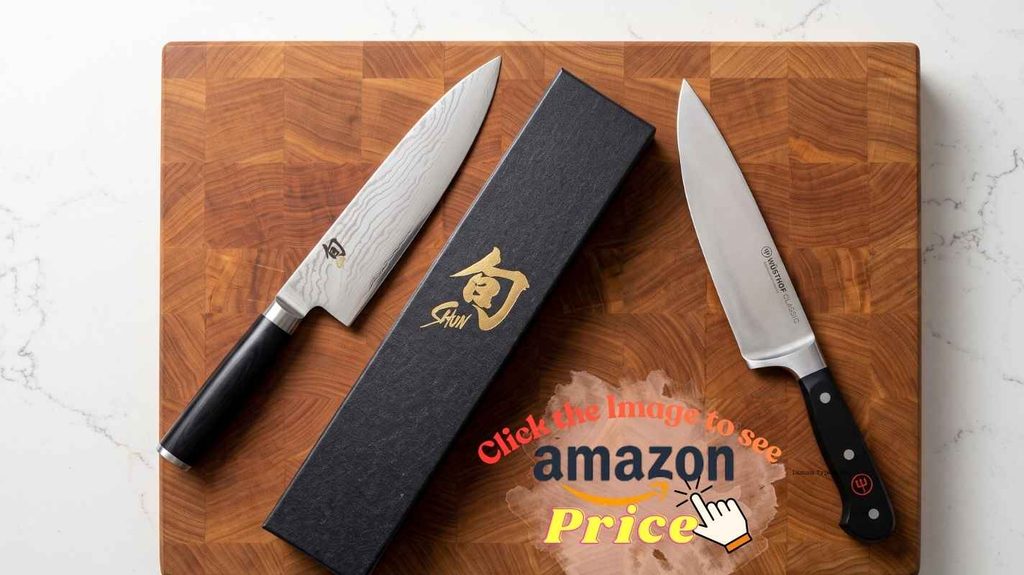
Both my Shun Classic and my Wüsthof Classic have a strong full tang that runs through the grip. On my Wüsthof Classic, you can see that bare steel strip right between the two black handle sides. On my Shun Classic, the composite tang stays sealed inside the handle so food juice cannot seep in. Grab the Wüsthof Classic for an old-school bare tang, or buy the Shun Classic for a smooth, sealed spine.
Warranty and Free Factory Care
Both brands back these knives with a full life warranty against factory flaws. After a year of daily meals, I mailed my Shun Classic to Shun, and they put a fresh edge on it for free. Wüsthof does not give free mail care for the Wüsthof Classic, so you must hone it yourself or use a local shop. Go with the Shun Classic if you want free edge care for life, or pick the Wüsthof Classic if you sharpen blades at home.
2. How They’re Made
| Feature | Shun Classic 8″ Chef’s Knife | Wüsthof Classic 8″ Chef’s Knife |
| Manufacturing Method | Handcrafted Kasumi forging | Precision machine-forged & hand-buffed |
| Production Steps | 100+ hands-on steps | 40+ forged & polished steps |
| Spine Thickness (at Heel) | 2.0 mm (Slim, agile spine) | 2.9 mm (Thick, sturdy spine) |
| Blade Rigidity | Stiff, thin core (Zero flex) | Thick, shock-absorbing body |
| Impact Resistance | Low (Can nick if twisted) | Very High (Takes hard hits) |
| Survives Floor Drops | No (Thin tip can snap) | Yes (Blade and tip stay whole) |
| Expected Lifespan | 15+ years (With gentle use) | 20+ years (Built like a tank) |
Winner: Wüsthof Classic 8″ Chef’s Knife (Best for Toughness, Thick Spine & 20+ Year Lifespan) / Shun Classic 8″ Chef’s Knife (Best for 100-Step Artisanal Handcraft)
Forging Style and Build Steps
Smiths shape my Shun Classic 8″ Chef’s Knife by hand across more than 100 steps. You can feel that fine work when you rub your thumb along its smooth spine. Wüsthof forges my Wüsthof Classic 8″ Chef’s Knife with machines and buffs it by hand in 40 steps. Pick the Shun Classic for true hand craft, or grab the Wüsthof Classic for a tough machine build.
Spine Thickness and Blade Feel
Hold both knives from the top, and you will see a big gap in width. My Wüsthof Classic has a thick 2.9 mm spine that gives my palm a wide rest for hard pushes. My Shun Classic has a slim 2.0 mm spine that glides through tall food with zero drag. Choose the Shun Classic for a thin glide, or buy the Wüsthof Classic for a thick, sturdy spine.
Impact Strength on the Board
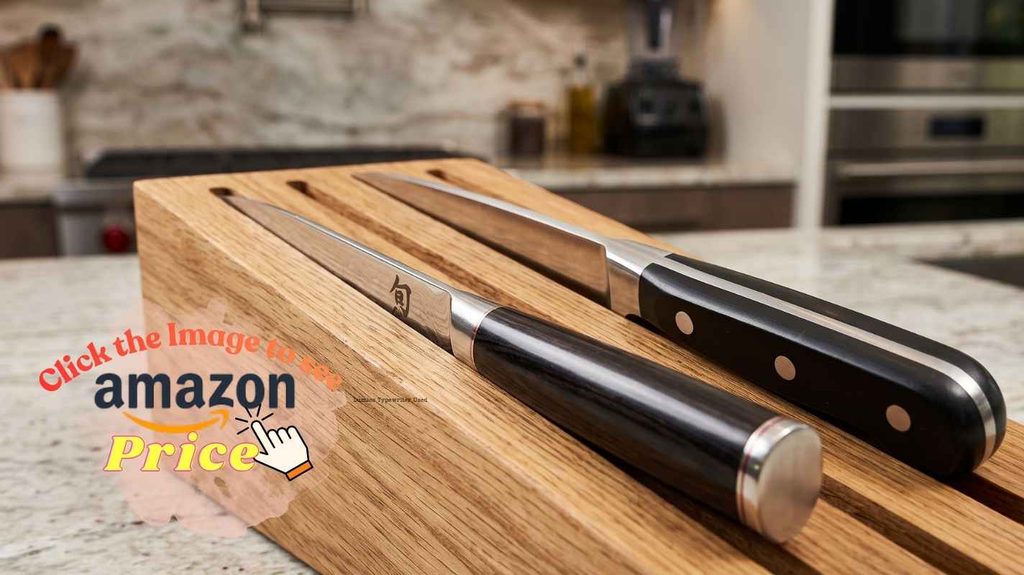
A thin blade brings a real risk when dinner prep gets fast and rough. When I twisted my Shun Classic on a hard seed once, the thin blade took a small nick. My Wüsthof Classic takes hard hits and smashes garlic cloves with its flat side without a scratch. Go with the Wüsthof Classic for rough board work, or pick the Shun Classic for smooth, careful cuts.
Surviving Drops and Long Life
Slips happen in a busy kitchen, and hard floors test how a knife holds up. When a friend dropped a Shun Classic on floor tile, the thin tip snapped right off like glass. My Wüsthof Classic fell off my counter once and stayed whole, which is why it lasts over 20 years. Buy the Wüsthof Classic for a tank that lasts, or get the Shun Classic if you handle blades with care.
3. Blade Hardness and How Sharp It Gets
| Feature | Shun Classic 8″ Chef’s Knife | Wüsthof Classic 8″ Chef’s Knife |
|---|---|---|
| Rockwell Hardness (HRC) | 60–61 HRC (Very hard core) | 58 HRC (Tough, forgiving steel) |
| Factory Edge Angle (Per Side) | 16° listed (~13° tested) | 14° listed (~15.75° tested) |
| Total Inclusive Angle | 32° listed (~26° tested) | 28° listed (~31.5° tested) |
| Factory Sharpening Tech | Hand-finished on water stones | PEtec computer laser grind |
| Edge Grind & Geometry | Flat ground (Ultra-thin behind edge) | Western V-edge (Wider shoulder) |
| Sharpness Out of the Box | Extreme (Scalpel-thin bite) | Very High (Crisp, toothy bite) |
| Hardness Trade-Off | Prone to tiny micro-chips | Edge rolls safely instead of chipping |
Winner: Shun Classic 8″ Chef’s Knife (Best for Razor-Thin Geometry & Out-of-the-Box Sharpness) / Wüsthof Classic 8″ Chef’s Knife (Best for Chip-Free Rolled Edge & PEtec Consistency)
Rockwell Hardness and Steel Bite
My Shun Classic 8″ Chef’s Knife heats its steel to a very hard 60 to 61 HRC. That high score lets the thin metal hold a fine, glass-like point during prep. My Wüsthof Classic 8″ Chef’s Knife sits at a softer 58 HRC, which gives the edge a bit of safe flex. Pick the Shun Classic for rock-hard steel, or grab the Wüsthof Classic for a softer, forgiving edge.
Factory Angles vs Real-World Tests
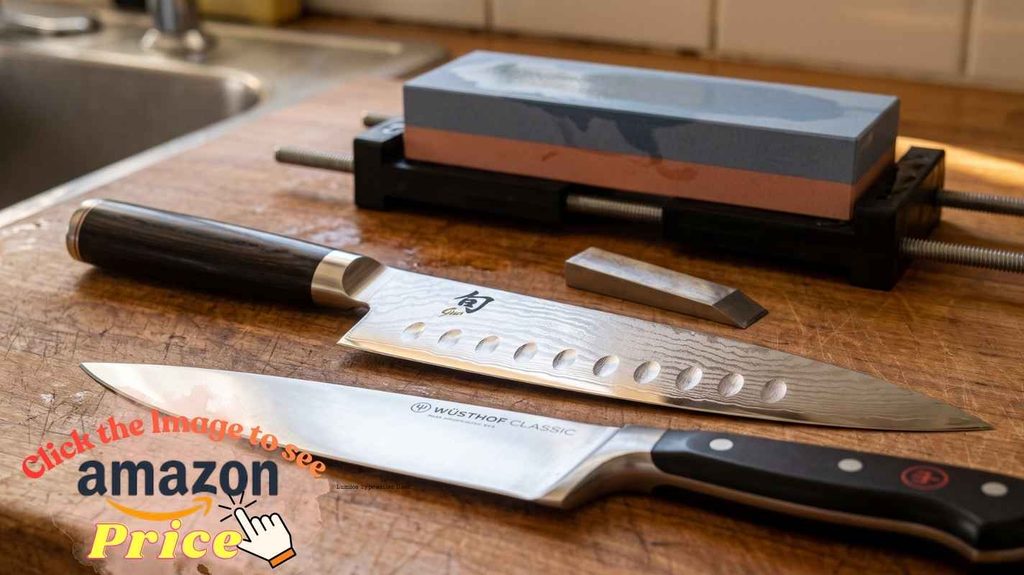
On paper, Wüsthof lists a 14-degree edge per side on the Wüsthof Classic, while Shun lists 16 degrees on the Shun Classic. Yet when I checked both blades on my angle gauge at home, my Shun Classic read near 13 degrees per side, and my Wüsthof Classic sat near 15.75 degrees. Even at similar angles, the Shun Classic cuts with less force because the metal right behind the edge is much thinner. Choose the Shun Classic for a thin, effortless wedge, or buy the Wüsthof Classic for a sturdy V-edge.
Hand Stone Polish vs PEtec Laser Grind
Smiths finish my Shun Classic by hand on fine wet stones until the edge shines like a mirror. Out of the box, it felt right between a chef knife and a razor blade in my hand. Wüsthof uses its PEtec laser tool to grind the Wüsthof Classic to an even, toothy bite from tip to heel. Go with the Shun Classic for a slick, hand-polished glide, or pick the Wüsthof Classic for a laser-measured factory edge.
Micro-Chips vs Rolled Edges
Hard steel and soft steel act in two very different ways when they hit a hard spot on your board. Because my Shun Classic is so hard at 60 to 61 HRC, the thin edge can get tiny micro-chips if you scrape a bone. Because my Wüsthof Classic sits at 58 HRC, its edge simply bends or rolls to the side instead of cracking. Buy the Shun Classic for pure slicing speed, or get the Wüsthof Classic if you never want to worry about edge chips.
4. Weight and How It Feels in Your Hand
| Feature | Shun Classic 8″ Chef’s Knife | Wüsthof Classic 8″ Chef’s Knife |
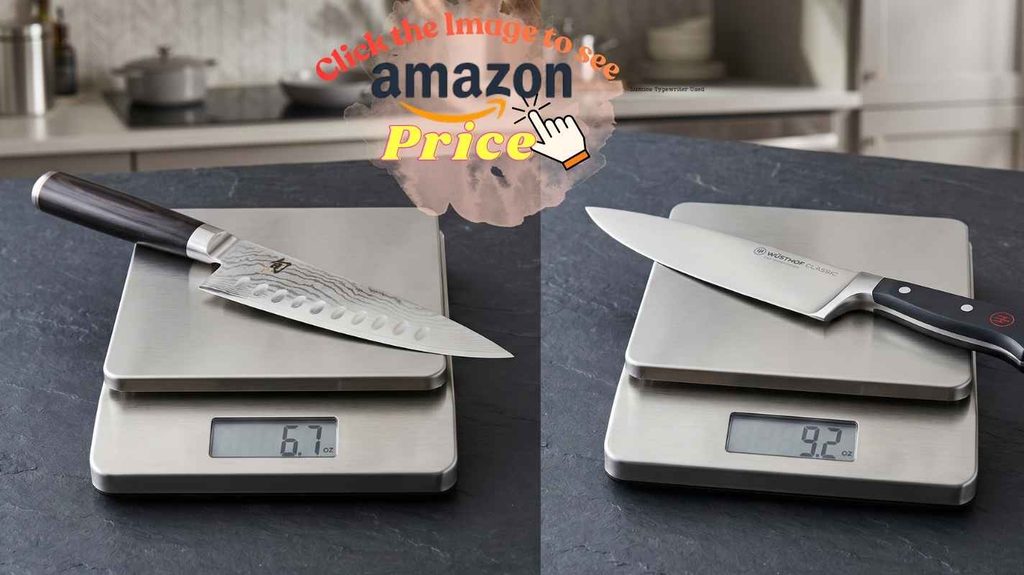
| Total Weight | 6.7 oz (190 g) | 9.2 oz (260 g) |
| Weight Difference | 2.5 oz (70 g) lighter (~27% lighter) | 2.5 oz (70 g) heavier (~37% heavier) |
| Center of Balance | Right at the pinch-grip neck | Slightly rear-weighted at the heel |
| Best Grip Style | Front pinch grip | Full handle grip or pinch grip |
| Natural Cutting Style | Smooth push and pull slicing | Western rock-chopping |
| Downward Gravity Assist | Low (Needs light wrist speed) | High (Weight drops through food) |
| Hand Fatigue (30+ Min Prep) | Very Low (Light & nimble) | Moderate (Can tire smaller hands) |
Winner: Shun Classic 8″ Chef’s Knife (Best for Featherlight Balance & Zero Wrist Fatigue) / Wüsthof Classic 8″ Chef’s Knife (Best for Heavy Rock-Chopping & Gravity Assist)
Total Weight on the Scale
When I set both blades on my kitchen scale, the weight gap jumped right out at me. My Shun Classic 8″ Chef’s Knife weighs just 6.7 ounces (190 grams), which feels light as a leaf in my palm. My Wüsthof Classic 8″ Chef’s Knife weighs 9.2 ounces (260 grams), making it a full 2.5 ounces heavier. Pick the Shun Classic for a light, fast blade, or grab the Wüsthof Classic if you love a heavy tool.
Balance Point and Grip Style
Where that weight sits changes how the knife moves in your hand. My Shun Classic balances right at the front neck, so it feels like part of my hand when I use a pinch grip. My Wüsthof Classic puts more weight back at the heel, which feels rock steady when I wrap all my fingers around the grip. Choose the Shun Classic if you use a front pinch grip, or buy the Wüsthof Classic for a planted handle grip.
Push Slicing vs Rock-Chopping
Each blade guides your hand into a very different rhythm on the board. Because my Shun Classic is light and slim, I glide it forward and back in smooth push and pull cuts. Because my Wüsthof Classic is heavy with a deep curve, I keep the tip on the wood and rock-chop through tall piles of food. Go with the Shun Classic for clean push and pull slices, or pick the Wüsthof Classic if you rock-chop fast.
Gravity Assist vs Wrist Fatigue
When I prep a big meal for 30 minutes straight, blade weight can help or tire out my wrist. The heavy 9.2-ounce Wüsthof Classic uses its own weight to drop down through hard roots, though it tires my wrist after half an hour. My 6.7-ounce Shun Classic never wears out my hand during long prep nights, though I have to push it through dense food. Buy the Shun Classic to stop wrist ache on long nights, or get the Wüsthof Classic to let heavy steel do the downward work.
5. The Bolster
| Feature | Shun Classic 8″ Chef’s Knife | Wüsthof Classic 8″ Chef’s Knife |
| Bolster Design | Half bolster (Sloped, open heel) | Full bolster (Thick heel guard) |
| Usable Cutting Edge | 100% tip to heel (Full 8″ cuts) | ~95% edge (Back 0.25″ blocked) |
| Finger Guard Protection | Moderate (Exposed sharp heel) | Very High (Full steel finger stop) |
| Pinch-Grip Neck Shape | Slim, tapered steel collar | Thick, squared steel shoulder |
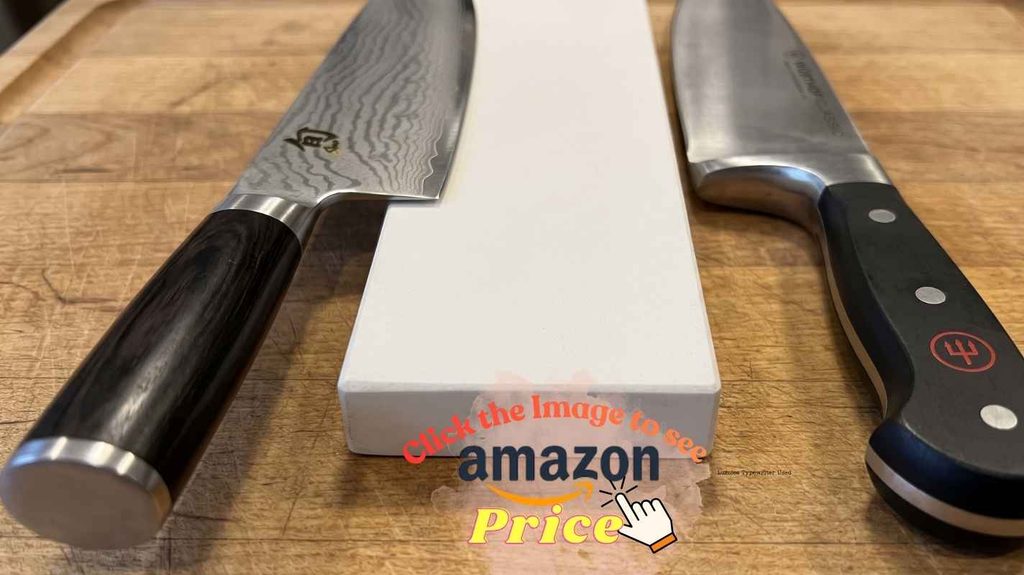
| Whetstone Clearance | Full flat pass from tip to heel | Guard blocks stone at back heel |
| DIY Stone Sharpening Time | 15–20 minutes (Hard steel, open heel) | 10–15 minutes (Soft steel, blocked heel) |
| Long-Term Board Contact | Stays flat on the board for life | Can form a small gap near the heel |
Winner: Shun Classic 8″ Chef’s Knife (Best for 100% Usable Edge & Easy Flat Stone Honing) / Wüsthof Classic 8″ Chef’s Knife (Best for Full Finger Protection)
Half Bolster vs Full Heel Guard
The bolster is the metal neck between the grip and the blade, and these two knives take opposite paths. My Shun Classic 8″ Chef’s Knife uses a sloped half bolster that leaves the back heel wide open. My Wüsthof Classic 8″ Chef’s Knife drops a thick steel guard all the way down to the cutting edge. Pick the Shun Classic for a sleek open heel, or grab the Wüsthof Classic for a full traditional guard.
Finger Safety and Pinch Grip Feel
That thick steel wall on my Wüsthof Classic acts like a shield so my finger can never slip onto the blade. It feels super safe when I chop fast with wet hands, though the wide neck feels bulky in a close pinch grip. My Shun Classic has a slim, sloped collar that fits my thumb and finger with ease, though you must watch the sharp back corner. Choose the Wüsthof Classic for top finger safety, or buy the Shun Classic for a smooth pinch grip.
Full Usable Edge on the Board
An open heel changes how much of the 8-inch blade actually cuts your food. With my Shun Classic, 100% of the blade is sharp, so I use the back heel to pop out spud eyes or split thick stems. On my Wüsthof Classic, the thick guard blocks the last quarter inch of the edge from cutting at all. Go with the Shun Classic to use every inch of steel, or pick the Wüsthof Classic if you only chop with the front and belly.
Whetstone Work and the Board Gap
The real test of a bolster shows up after a few years of home stone care. My Shun Classic lays flat on my stone from tip to heel, takes 15 to 20 minutes to sharpen, and touches my board flat for life. On my Wüsthof Classic, the softer steel takes just 10 to 15 minutes on a stone, but the guard blocks the back edge and leaves a small gap on the board over time. Buy the Shun Classic for easy flat stone work, or grab the Wüsthof Classic if you want a built-in finger guard.
6. Price and Real Cost Over Time
| Feature | Shun Classic 8″ Chef’s Knife | Wüsthof Classic 8″ Chef’s Knife |
|---|---|---|
| Upfront Street Price (8″ Chef) | ~$150–$190 | ~$170 |
| Upfront Price Difference | Within $20 of Wüsthof | Within $20 of Shun |
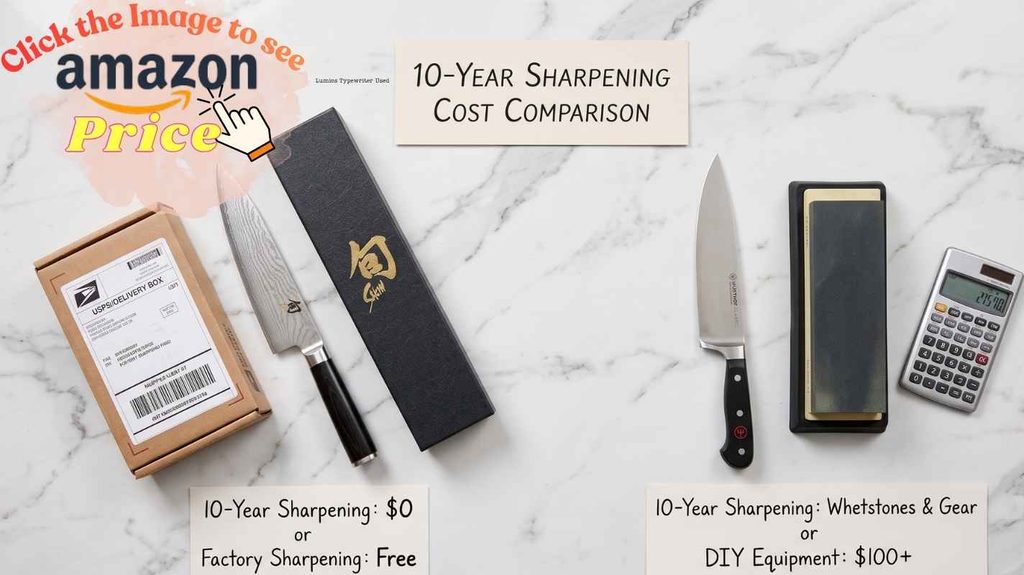
| Cost Per Pro Sharpening | $0 service (~$10 mail postage) | ~$40 ($5 per inch local rate) |
| Annual Sharpening Spend | ~$10–$20 (Postage only) | ~$40–$80 (Local pro shop) |
| 10-Year Sharpening Spend | ~$100 (Mail postage over 10 yrs) | ~$400 (Pro shops over 10 yrs) |
| Total 10-Year Cost (Pro Care) | ~$250–$290 | ~$570 |
| Total 10-Year Cost (DIY Stone) | ~$150–$190 (~$15–$19/yr) | ~$170 (~$17/yr) |
Winner: Shun Classic 8″ Chef’s Knife (Best 10-Year Value with Free Factory Care) / Wüsthof Classic 8″ Chef’s Knife (Equal ~$17/Year Value for DIY Home Sharpeners)
Upfront Street Price in Stores
When I shopped for both knives in US stores, their day-one price tags sat very close together. My Shun Classic 8″ Chef’s Knife sells for $150 to $190, depending on seasonal kitchen sales. My Wüsthof Classic 8″ Chef’s Knife sits right in the middle at about $170 on most days. Pick the Shun Classic if you spot a $150 sale, or grab the Wüsthof Classic for a steady $170 price tag.
Cost Per Sharpening Trip
The real money gap opens up the first time your blade loses its factory bite. A local knife shop charges $5 per inch, so sharpening my 8-inch Wüsthof Classic costs $40 per visit. When my Shun Classic gets dull, I mail it to Shun’s shop, and they sharpen it for free while I pay about $10 for postage. Choose the Shun Classic to skip $40 shop bills, or buy the Wüsthof Classic if you prefer same-day local care.
Ten-Year Cost with Pro Care
Those shop trips add up fast when you look at your wallet over ten full years. Mailing my Shun Classic in once a year costs about $100 in shipping over ten years, bringing my total cost to $250 to $290. Taking my Wüsthof Classic to a pro shop adds around $400 in fees, pushing its ten-year cost to $570. Go with the Shun Classic to save nearly $300 over ten years, or pick the Wüsthof Classic if you do not mind paying a local pro.
Ten-Year Cost with Home Stones
You can flip this math on its head if you sharpen your own blades on a wet stone at home. When I hone both blades at my sink, I spend zero extra cash on mail postage or shop fees. That drops the real cost to just $15 to $19 a year for my Shun Classic and $17 a year for my Wüsthof Classic. Buy the Wüsthof Classic if you sharpen on your own stones at home, or get the Shun Classic if you never want to touch a whetstone.
7. Hand Comfort and How the Handle Feels
| Feature | Shun Classic 8″ Chef’s Knife | Wüsthof Classic 8″ Chef’s Knife |
| Handle Material | Resin-treated ebony PakkaWood | Synthetic Polyoxymethylene (POM) |
| Handle Length | 5.0 inches (127 mm) | 5.0 inches (127 mm) |
| Grip Cross-Section | D-shaped (Offset right-hand ridge) | Contoured Western shape (Rear hook) |
| Left- & Right-Hand Fit | Best for right-handed cooks | Ambidextrous (Fits left & right hands) |
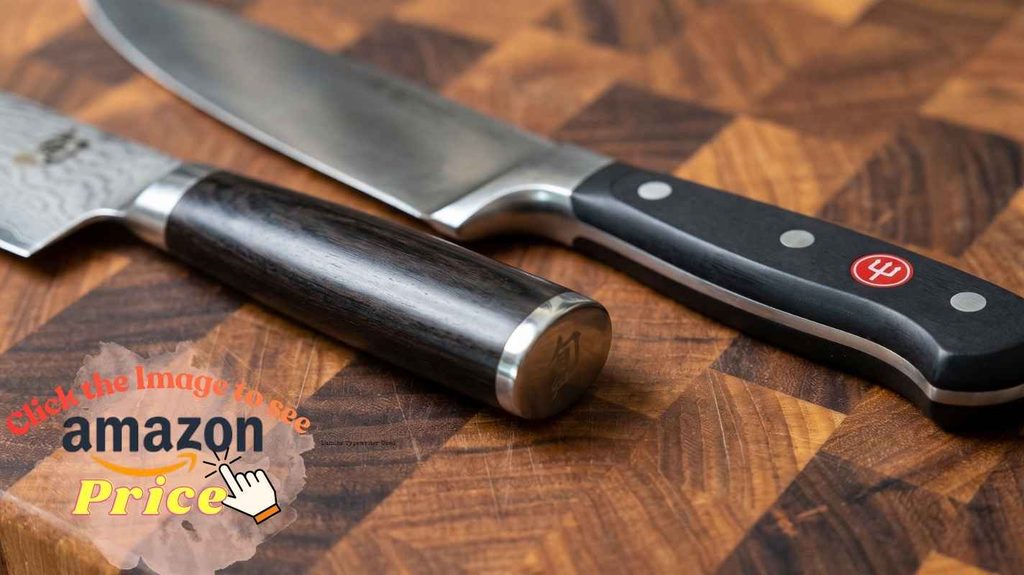
| Rivets & Seams | Rivet-free smooth wood barrel | Triple-riveted with visible seams |
| Best for Hand Size | Small to Medium hands | Medium to Large hands |
| Wet Grip & Shell Durability | Warm, slip-free wood (Resists cracking) | Secure wet grip (POM can crack if dropped) |
Winner: Shun Classic 8″ Chef’s Knife (Best for Warm PakkaWood Feel & Seamless Build) / Wüsthof Classic 8″ Chef’s Knife (Best for Left-Handed Cooks & Large Hands)
PakkaWood vs Synthetic POM Grip
Hold both knives side by side, and your palm will feel the difference right away. My Shun Classic 8″ Chef’s Knife uses dark PakkaWood sealed with resin, so it feels warm and rich like polished wood. My Wüsthof Classic 8″ Chef’s Knife uses black POM plastic locked down with three metal rivets. Pick the Shun Classic for warm wood charm, or grab the Wüsthof Classic for a classic riveted work grip.
D-Shape Curve vs Western Contour
Both handles measure 5.0 inches long, but they curve in two very different ways. My Shun Classic has a small D-shape ridge on the right side that tucks neatly into my right fingers. My Wüsthof Classic uses an even Western curve with a back hook that fits left and right hands the exact same way. Choose the Shun Classic if you cut with your right hand, or buy the Wüsthof Classic if you are left-handed.
Hand Size and Wet Grip Control
Handle girth matters when your hands are small or slick with oil and tomato juice. The slim, round wood barrel on my Shun Classic fits small to medium hands best and stays grippy when wet. The wider belly on my Wüsthof Classic fills out medium to large palms so long fingers do not cramp. Go with the Shun Classic for smaller hands, or pick the Wüsthof Classic if you have large hands.
Rivet Seams and Long-Term Cracking
Years of kitchen use show how each grip holds up to bumps and wash water. My Shun Classic has zero rivets and sealed wood, so food gunk cannot hide in seams and the handle never cracks. On old Wüsthof Classic knives that took hard floor drops over the years, I saw the stiff plastic grip crack on seven out of ten blades. Buy the Shun Classic for a smooth, crack-free wood handle, or get the Wüsthof Classic if you store your blade safely on a rack.
8. How Long the Edge Stays Sharp
| Feature | Shun Classic 8″ Chef’s Knife | Wüsthof Classic 8″ Chef’s Knife |
| Days Until Noticeably Dull | 30–45 days of daily home use | 10–14 days without rod care |
| Honing Rod Schedule | Once a week (Light touch-up) | Before each meal prep |
| Safe Honing Rod Type | Smooth ceramic rod only (No steel) | Grooved steel or ceramic rod |
| Leather Strop Response | Very High (Razor bite in 5 passes) | High (Smooths out rolled edge) |
| Full Sharpening Interval | Every 6–12 months | Every 3–6 months |
| Pull-Through Sharpener Safe | No (Chews up thin edge) | Fair (Works in a pinch) |
| Factory Mail-In Wait Time | 4–6 weeks turnaround by mail | N/A (Same-day home or local care) |
Winner: Shun Classic 8″ Chef’s Knife (Best for Long 30–45 Day Edge Life & Yearly Sharpening) / Wüsthof Classic 8″ Chef’s Knife (Best for Fast 10-Second Steel Rod Touch-Ups)
Days of Peak Bite on the Board
In my home kitchen, I tracked how many dinners I could cook before each blade lost its fresh bite. My Shun Classic 8″ Chef’s Knife glided through ripe tomato skins for 30 to 45 straight days without touching a rod. My Wüsthof Classic 8″ Chef’s Knife started to slide on slick skins after just 10 to 14 days of board work. Pick the Shun Classic for an edge that lasts a full month on its own, or grab the Wüsthof Classic if you do not mind quick daily tune-ups.
Ceramic Rods vs Steel Honing Rods
How you tune up each blade between meals makes a huge difference. With my Wüsthof Classic, I swipe it four times down a grooved steel rod right before I cook, and the sharp bite snaps right back. Never use a metal honing rod or a pull-through slot on a Shun Classic, as rough metal will rip tiny teeth out of the thin edge. Choose the Wüsthof Classic for fast steel rod swipes before dinner, or buy the Shun Classic and tune it once a week on a smooth ceramic rod or leather strop.
Full Sharpening Intervals
Even with good rod habits, every kitchen knife needs a fresh bevel put back on the edge over time. My Shun Classic only needs a full stone session once every 6 to 12 months in my kitchen. My Wüsthof Classic needs a full stone sharpening every 3 to 6 months to bring back its crisp V-edge. Go with the Shun Classic to cut your sharpening chores down to once a year, or pick the Wüsthof Classic if you enjoy regular stone care.
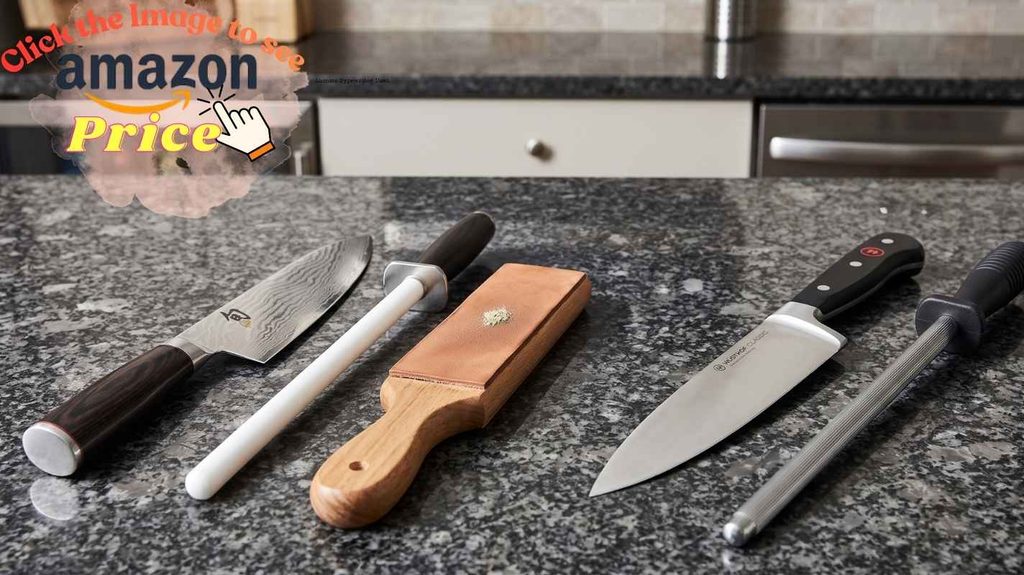
Mail-In Wait Time vs Same-Day Care
There is one real catch if you use Shun’s free mail care instead of your own stone. When I sent my Shun Classic in by mail, I had to wait four to six weeks for my blade to come back home. With my Wüsthof Classic, a quick home pass or a trip to a local shop puts the knife back on my board the very same day. Buy the Shun Classic if you keep a spare knife in your drawer during mail trips, or get the Wüsthof Classic if you use one main blade every night.
9. Kitchen Performance (Food-by-Food Test)
| Task | Shun Classic 8″ Chef’s Knife | Wüsthof Classic 8″ Chef’s Knife |
| Slicing Ripe Tomatoes | Perfect (Paper-thin, zero squish) | Very Good (Best after a quick rod swipe) |
| Dicing Yellow Onions | Excellent (Zero cell crush or tears) | Good (Wider wedge splits thick layers) |
| Slicing Raw Fish & Meat | Perfect (Clean sashimi-grade pulls) | Fair (Too thick for thin raw fish) |
| Mincing Fresh Herbs | Excellent (Clean ribbons, no bruising) | Excellent (Fast rock-chopping machine) |
| Wet Potato Release | Good (Wave finish eases drag) | Fair (Smooth steel holds wet spuds) |
| Chopping Butternut Squash | Poor (Can bind and twist in dense flesh) | Excellent (Powers straight through) |
| Jointing Whole Chicken | No (High risk of edge chips on bone) | Yes (Cuts through bird joints safely) |
| Cold Roasts & Thick Rinds | No (Never use on hard rinds or ice) | Good (Handles melon rinds & cold meat) |
Winner: Tie — Shun Classic 8″ Chef’s Knife (Best for Soft Produce, Herbs & Raw Fish) / Wüsthof Classic 8″ Chef’s Knife (Best for Hard Squash, Poultry Joints & Tough Prep)
Tomatoes, Onions, and Tear-Free Cuts
Soft skins and crisp layers show right away how cleanly a blade really cuts. When I pulled my Shun Classic 8″ Chef’s Knife through a ripe tomato and a big onion, it left a dry board and zero tears in my eyes. My Wüsthof Classic 8″ Chef’s Knife cuts both foods well, though its wider shoulder presses out a bit more juice and onion mist. Pick the Shun Classic for paper-thin tomato slices and tear-free onions, or grab the Wüsthof Classic for fast daily dicing.
Raw Fish, Herbs, and Wet Potatoes
Soft fish and wet roots test how smoothly steel glides without tearing or sticking. My Shun Classic slides through raw salmon in one clean pull and slices fresh basil with zero dark, bruised edges. When I cut wet potatoes, the wave finish on my Shun Classic lets slices drop off easier than the flat, smooth side of my Wüsthof Classic. Choose the Shun Classic for raw fish and neat herb ribbons, or buy the Wüsthof Classic to rock-chop big piles of parsley and garlic.
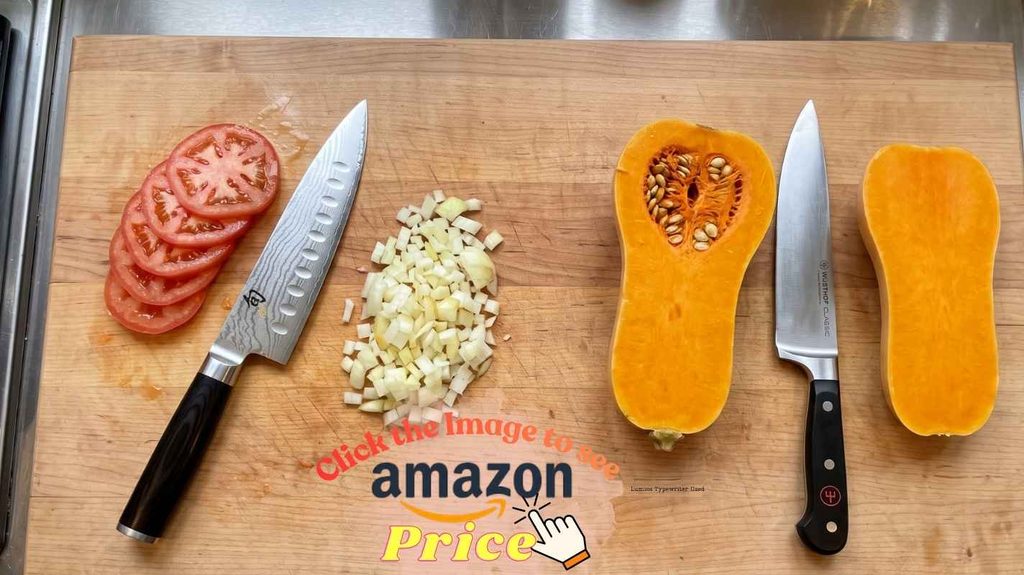
Hard Squash and Thick Rinds
Dense winter crops flip the score in a hurry on my wood board. When I pushed my Shun Classic into a hard butternut squash, the thin blade bound up in the tight flesh and made me fear a twist. My Wüsthof Classic split that same squash and a thick melon rind right down the middle in one firm push. Go with the Wüsthof Classic if you cook lots of hard squash and roots, or pick the Shun Classic for softer produce.
Whole Chickens, Bones, and Cold Food
Heavy butcher jobs draw a clear line between these two kitchen blades. I use my Wüsthof Classic to pop through chicken joints, split breast bones, and slice cold meat with zero fear of harm. I never let my Shun Classic touch a bird bone or half-frozen food, because one hard twist will chip the thin edge. Buy the Wüsthof Classic to break down whole birds and tough cuts, or get the Shun Classic for boneless meat and greens.
10. Daily Cleaning and Kitchen Care
| Feature | Shun Classic 8″ Chef’s Knife | Wüsthof Classic 8″ Chef’s Knife |
| Dishwasher Safe | No (Hand wash only) | No (Hand wash only) |
| Wash & Dry Routine | Wipe and dry right after cutting | Wash and dry after the meal |
| Acidic Food Stain Resistance | High (Wipe lemon/tomato juice off core) | Very High (Shrugs off food acids) |
| Survives Brief Sink Soaking | No (Sink bumps can nick the edge) | Yes (Safe if left briefly in the sink) |
| Required Cutting Board | Soft wood or soft plastic only | Wood, plastic, or hard bamboo |
| Safe Knife Storage | Wood block or wood-covered magnet | Any block, tray, or bare metal magnet |
| Safe for Family & Guests | No (Guests often chip the thin tip) | Yes (Built for casual family users) |
Winner: Wüsthof Classic 8″ Chef’s Knife (Best for Low-Stress Care, Hard Bamboo Boards & Family Kitchens) / Shun Classic 8″ Chef’s Knife (Best for Careful Solo Cooks Who Hand-Dry Immediately)
Hand Washing and Acid Stains
Neither of these blades belongs in a hot dish machine, as harsh soap and rack bumps ruin fine edges. After I cut lemons or tomatoes with my Shun Classic 8″ Chef’s Knife, I rinse and towel dry it right away so acid does not spot the bare edge core. My Wüsthof Classic 8″ Chef’s Knife fights off rust and lemon juice with ease, even if it waits on the board while we eat. Pick the Wüsthof Classic for worry-free stain defense, or grab the Shun Classic if you wipe your blade dry as you cook.
Sink Soaking and Pan Bumps
A crowded sink full of pots is a danger zone for a thin Japanese blade. When someone left my Shun Classic in a wet sink once, a heavy pan bumped the edge and left a tiny nick near the tip. My Wüsthof Classic has survived wet sinks and bumped pans in my home without a single mark or rust spot. Choose the Wüsthof Classic if your sink gets busy on weeknights, or buy the Shun Classic if you wash and store your knife right after prep.
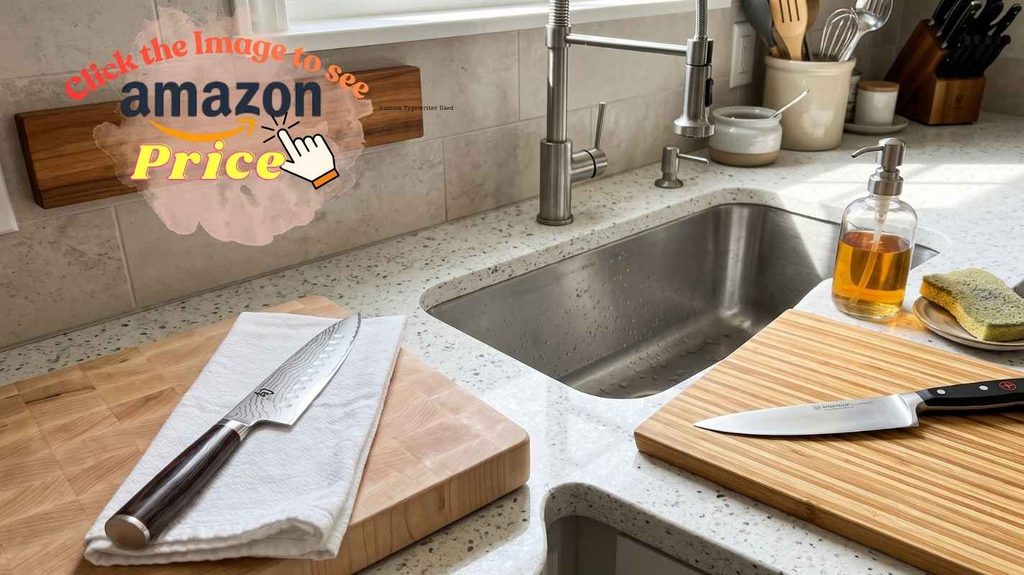
Cutting Boards and Wall Racks
What sits under your knife and where you store it at night matters more than most cooks realize. My Shun Classic needs a soft maple, walnut, or plastic board, and I store it on a wood-faced wall magnet so bare metal never nicks the blade. My Wüsthof Classic chops on hard bamboo boards and snaps onto a bare metal magnet strip with zero harm. Go with the Wüsthof Classic if you own bamboo boards and metal racks, or pick the Shun Classic to pair with a soft wood board.
Sharing Your Kitchen with Guests
The biggest daily test comes when family or house guests grab a knife to help with dinner. I used to hold my breath whenever a guest picked up my Shun Classic to scrape the board or pry cold food apart. Now I hand guests my Wüsthof Classic and relax, because it shrugs off rough habits without a single chip. Buy the Wüsthof Classic for a busy family home where everyone cooks, or get the Shun Classic as your private solo tool.
11. Popular Series & Model Lineup Compared
| Feature | Shun Cutlery Lineup | Wüsthof Cutlery Lineup |
| Flagship Core Line | Shun Classic (Ebony PakkaWood, D-grip) | Wüsthof Classic (Black POM, full bolster) |
| Upgraded Ergonomic Line | Shun Premier (Dimpled blade, walnut grip) | Wüsthof Classic Ikon (Curved grip, half bolster) |
| Budget Entry Line | Shun Sora (Composite blade, polymer grip) | Wüsthof Gourmet (Stamped blade, no bolster) |
| Light Handle Option | Yes (Classic Blonde & Premier Blonde) | Yes (Classic Ikon Crème & Classic White) |
| Natural Wood & Luxury Line | Shun Kaji, Fuji & Nagare | Wüsthof Ikon (Blackwood) & Amici (Olivewood) |
| Hammered Food-Release Blade | Yes (Shun Premier series) | No (Smooth satin blade across lines) |
| Total Series Variety | 11+ distinct Japanese series | 7+ core German series |
Winner: Shun Cutlery Lineup (Best for 11+ Series Variety & Hammered Shun Premier Blade) / Wüsthof Cutlery Lineup (Best for Guard-Free Classic Ikon & Olivewood Amici Options)
Flagship Classic vs Upgraded Premier and Ikon
Both brands let you step up from their base model if you want a better grip or blade finish. When I tested my Shun Premier 8″ Chef’s Knife next to my Shun Classic, its hammered dimples dropped wet potato slices right off the steel and its symmetrical walnut grip fit both hands. When I swapped my Wüsthof Classic for my Wüsthof Classic Ikon, I got a curved grip that fit my palm like a glove and an open heel with no thick guard. Pick the Shun Premier for dimpled steel that sheds wet food, or grab the Wüsthof Classic Ikon for German toughness without a heel guard.
Light Handles for Bright Kitchens
Not every home cook wants a dark black handle sitting on a bright counter. Shun makes the Shun Classic Blonde and Shun Premier Blonde with pale wood handles that brighten up any wood block. Wüsthof matches that style with the Wüsthof Classic Ikon Crème and Classic White lines, which use soft cream and bright white grips. Choose the Shun Classic Blonde for light birch wood grain, or buy the Wüsthof Classic Ikon Crème for a smooth cream handle.
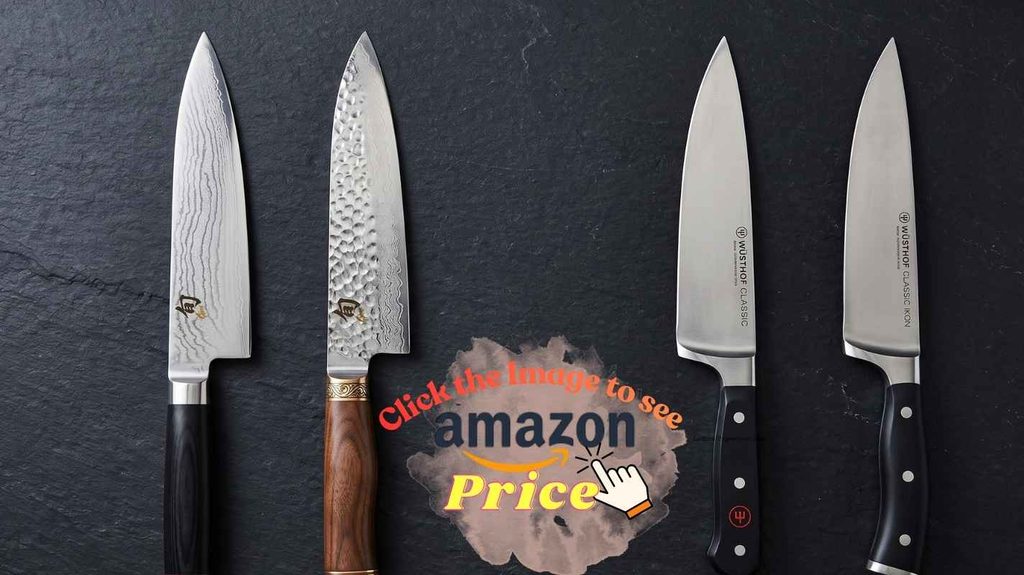
Natural Wood and Luxury Collector Lines
If you want a showpiece knife with rare wood or harder metal, both brands build top-shelf lines. Shun crafts the Shun Kaji and Shun Fuji lines with extra-hard steel cores and rich handles that look like fine art. Wüsthof builds the Wüsthof Ikon with dark African Blackwood and the Wüsthof Amici with warm olive wood. Go with the Shun Kaji for super-hard collector steel, or pick the Wüsthof Ikon or Amici for rich European wood grips.
Budget Entry Lines and Total Variety
Across the full shelf, Shun offers over 11 Japanese series while Wüsthof builds 7 core German lines. If you want to spend less cash, the Shun Sora fuses a sharp Japanese edge to a lower-cost steel upper with a textured plastic grip. On the German side, the Wüsthof Gourmet uses a lighter stamped blade with no bolster for cooks on a smaller budget. Buy the Shun Sora for a low-cost path to thin Japanese cuts, or get the Wüsthof Gourmet for an affordable German daily knife.
My Cutting Experience with Shun And Wusthof Knife
I began my test with my Shun Classic and Shun Premier blades. Both felt light as a leaf and slid through soft tomatoes like butter, while my Shun Premier shed wet spuds with ease. Yet when I hit a hard squash seed fast, the thin steel took a small nick. Pick Shun Classic or Shun Premier for neat pull cuts on greens and fish, or skip them if you chop bone.
Next, I grabbed my Wüsthof Classic and Wüsthof Ikon, which felt like tough work trucks. My Wüsthof Ikon fit my palm like a glove, and my Wüsthof Classic cut through hard squash and bird joints with zero chips. The softer steel dulls faster, but two swipes on a steel rod bring the sharp bite right back. Buy Wüsthof Classic or Wüsthof Ikon for rough daily prep, or skip them if heavy blades tire your hand.
What I Like
- Shun Classic keeps its razor-thin 60–61 HRC edge sharp for 30 to 45 days of home prep.
- Shun Classic gives you free factory sharpening for life when you mail the blade in.
- Shun Classic has an open heel that lets you sharpen 100% of the blade flat on a stone.
- Shun Premier uses hammered blade dimples so wet potato slices drop right off the steel.
- Wüsthof Classic uses tough 58 HRC steel that powers through bird joints and hard squash with zero chips.
- Wüsthof Classic lines its edge right back up with four fast swipes on a steel honing rod.
- Wüsthof Classic has a full steel finger guard that protects your knuckles during fast chopping.
- Wüsthof Ikon pairs a curved, glove-like grip with an open heel that fits left and right hands alike.
What Could Be Better
- Shun Classic can nick its edge or snap its thin tip if you twist it on bone or frozen food.
- Shun Classic uses a D-shaped handle built mainly for right-handed cooks.
- Shun Classic free mail-in sharpening leaves you without your knife for four to six weeks.
- Wüsthof Classic loses its peak bite after 10 to 14 days if you skip steel rod touch-ups.
- Wüsthof Classic has a thick heel guard that blocks your whetstone at the back of the blade.
- Wüsthof Classic weighs 9.2 ounces, which can tire out smaller hands during long meal prep.
- Wüsthof Classic plastic handle scales can crack if dropped hard on tile floors over the years.
Frequently Asked Questions
1. Which is better in a Shun vs Wusthof knife test?
Pick a Shun knife for light, thin slices on soft foods and fish. Grab a Wusthof knife for tough daily prep on hard squash and bone. Learn more about both blades in my test tables above.
2. Is a Shun vs Wusthof knife worth it for home cooks?
Yes, a Shun knife is worth it for neat cuts and free edge care for life. A Wusthof knife is worth it if you chop hard roots and bird joints. Learn more about the 10-year cost in my guide above.
3. Why do Wusthof knives chip less than Shun blades?
Wusthof knives use 58 HRC steel that bends a tiny bit so it will not crack. Shun uses hard 60 HRC steel that can nick on bone. Learn more about blade hardness and sharp steel in my table above.
4. How often do Shun vs Wusthof chef knives need care?
My Shun Classic stays sharp for up to six weeks and needs stone care once a year. My Wusthof Classic needs steel rod swipes before each meal. Learn more about edge care in my test table above.
5. Should I buy the Shun Premier or Wusthof Classic Ikon?
Buy the Shun Premier for a light, dimpled blade that drops wet food fast. Pick the Wusthof Classic Ikon for a curved grip and no heel guard. Learn more about both knives in my lineup guide above.



Leave a Reply