

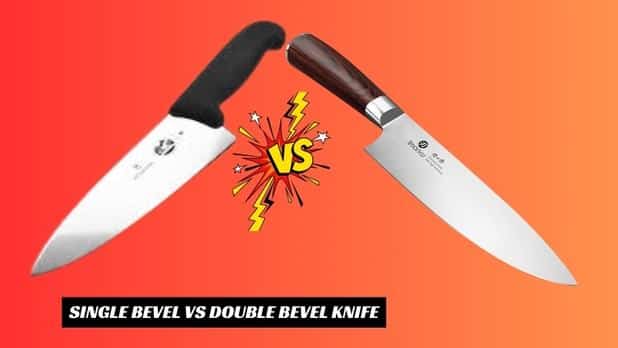
Why do some blades glide through food like silk while others stick? Because the edge shape changes each cut. That’s why you need to know the differences between a single bevel and a double bevel knife. I know how each blade cuts food. I used the Imarku Single-Bevel Chef Knife. It gives me clean, thin cuts on fish. I also used a double-bevel knife, which is the Victorinox Fibrox Pro Chef Knife. It gives me fast, safe chops each day.
- Winner: Victorinox Fibrox Pro 8″ Chef’s Knife
- Best for precision and delicate slicing: Imarku 8″ Single-Bevel Chef Knife
- Best for busy home cooks and daily meal prep: Victorinox Fibrox Pro 8″ Chef’s Knife
What Is a Single Bevel Knife?
A single bevel knife is ground on just one side like a chisel. In Japan, cooks call this traditional blade style a Kataba. When I first held one, it felt just like a wood carving tool in my grip. One side slopes down to the cutting edge, while the back side stays mostly flat.
I saw these neat parts on my Imarku Single-Bevel Chef Knife. The front slope meets the flat steel at a ridge line called the Shinogi. The back face has a gentle hollow dip called the Urasuki with a thin flat rim called the Uraoshi. This clever shape forms an air pocket that stops wet food from sticking to the steel.
Only one side has an angle, so it cuts at a sharp ten to fifteen degrees. When I slice raw fish, the blade does not crush soft meat cells. It glides through with zero drag on the flesh. Each cut stays clean, shiny, and smooth on the cutting board.
Pros of a Single Bevel Knife
- Super Sharp Edge: The acute angle cuts soft food with almost zero drag.
- Clean Food Cuts: It does not crush cells, so raw fish stays shiny and fresh.
- Easy Food Release: The hollow back stops wet slices from sticking to the steel.
Cons of a Single Bevel Knife
- Blade Drift: The angled face pulls your cuts off to one side as you slice.
- Fragile Edge: The thin edge can chip on bone, frozen food, or hard squash.
- Hard to Sharpen: You must use flat waterstones, as cheap pull-through tools ruin the edge.
- Right Hand Bias: Most knives fit right hands, and left-hand models cost far more.
If you want paper-thin cuts of fish, a single bevel brings pure joy. But for daily meal prep, the Victorinox Fibrox Pro Chef Knife feels much easier to control.
What Is a Double Bevel Knife?
A double bevel knife has an edge ground on both sides to make an even V shape. In Japan, blade smiths call this balanced style a Ryoba. People also call it a dual bevel knife. It is the most common blade you will find in home kitchens today.
I use this edge style every day on my Victorinox Fibrox Pro Chef Knife. Both sides push food away with equal force as you slice. When I cut straight down through a carrot, the blade moves in a true, clean path. It will not steer or pull off to the side on you.
Each side is ground at fifteen to twenty degrees. That shape gives the cutting edge great strength against hard prep boards. The thicker steel helps stop small chips when you chop fast through tough food. It makes daily meal prep easy, fast, and safe for all cooks.
Pros of a Double Bevel Knife
- Straight Cuts: The balanced V shape cuts straight down with zero pull.
- Fits Both Hands: Left and right hands can use the same blade with ease.
- Tough Edge: The thick steel stops chips on hard cutting boards.
- Simple Care: It hones fast on a home steel rod.
Cons of a Double Bevel Knife
- Food Wedging: The thick edge can split hard squash or root crops.
- Less Delicate: It lacks the thin bite needed for raw fish.
- Food Clings: Slices stick to the flat steel as you chop.
For daily meals, a double bevel is the easiest tool to use. While my Imarku Single-Bevel Chef Knife wins on raw fish, my Victorinox Fibrox Pro Chef Knife rules everyday chopping. It cuts straight and keeps prep calm. It is the best choice for busy home cooks.
How to Tell If a Knife Is Single or Double Bevel
Look right down the spine to tell if a knife is single or double bevel. Hold the knife up with the tip pointing away from you. If both sides slope inward like a peaked roof, you have a double bevel. If one side drops straight and flat while only one side slopes, you have a single bevel.
Next, check how the steel reflects light on each face. My Victorinox Fibrox Pro Chef Knife gleams the exact same way on both sides. My Imarku Single-Bevel Chef Knife shows a clear ridge line where the slope begins on the right face. The back face stays flat and casts a soft, hollow shade in the center.
Last, you can try a quick test cut on a firm carrot. Push the knife straight down with light, even hand force. A double bevel tracks straight down to the board in a true line. A single bevel pulls off to one side as you slice through the root.
Which Knives Use Which Bevel in Traditional Knife Types?
Which knives use single bevels, and which use double? Single bevel blades fit tools made for one specialized task. Double bevel blades fit versatile chef knives built for all daily food prep. Each knife style fills a clear, distinct need in a home kitchen.
The Single Bevel Champions
- Yanagiba (Raw Fish & Sashimi): A long, slender blade designed to pull through raw fish in one smooth stroke without tearing. Master makers like Yoshihiro and Sakai Takayuki craft these to leave sashimi glossy, fresh, and cleanly sliced.
- Deba (Fish Butchery & Poultry Joints): A thick, heavy knife built with enough spine weight to butcher whole fish, remove heads, and glide past small poultry joints without chipping. Brands like Mercer and Kai offer popular, sturdy versions.
- Usuba (Paper-Thin Vegetable Sheets): A flat, rectangular blade with a dead-straight edge used by Japanese chefs for katsuramuki—the traditional art of shaving daikon radish into translucent sheets.
The Double Bevel Workhorses
- Gyuto (Japanese Chef Knife): The nimble Japanese equivalent of a classic chef knife, popular from brands like Shun and Tojiro for slicing meats and fine dicing.
- Santoku (The “Three Virtues” Knife): A multi-purpose blade crafted for meat, fish, and greens, made famous globally by makers like Global and Wüsthof.
- Nakiri (Vegetable Cleaver): A double-bevel push-cutting specialist with a flat rectangular blade that chops straight down through crisp produce without steering.
- Western Chef’s Knife: A tough, curved-belly workhorse like the Victorinox Fibrox Pro Chef Knife, designed to rock smoothly through everyday chopping.
- Petty & Utility Knives: Compact, nimble double-bevel blades ideal for peeling fruit, trimming fat, and small off-board hand tasks.
Why an 8-Inch Single-Bevel Chef Knife Is Unusual
In authentic Japanese knife craft, blacksmiths almost never put a single bevel on an eight-inch curved chef knife. Western chef knives feature a rounded belly made specifically for continuous rocking cuts. However, a single-bevel chisel edge naturally wants to steer to one side, which fights against that rocking motion.
The Imarku 8″ Single-Bevel Chef Knife is a unique modern hybrid. It gives home cooks a budget-friendly way to experience Japanese chisel slicing on raw salmon, flank steak, and ripe tomatoes without having to spend hundreds of dollars on a high-end artisan Yanagiba.
Which Fits Your Board?
- Try the Victorinox Fibrox Pro 8″ Chef’s Knife if you need one reliable workhorse to dice onions, crush garlic, and rock through daily dinner prep with zero stress.
- Try the Imarku 8″ Single-Bevel Chef Knife if you already have a solid double-bevel blade and want an enjoyable, specialized slicer to practice clean, glassy fish cuts at home.
Imarku 8″ Single-Bevel Chef Knife vs Victorinox Fibrox Pro 8″ Double-Bevel Chef’s Knife
I have got lots of questions about single-bevel vs double-bevel knives. They also ask me which brand would be better. For me, I find the imarku 8″ Single-Bevel Chef Knife and Victorinox Fibrox Pro 8″ double knife Chef’s Knife better. I used both of them for a long time. I have cut piles of onions, tomatoes, chicken, and fish with knives like these. Let’s discuss my experiences.
How They Are Made and Built
| Aspect | Imarku 8″ Single-Bevel Chef Knife | Victorinox Fibrox Pro 8″ Chef’s Knife |
| Blade Production | Stamped steel, thin Japanese-inspired profile | Stamped steel, proven Swiss factory build |
| Steel Composition | 7Cr17MoV high-carbon stainless steel | High-carbon Swiss stainless steel |
| Steel Behavior | Harder steel tuned for acute edge hold | Softer, springy steel tuned for toughness |
| Impact Resistance | Moderate; can chip on bone or frozen food | High; flexes slightly under hard bumps |
| Expected Lifespan | Long with mindful care and proper boards | Decades of heavy, casual home use |
Winner for build and toughness: Victorinox Fibrox Pro 8″ Chef’s Knife (Best for durable, bump-proof daily prep), with the Imarku 8″ Single-Bevel Chef Knife winning for refined, lightweight steel.
How are these two knives made and built? Both blades are cut from flat sheets of steel. This stamped build keeps both knives light in your hand. Yet each blade uses a very different steel.
The Imarku Single-Bevel Chef Knife uses hard steel. This steel holds a sharp edge well. But hard steel can chip on bone. It needs a calm hand and clean cuts.
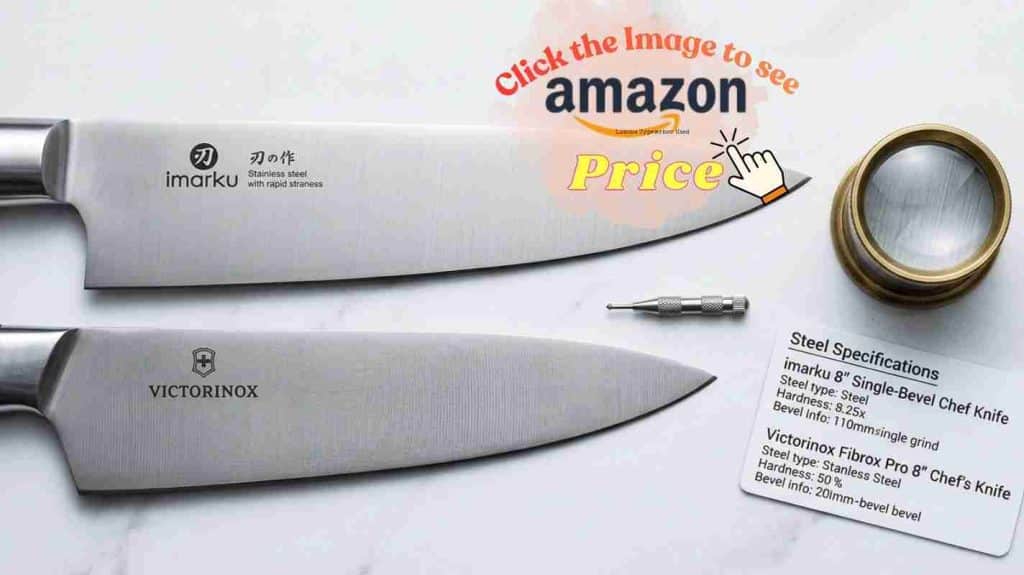
The Victorinox Fibrox Pro Chef Knife uses soft Swiss steel. Soft steel bends a bit instead of chipping. When I bump it on a board, the edge stays whole. It was built to take rough daily use.
The Imarku rewards clean, slow cuts. The Victorinox shrugs off hard knocks with ease. If you baby your tools, buy the Imarku. If your kitchen gets busy, pick the Victorinox.
Blade Hardness and Sharpness Feel
| Aspect | Imarku 8″ Single-Bevel Chef Knife | Victorinox Fibrox Pro 8″ Chef’s Knife |
| Rockwell Hardness (HRC) | ~56–58 HRC (harder, holds acute bite longer) | ~55–56 HRC (softer, more forgiving steel) |
| Edge Angle (Per Side) | ~15° on one side only (flat back) | ~15° on both sides (symmetrical) |
| Total Inclusive Angle | ~15° acute chisel angle | ~30° balanced V-wedge angle |
| Initial Sharpness Feel | Surgical, laser-thin bite on soft food | Confident, smooth, and snappy bite |
| Wedge Resistance | Very low; slips through food with no push | Moderate; splits food evenly from both sides |
Winner for sharpness feel: Imarku 8″ Single-Bevel Chef Knife (Best for razor-sharp slice feel), with the Victorinox Fibrox Pro 8″ Chef’s Knife winning for forgiving, reliable cutting power.
How do these knives compare in edge feel? The Imarku has a hard edge that cuts like a razor. The Victorinox uses soft steel that feels tough and safe. Both knives cut great out of the box.
The Imarku Single-Bevel Chef Knife is ground on just one face. This thin edge cuts with low drag on food. Slicing a ripe tomato feels like moving through air. The hard steel holds that laser bite on soft food.
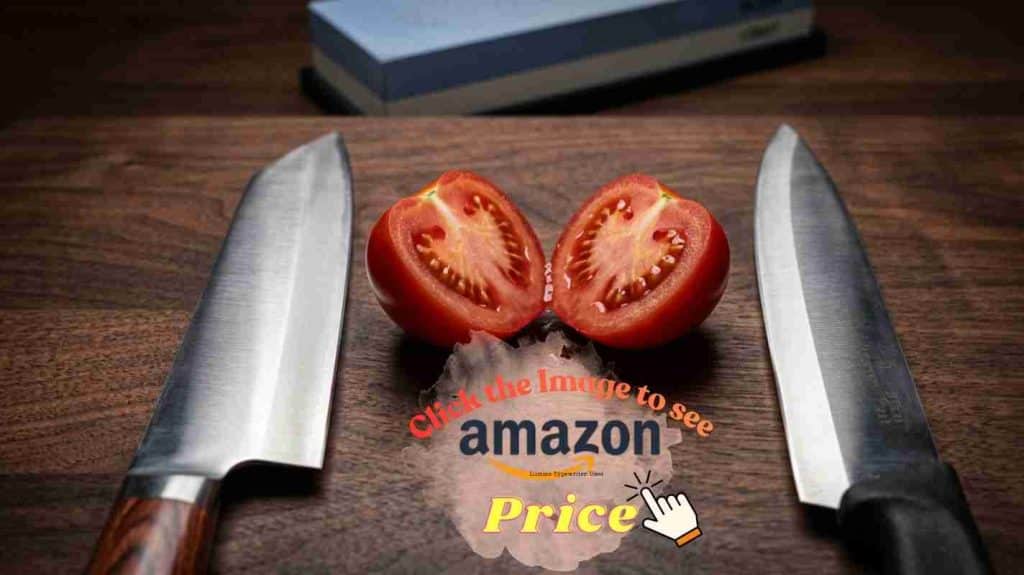
The Victorinox Fibrox Pro Chef Knife is ground on both sides. This makes a V shape with strong steel support. It glides through food with a firm bite. The wider shape pushes food away as you chop.
If you want a laser feel in hand, buy the Imarku. If you want a tough edge for all-day prep, pick the Victorinox. Both knives cut well on a wood board. Choose the feel that fits your way to cook.
Weight and How It Feels in Your Hand
| Aspect | Imarku 8″ Single-Bevel Chef Knife | Victorinox Fibrox Pro 8″ Chef’s Knife |
| Total Weight | ~7.0 oz (198g) — light to medium heft | ~6.0 oz (170g) — featherlight build |
| Weight Balance | Blade-forward (heft tilts toward the tip) | Neutral balance (centered near index finger) |
| Cutting Style Comfort | Best for smooth pull-cuts and draw slices | Best for continuous rocking cuts and chopping |
| Hand Fatigue (30+ Min) | Low on delicate slicing; tiring on fast chops | Very low on long, high-volume prep sessions |
Winner for long prep comfort: Victorinox Fibrox Pro 8″ Chef’s Knife (Best for neutral, fatigue-free rocking cuts), with the Imarku 8″ Single-Bevel Chef Knife winning for nimble pull-slice balance.
How do these two knives feel in your hand? The Imarku leans its weight forward near the tip. The Victorinox feels light and centered in your grip. Both knives feel swift from the first cut.
The Imarku Single-Bevel Chef Knife sits heavy near the tip. That tip weight pulls the blade through soft food. You do not need to push down hard. Yet that forward heft can tire your hand on fast chops.
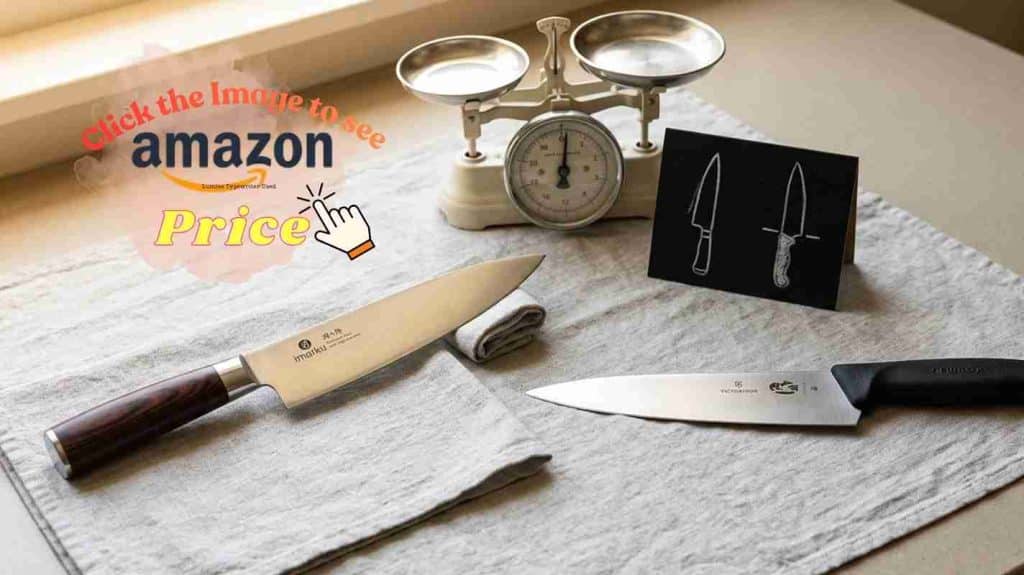
The Victorinox Fibrox Pro Chef Knife feels super light in hand. Its weight sits right under your first finger. When I chop for an hour, my wrist never aches. This center balance makes quick rocking cuts feel fun.
If you want a knife for smooth pull slices, buy the Imarku. If you prep big meals and chop for hours, pick the Victorinox. Both knives feel light on a board. Choose the heft that fits your way to cook.
The Bolster, Safety, and Sharpening Access
| Aspect | Imarku 8″ Single-Bevel Chef Knife | Victorinox Fibrox Pro 8″ Chef’s Knife |
| Bolster Style | Bolsterless with sleek metal collar | Bolsterless with molded finger guard |
| Finger Guard Safety | Moderate; smooth metal can slip if wet | High; textured drop guard stops slips |
| Whetstone Heel Access | 100% open heel; lies flat on waterstones | 100% open heel; lies flat on any stone |
| Heel Sharpening Ease | Needs flat stone passes to protect back | Quick and easy; heel sharpens fast |
Winner for safety and simple stone access: Victorinox Fibrox Pro 8″ Chef’s Knife (Best for slip-proof hand safety), with the Imarku 8″ Single-Bevel Chef Knife winning for clean, full-edge stone clearance.
How do these bolsters compare on a stone? Neither blade has thick steel in the way. Both let the heel touch a flat stone. The Victorinox gives safer grip control in hand.
The Imarku Single-Bevel Chef Knife has an open heel. The blade can lay flat on a stone. You can sharpen the whole edge with ease. Its smooth neck looks neat, but feels slick when wet.
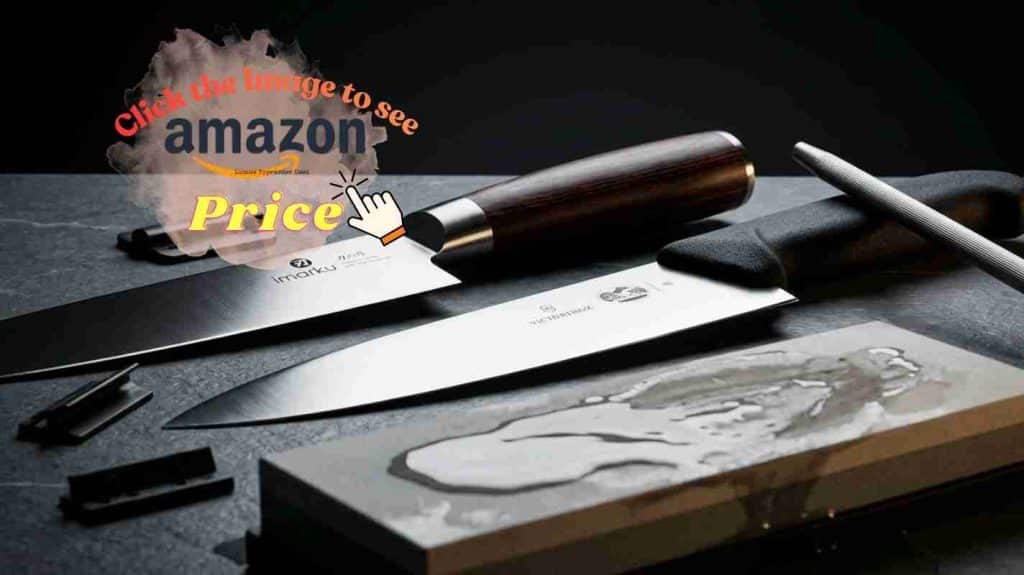
The Victorinox Fibrox Pro Chef Knife also has an open heel. No thick steel blocks a stone. It has a built-in guard on the grip. That small lip keeps your hand safe from the edge.
If you want a sleek look on a stone, buy the Imarku. If you want built-in hand safety, pick the Victorinox. Both knives make stone work simple. Choose the knife that fits how you cook.
Price and Real Cost Over Time
| Aspect | Imarku 8″ Single-Bevel Chef Knife | Victorinox Fibrox Pro 8″ Chef’s Knife |
| Upfront Purchase Price | Mid-budget ($40–$55) | Budget-friendly ($35–$45) |
| Maintenance Gear Cost | Medium; needs waterstones to protect edge | Very low; responds to a cheap honing rod |
| Edge Repair Risk & Cost | Higher if chipped on hard bones or squash | Very low; soft steel bends instead of breaking |
| 10-Year Real Cost of Use | Moderate; extra stone care adds to cost | Rock-bottom; pennies per year across decades |
Winner for pure value and real cost: Victorinox Fibrox Pro 8″ Chef’s Knife (Best for low upfront and long-term cost), with the Imarku 8″ Single-Bevel Chef Knife winning for affordable single-bevel entry.
Which knife costs less to own over time? The Victorinox costs less on day one and over years of use. The Imarku costs a bit more to buy and keep sharp. Both give great value for the cash you spend.
The Imarku Single-Bevel Chef Knife is a fair buy up front. It costs far less than old Japanese blades. Yet its hard edge needs flat waterstones to stay sharp. If you chip the thin edge on bone, it costs time to fix.
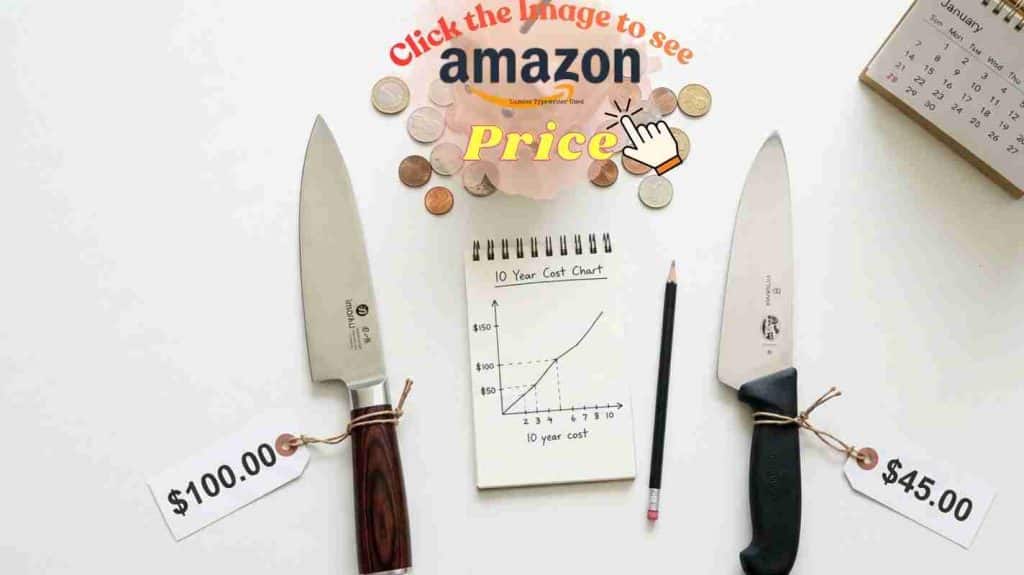
The Victorinox Fibrox Pro Chef Knife has a very low cost over time. It costs less on day one and lasts for years. A cheap steel rod keeps it sharp with no fuss. You will spend next to no cash to keep it in top shape.
If you want to try a single bevel on a budget, buy the Imarku. If you want the best value for your cash, pick the Victorinox. Both knives are a fair deal for any home cook. Choose the knife that matches your wallet and prep goals.
Hand Comfort and How the Handle Feels
| Aspect | Imarku 8″ Single-Bevel Chef Knife | Victorinox Fibrox Pro 8″ Chef’s Knife |
| Handle Material | Polished pakkawood with classic rivets | Textured Fibrox thermoplastic (molded) |
| Grip Traction (Wet / Oily) | Moderate; smooth wood can slip when wet | Exceptional; non-slip traction with oil or water |
| Hand Size & Fit | Slim profile; best for small to medium hands | Roomy ergonomic swell; fits small to large hands |
| Aesthetic Style | Warm, handsome, high-end “chef show” look | Utilitarian, pro restaurant line workhorse |
Winner for grip security and hand comfort: Victorinox Fibrox Pro 8″ Chef’s Knife (Best for slip-proof wet grip), with the Imarku 8″ Single-Bevel Chef Knife winning for handsome wood aesthetics.
How do these knife handles feel in your hand? The Imarku looks great with smooth wood. The Victorinox grips like glue when wet. Each handle serves a clear need.
The Imarku Single-Bevel Chef Knife has a warm wood grip. It feels smooth and fine in a dry hand. Yet that polished wood can get slick when wet. It fits small to mid-size hands best.
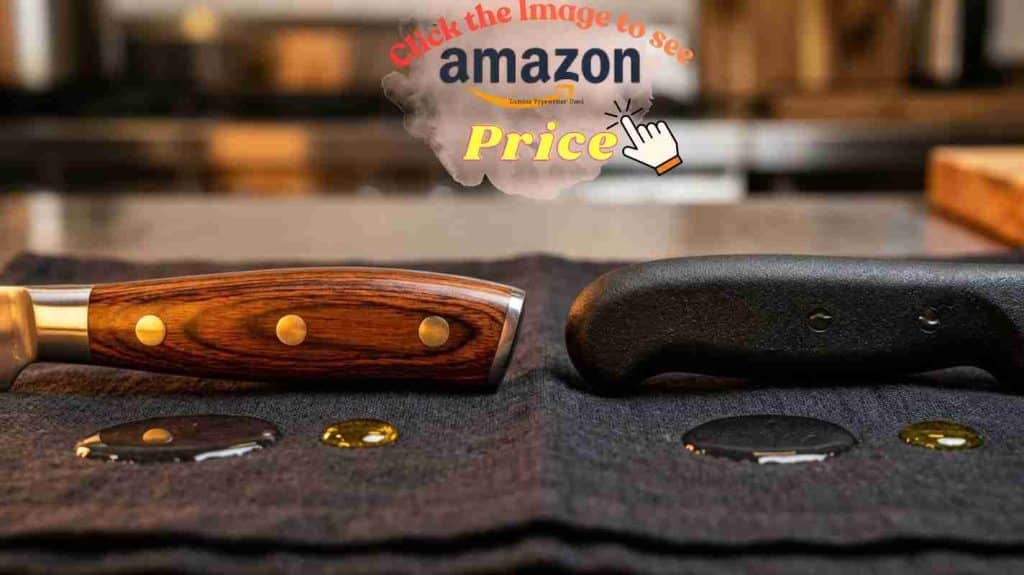
The Victorinox Fibrox Pro Chef Knife uses rough plastic. It does not win a prize on looks. Yet the rough grip locks in your palm like glue. Even with wet oil or fish juice on your skin, it will not slip.
If you want a knife that looks sleek on a board, buy the Imarku. If you want total grip safety on messy jobs, pick the Victorinox. Both handles feel good in hand. Choose the grip that keeps your hands safe and sure.
How Long the Edge Stays Sharp
| Aspect | Imarku 8″ Single-Bevel Chef Knife | Victorinox Fibrox Pro 8″ Chef’s Knife |
| Peak Razor Edge Life | Long on soft foods (raw fish, ripe fruit) | Moderate; good for daily mixed home prep |
| Edge Toughness on Boards | Fragile; hard boards cause micro-rolls | High; thick shoulder absorbs board hits |
| Honing Rod Response | Needs gentle, smooth ceramic rod care | Bounces back fast with a cheap steel rod |
| Forgiveness If Neglected | Low; can chip or steer if not maintained | Very high; dulls gently and recovers easily |
Winner for forgiving edge life: Victorinox Fibrox Pro 8″ Chef’s Knife (Best for easy, forgiving daily retention), with the Imarku 8″ Single-Bevel Chef Knife winning for long peak bite on soft foods.
How long do these edges stay sharp? The Imarku holds its bite on soft foods. The Victorinox takes rough daily use with ease. Each blade keeps its edge in a neat way.
The Imarku Single-Bevel Chef Knife holds a fine edge on soft prep. When I slice fish and soft fruit, it stays sharp. Yet that thin edge hates hard prep boards. Chop on hard wood or hit a bone, and tiny chips form fast.
The Victorinox Fibrox Pro Chef Knife is much more forgiving. Its wide V edge takes hard board hits with no fear. Even if you forget to hone it, it just gets dull. A few passes on a steel rod bring the bite right back.
If you baby your knife on soft foods, buy the Imarku. If you want an edge that takes rough daily prep, pick the Victorinox. Both blades hold a good edge over time. Choose the knife that fits how you cook.
Kitchen Performance: Vegetables and Everyday Prep
| Everyday Prep Task | Imarku 8″ Single-Bevel Chef Knife | Victorinox Fibrox Pro 8″ Chef’s Knife |
| Slicing Ripe Tomatoes | Exceptional; skin parts with zero pressure | Great; smooth glide with minimal squash |
| Dicing Onions & Root Veg | Steers slightly; demands wrist angle control | Easy and true; tracks straight down |
| Rocking Mince (Fresh Herbs) | Less natural; straight edge resists rocking | Very natural; curved belly rocks smoothly |
| Dense Squash & Potatoes | Risk of wedge drift; needs mindful cuts | Confident; splits thick veg evenly |
Winner for everyday vegetable prep: Victorinox Fibrox Pro 8″ Chef’s Knife (Best for straight dicing and rocking herbs), with the Imarku 8″ Single-Bevel Chef Knife winning for paper-thin tomato slices.
How do these knives cut daily food? The Victorinox wins for chopping greens and herbs. The Imarku shines on ripe red fruit. Each knife has a clear job on your board.
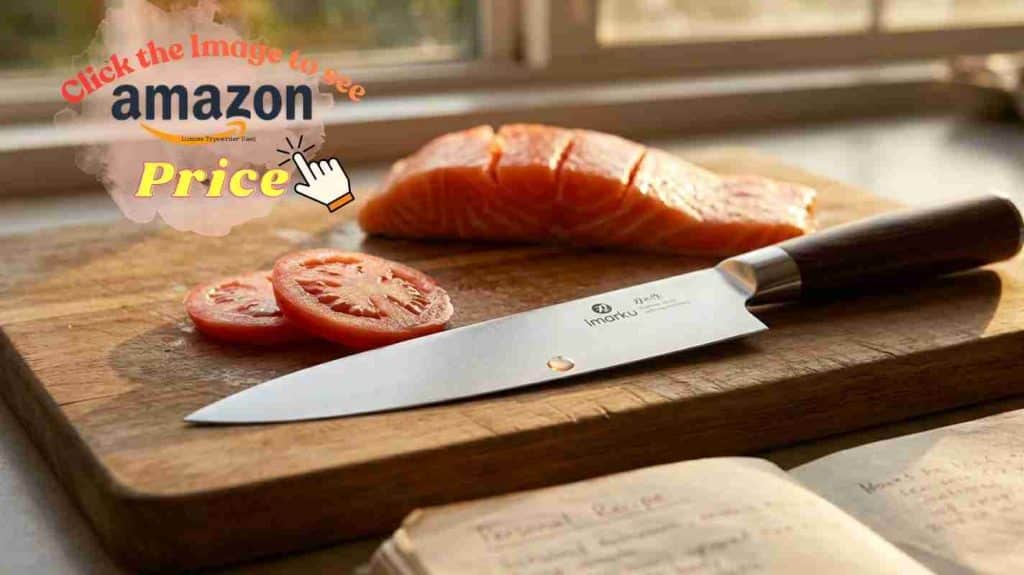
The Imarku Single-Bevel Chef Knife glides through skin like silk. It cuts soft fruit with zero crush. Yet on a carrot, the blade pulls to one side. That single bevel steers the cut to the left as you push down.
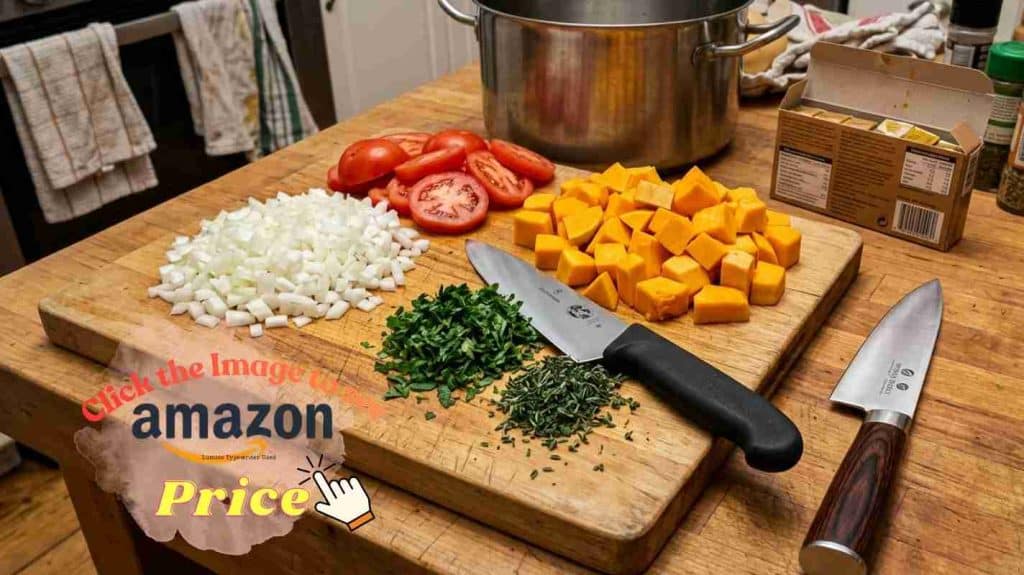
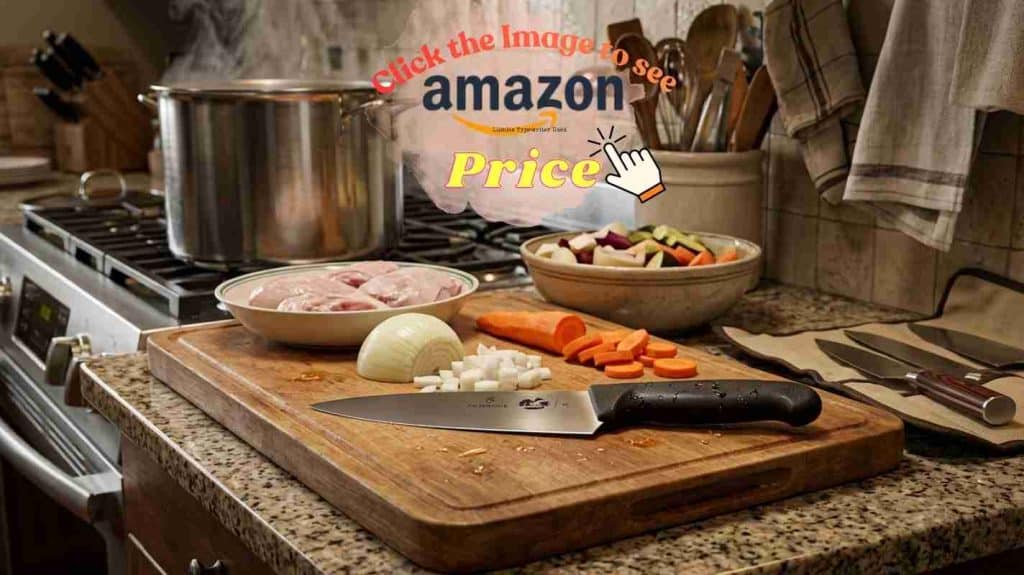
The Victorinox Fibrox Pro Chef Knife cuts true in daily prep. It cuts straight down through an onion with no steer. The curved belly rocks on fresh herbs with ease. It chops hard root crops fast and keeps meal prep on track.
If you want paper-thin cuts on soft food, buy the Imarku. If you need straight, fast cuts for stew, pick the Victorinox. Both blades cut clean on food. Choose the knife that matches how you cook.
Kitchen Performance: Meat and Fish
| Protein Prep Task | Imarku 8″ Single-Bevel Chef Knife | Victorinox Fibrox Pro 8″ Chef’s Knife |
| Slicing Raw Fish (Sashimi) | Flawless; leaves glassy, mirror-clean cuts | Good; clean cut, but minor surface drag |
| Carving Cooked Roasts & Steaks | Laser-thin ribbons; gorgeous presentation | Practical, clean slices with total control |
| Trimming Fat & Silver Skin | Sharp, but angle-sensitive to meat grain | Smooth and forgiving; glides around fat |
| Joints & Small Bone Prep | High risk; hard edge can chip on bone | Safe; tough steel works through joints |
Winner for fish and fine slicing: Imarku 8″ Single-Bevel Chef Knife (Best for delicate raw fish and thin roasts), with the Victorinox Fibrox Pro 8″ Chef’s Knife winning for butchery and bone-safe meats.
How do these knives cut meat and fish? The Imarku is best for slicing raw fish. The Victorinox rules daily meat prep and rough cuts. Each blade treats meat in its own way.
The Imarku Single-Bevel Chef Knife is a dream on raw fish. It glides through salmon and tuna in one clean pull. The meat stays whole, so each cut stays shiny and fresh. Yet keep this thin edge far away from hard bone.
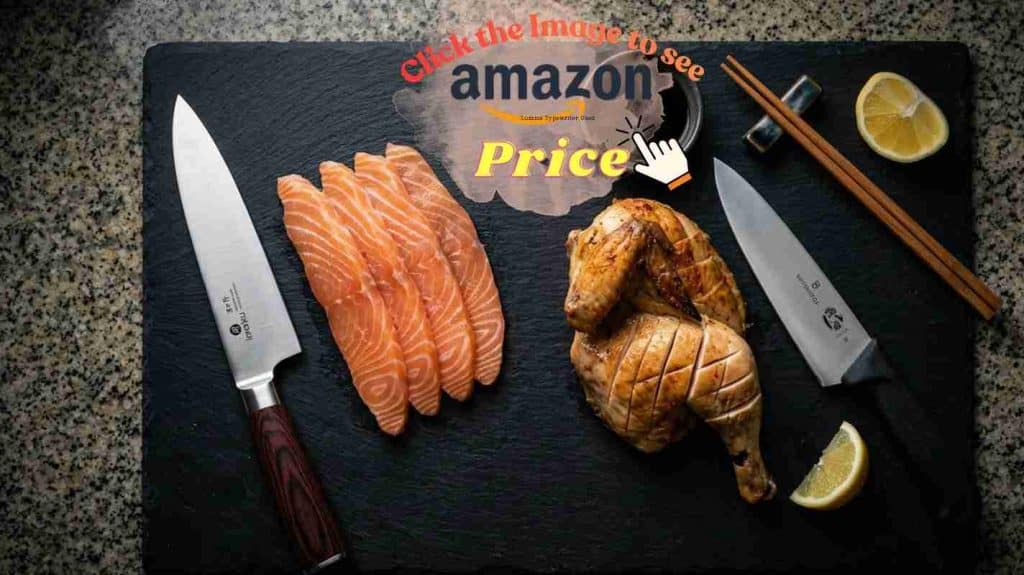
The Victorinox Fibrox Pro Chef Knife is a tough meat tool. It trims fat and cuts cooked beef with easy control. When I prep a whole chicken, it glides past joints with no fear. It takes on rough meat jobs without a chip.
If you want to make sushi and thin meat platters, buy the Imarku. If you roast birds, trim fat, and need a tough blade, pick the Victorinox. Both blades cut meat well on a board. Choose the tool that fits what you cook.
Skill Level and Learning Curve
| Aspect | Imarku 8″ Single-Bevel Chef Knife | Victorinox Fibrox Pro 8″ Chef’s Knife |
| Beginner Friendliness | Low to moderate; steep initial learning curve | Exceptionally high; intuitive from day one |
| Cutting Technique Demands | Requires wrist compensation and deliberate form | Natural and forgiving; tracks straight automatically |
| Tolerance for Sloppy Cuts | Low; twisting blade risks chips or crooked slices | High; soft steel and V-edge absorb rough habits |
| Best User Match | Curious cooks and single-bevel hobbyists | Beginners, busy home cooks, and shared kitchens |
Winner for beginner friendliness: Victorinox Fibrox Pro 8″ Chef’s Knife (Best for easy, zero-learning-curve prep), with the Imarku 8″ Single-Bevel Chef Knife winning for rewarding technique practice.
Which knife is easier to learn and use? The Victorinox is simple for new cooks from day one. The Imarku takes time and calm hands to learn. Each blade fits a clear skill level.
The Imarku Single-Bevel Chef Knife feels like a stick-shift car. It is fun, but it needs good form. You must tilt your hand a bit to cut straight. If you rush through prep, the blade pulls off line.
The Victorinox Fibrox Pro Chef Knife feels right from the start. Its double bevel goes straight where you aim. Anyone in your home can grab it and cut safe. It takes bad habits with zero fuss.
If this is your first chef knife, buy the Victorinox. If you want to test new cutting skills, pick the Imarku. Both tools cut well on the board. Choose the knife that matches how you like to cook.
Maintenance and Sharpening Effort
| Maintenance Aspect | Imarku 8″ Single-Bevel Chef Knife | Victorinox Fibrox Pro 8″ Chef’s Knife |
| Sharpening Method | Flat waterstone bevel work + flat deburring | Alternating 50/50 strokes on both sides |
| Compatible Tools | Flat waterstones only (1000/6000 grit) | Waterstones, oil stones, pull-throughs, rods |
| Pull-Through Sharpeners | Strictly forbidden; destroys single bevel | Safe and works for fast, casual touch-ups |
| Honing Rod Response | Rare; only gentle, ultra-fine ceramic rods | Daily steel rod passes realign edge fast |
| Sharpening Stress | High; demands steady hand and stone focus | Very low; quick, easy, and very forgiving |
Winner for low-stress maintenance: Victorinox Fibrox Pro 8″ Chef’s Knife (Best for quick, easy home care), with the Imarku 8″ Single-Bevel Chef Knife winning for rewarding whetstone craft.
Which knife is easier to keep sharp? The Victorinox is fast and calm to hone. The Imarku takes flat stone skill and calm hands. Each blade needs its own kind of care.
The Imarku Single-Bevel Chef Knife needs work on a flat wet stone. You must lay the front slope flat on the grit. Then lay the back flat to wipe the burr off. Never use pull-through tools, or you will ruin the edge.
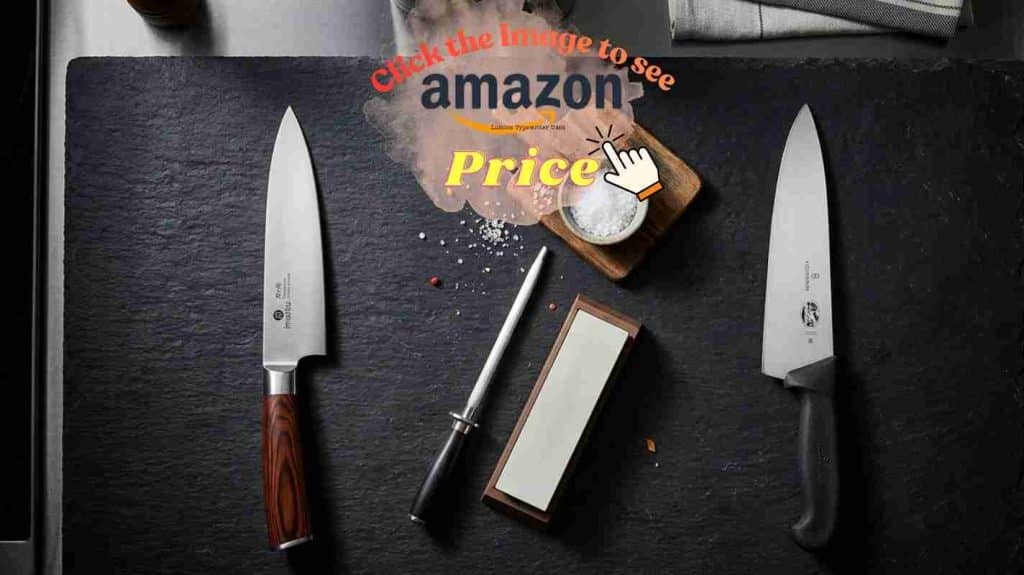
The Victorinox Fibrox Pro Chef Knife is easy to keep sharp. It loves a quick rub on a cheap steel rod. Both sides take an edge with simple strokes. If your hand slips a bit, the steel stays fine.
If you like stone care as a hobby, buy the Imarku. If you just want a sharp knife with no fuss, pick the Victorinox. Both knives take a fine edge. Choose the tool that fits how you like to work.
Left-Handed Friendliness and Versatility
| Handedness Aspect | Imarku 8″ Single-Bevel Chef Knife | Victorinox Fibrox Pro 8″ Chef’s Knife |
| Right-Handed Use | Natural, smooth, and tuned for right hands | 100% comfortable and balanced |
| Left-Handed Use | Awkward and unsafe; blade pulls toward hand | 100% comfortable, natural, and safe |
| Ambidextrous Design | No; right-hand specific chisel grind | Yes; symmetrical 50/50 double-bevel |
| Shared Kitchen Fit | Poor; only right-handed cooks can use it | Perfect; anyone in the house can use it |
Winner for left-handed use and shared kitchens: Victorinox Fibrox Pro 8″ Chef’s Knife (Best for 100% ambidextrous versatility), with the Imarku 8″ Single-Bevel Chef Knife winning strictly for dedicated right-hand slicing.
Can left hands use these two knives? The Victorinox works for left and right hands. The Imarku is built for right hands only. This matters when you share tools at home.
The Imarku Single-Bevel Chef Knife is made for right hands. Its single bevel is ground on the right side. In a left hand, the blade steers the wrong way. It can pull toward your thumb and feel unsafe.
The Victorinox Fibrox Pro Chef Knife does not take sides. Its double bevel is ground the same on both sides. Left and right hands can use it with no fuss. Anyone in your house can grab it and cut.
If someone in your home is left-handed, buy the Victorinox. If you cook alone with your right hand, pick the Imarku. Both blades cut well in the right grip. Choose the tool that fits all cooks in your home.
My Imarku 8″ Single-Bevel Chef Knife And Victorinox Fibrox Pro 8″ Chef’s Knife Using Story
When I first tried a single bevel like the imarku 8″ Single-Bevel, I felt like I had borrowed a small sushi knife. It slid through tomatoes and fish like a clean razor, but it also pulled to one side if my angle was off. I had to slow down, breathe, and watch my hands.
Later I picked up a Victorinox Fibrox Pro 8″ Chef’s Knife, and it felt like that friend who will help you move house and never complain. It was not fancy, but it cut onions, carrots, and chicken without drama. The grippy handle was a big deal when my hands were wet. Over time I found myself reaching for the Victorinox on busy nights, and pulling out the single bevel when I wanted to play and practice thin, pretty slices.
So here is how I see it now. Imarku is the “fun project knife” for focused cuts and people who like to learn. Victorinox is the “default U.S. kitchen knife” for anyone who cooks a lot and needs a tool that just works.
For me, the imarku 8″ Single-Bevel Chef Knife is a “hobby joy” knife. It is ideal for home cooks who already love cooking, watch knife videos, and want to taste that single bevel vs double bevel knife difference without jumping to a very expensive Japanese brand. It is not ideal for people who rush, slam through hard squash, or share the knife with kids and guests.
The Victorinox Fibrox Pro 8″ Chef’s Knife feels built for U.S. reality: small apartments, busy weeknights, camp trips, church kitchens, and restaurant lines where knives get tossed into knife rolls and dish pits. It is ideal if you want one knife that anyone can grab and use. It is less ideal only if you already own several knives and now want something more special or pretty.
If you only want one knife, I would hand you the Victorinox. If you already have a solid all‑rounder and want a second knife with more “character” and a single‑bevel twist, then the imarku is a fun add‑on.
What I Like
- imarku single bevel feels razor sharp on soft foods.
- Victorinox Fibrox Pro is tough and very forgiving.
- imarku looks more premium with its wood‑style handle.
- Victorinox handle stays grippy when wet or greasy.
- imarku gives a taste of Japanese‑style cutting on a budget.
- Victorinox is easy to sharpen and hone at home.
What Could Be Better
- imarku’s harder edge feels a bit delicate on tough foods.
- Victorinox does not look fancy and the handle looks plain.
- imarku single bevel has a learning curve and can steer.
- Victorinox edge retention is good, not amazing, on hard use.
- imarku may not love heavy pro line abuse on dense veg.
- Victorinox can trap gunk near the handle and blade junction.
FAQ
Is the imarku 8″ Single-Bevel Chef Knife worth it for home cooks?
Yes, if you want to try a single bevel vs double bevel knife on a budget and enjoy learning better cutting control. Learn more about its edge feel inside.
Is the Victorinox Fibrox Pro 8″ Chef’s Knife good for beginners?
Yes, it is one of the best first chef knives, with a safe grip, soft steel, and easy home care for most U.S. kitchens. Learn more about its value inside.
Which is better for sushi, imarku 8″ Single-Bevel or Victorinox Fibrox Pro?
The imarku single bevel is better for thin, clean fish slices, while the Victorinox works fine for casual rolls and mixed cooking. Learn more in the meat and fish section.
Does the Victorinox Fibrox Pro stay sharp longer than the imarku single bevel?
Victorinox is more forgiving on hard tasks and recovers fast with honing, while imarku feels sharper on soft foods but needs more care. Learn more about edge life inside.
Which should I buy if I only want one knife, imarku or Victorinox?
If you want one simple do‑it‑all tool, choose the Victorinox Fibrox Pro; add the imarku later when you want a second, more niche single bevel knife. Learn more in the buyer guide.


Leave a Reply