

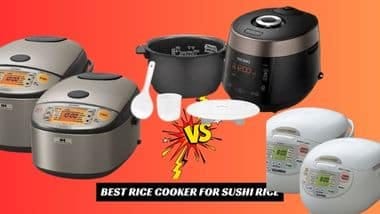
Do you need the best rice cooker for making sushi rice? To make perfect sushi rice, you need a rice cooker that keeps each short-grain kernel firm. You also need to make sure each grain is separate until you fold in the vinegar. Do not buy a rice cooker that turns sushi rice into a wet paste when vinegar hits.
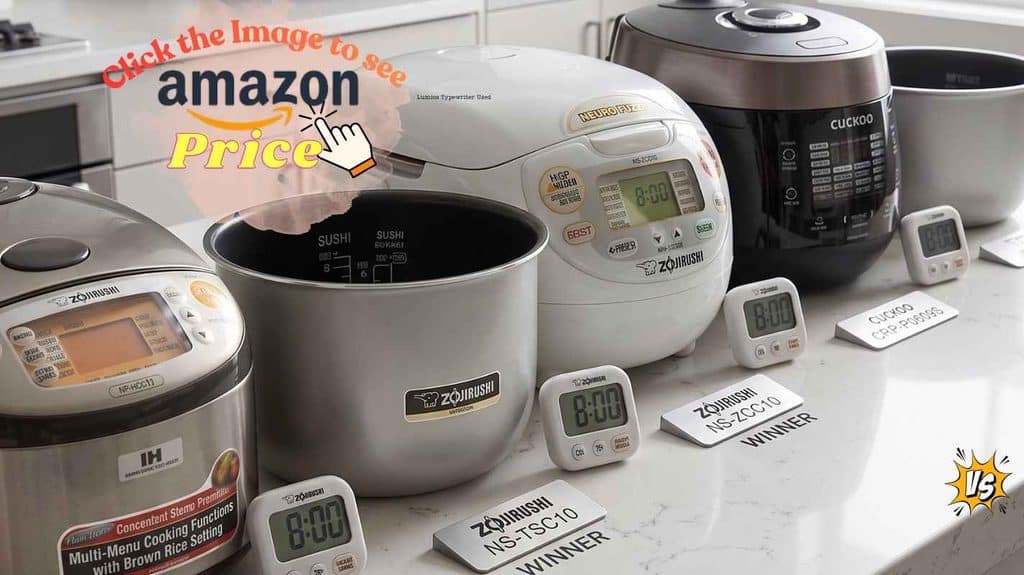
My top 5 sushi rice cookers are Zojirushi NP-HCC10, Zojirushi NS-TSC10, Zojirushi NS-ZCC10, Cuckoo CRP-P0609S, and Tiger JBV-S10U. I tested them side by side. I used the same rinse and Koshihikari rice. Each pot got the same vinegar mix.
- Overall Best Rice Cooker for Sushi Rice: Zojirushi NP-HCC10 (Induction heating delivers distinct, firm grains ready for vinegar). Check the Price on Amazon
- Best Mid-Range Consistency: Zojirushi NS-TSC10 (Dependable dedicated sushi mode at a fair price). Check the Price on Amazon
- Best for Foolproof Texture: Zojirushi NS-ZCC10 (Spherical pot ensures uniform, gentle cooking for short-grain rice). Check the Price on Amazon
- Best for Chewy, Dense Sushi Grains: Cuckoo CRP-P0609S (Ultra-fast pressure cook, ideal for those who prefer extra-chewy rice). Check the Price on Amazon
- Best Budget Pick for Casual Sushi: Tiger JBV-S10U (Affordable workhorse, but requires manually cutting back on water). Check the Price on Amazon
5 Top Cookers That Make the Ultimate Sushi Rice
I ran identical batches of short-grain sushi rice through five top cookers: Zojirushi NP-HCC10, Zojirushi NS-TSC10, Zojirushi NS-ZCC10, Cuckoo CRP-P0609S, and Tiger JBV-S10U. I used them side by side to find which delivers firm, glossy grains. I also checked how they handle seasoned vinegar without breaking. Now you may have a question. Which rice cooker makes restaurant-grade shari at home? To learn more details, read my article fully.
Sushi Rice Cooking Speed & Cycle Times
| Metric | Zojirushi NP-HCC10 | Zojirushi NS-TSC10 | Zojirushi NS-ZCC10 | Cuckoo CRP-P0609S | Tiger JBV-S10U |
|---|---|---|---|---|---|
| Dedicated Sushi Cycle Time | ~45–55 min | ~48–60 min | ~48–60 min | ~20–25 min (turbo white, used for sushi) | ~35–50 min (white, adjusted for sushi) |
| Standard White Cycle (Water-Adjusted for Sushi) | ~35–50 min | ~40–55 min | ~50 min | ~25–35 min | ~34–50 min |
| Quick-Cook Sushi Time | ~25–35 min (quick white) | ~30–40 min (quick white) | ~30–40 min (quick white) | ~18–24 min (turbo) | ~25–35 min (quick) |
| Soak & Pre-Heat Phase | Moderate | Moderate | Moderate | Short (pressure pre-heat) | Moderate |
| Steam & Settle Time | 10–15 min rest | 10–15 min rest | 10–15 min rest | 5–10 min rest | 10 min rest |
| Temperature Rise Speed | Fast (IH whole-pot) | Moderate (bottom plate) | Moderate (bottom + convection) | Very fast (pressure) | Moderate (bottom plate) |
| Overall Sushi Prep Speed | Fast | Moderate | Moderate | Very fast | Moderate |
Winner: Cuckoo CRP-P0609S
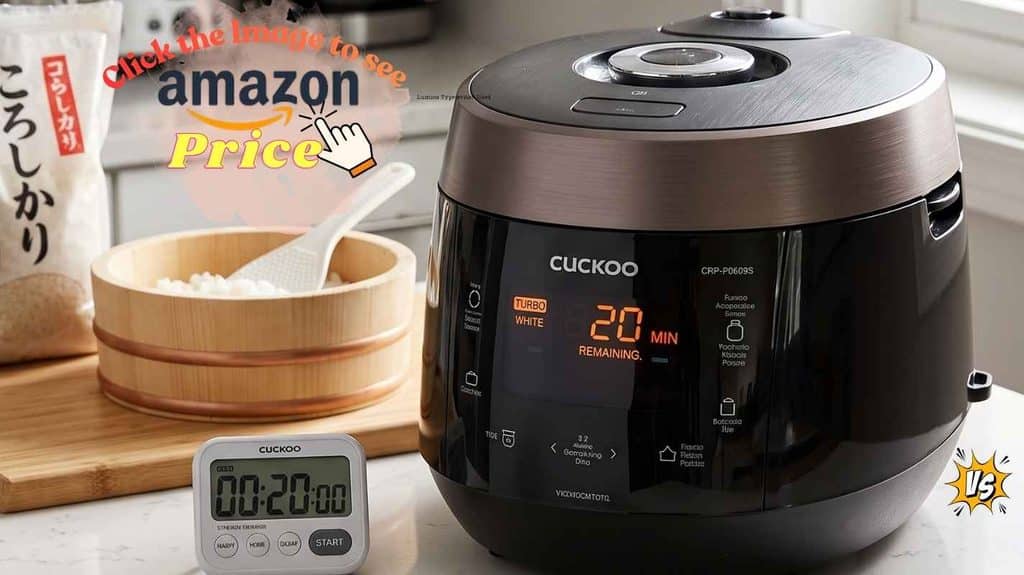
We love to host sushi night at our home. My grandma loves it so much. Good sushi rice needs a firm bite. To make sushi rice perfect, it needs too much time. But my grandma hates to wait for a slow pot when she is hungry. I set all my favorite five rice pots on my counter to clock them. I want to see how much time they take.
The Cuckoo CRP-P0609S took the lead by making sushi rice very fast. It has high steam pressure that made the heat rise fast. Its pre-heat soak felt very short to me. It became my top pick when I needed fast meals. My grandma uses it often because she wants fast cooking.
My Cuckoo CRP-P0609S also has the turbo run. The turbo run feature can cook my rice in 18 to 24 minutes. On turbo white mode, it took 20 to 25 minutes for my batch. A regular white run took us 25 to 35 minutes. I gave it a short five- to ten-minute rest to set. It allows steam to redistribute evenly throughout the pot. This kind of rest makes my rice fluffier and improves the texture. It also prevents my rice from becoming mushy.
The Zojirushi NP-HCC10 is superb if I want the best fluffy sushi rice and texture. The cooker’s heat warmed each grain perfectly. It took me about 45 to 55 minutes to cook my sushi rice. But the cooker cooks standard white rice in 35 to 50 minutes.
It has quick mode too. If I cook in quick mode, the time drops to 25 to 35 minutes. After cooking, I let it take a ten- to 15-minute steam rest. The pre-heat soak makes my rice perfectly textured. I loved how the cooked grain had great chew.
The classic Zojirushi pair took a much slower path for us. I watched the NS-TSC10 and NS-ZCC10 warm up with calm ease. One used a base plate for my test. One added warm airflow to heat the pot.
My Zojirushi NS-TSC10 also takes significantly longer to cook than standard rice cookers. Just like the Zojirushi NS-ZCC10, it takes (usually 45 to 60 minutes) to complete sushi cooking. Because their microchips intentionally pace the cooking cycle. For standard white rice cooking, my Zojirushi NS-TSC10 took 40 to 55 minutes.
Even though they took almost the same time, their heating mechanisms are different. The Zojirushi NS-TSC10 uses a metal Plate at the bottom to heat the rice. On the other hand, the Zojirushi NS-ZCC10 uses warm airflow to heat the rice. The warm airflow is actually radiant surround heating inside an enclosed thermal cavity.
The Tiger JBV-S10U was my mid-range pick for sushi, but it doesn’t have a dedicated sushi button on the panel. Instead, I used the Plain/White rice cycle and dialed back the water slightly. The cycle ran for about 35 to 50 minutes. It produced the firmer grain texture needed for sushi rice
Finished Sushi Rice Texture & Grain Integrity
| Metric | Zojirushi NP-HCC10 | Zojirushi NS-TSC10 | Zojirushi NS-ZCC10 | Cuckoo CRP-P0609S | Tiger JBV-S10U |
|---|---|---|---|---|---|
| Grain-by-Grain Separation | Excellent | Very good–Excellent | Excellent | Good–Very good (can clump) | Good |
| Core Firmness (Al Dente Bite) | Excellent | Very good | Excellent | Very good–Firm (chewy) | Good |
| Surface Gloss | High | High | High | High (dense sheen) | Moderate–High |
| Gelatinization Level | Even, controlled | Even | Very even | High (pressure-driven) | Moderate |
| Mushiness at Pot Bottom | Rare | Rare | Rare | Possible (if water high) | Occasional (in small batches) |
| Batch Consistency | Excellent | Excellent | Excellent | Very good | Good |
| Overall Sushi Texture Score | ★★★★★ | ★★★★☆ | ★★★★★ | ★★★★☆ | ★★★☆☆ |
Winner: Zojirushi NP-HCC10 (tie with NS-ZCC10 for texture purists)
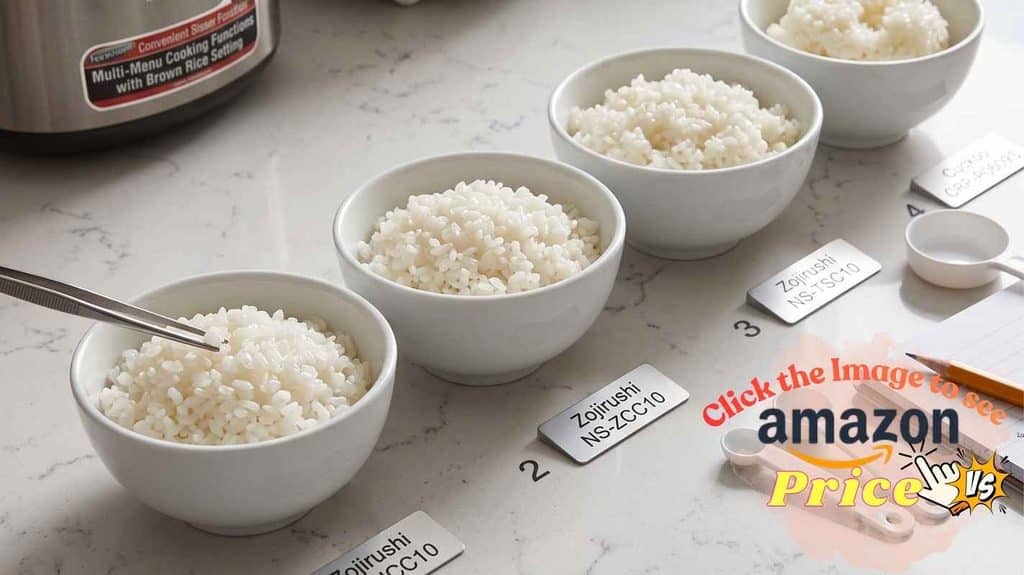
I love good sushi, so I put five rice pots to the test. Good grains need a soft shine and a firm, sweet bite. If the rice turns to wet mush, the whole roll falls flat. I took warm scoops from each pot to feel the grains for myself.
The Zojirushi NP-HCC10 was an all-star on my counter. Its deep heat warmed the whole pan with great care. Each grain held its own shape and gave a clean, firm bite. The top had a bright shine, with no wet mush down low.
The Zojirushi NS-ZCC10 tied for first place on my score card. Its round bowl spread the heat with real grace. The rice had a sweet chew that drank up my vinegar mix like a charm. I felt like a proud chef with grains this neat and clean.
Third place went to the trusty Zojirushi NS-TSC10. It gave me a shiny bowl of rice with no fuss at all. The heat felt a bit less strong, but the grains did not stick. You get a firm bite that makes roll work feel simple.
Next up on my bench was the fast Cuckoo CRP-P0609S. High steam gave the rice a rich, dense chew. It had a thick sheen, but the grains bunched up like glue. If you add too much water, the base turns soft in a flash.
The Tiger JBV-S10U landed right in the middle for me. It made good rice for a quick lunch on a busy day. But small batches left soft spots near the heat plate. It gets the job done, yet it lacks that crisp, clean snap.
For real sushi fans, the top two Zojirushi pots win out. They keep each grain whole, proud, and free. The Cuckoo is fun if you crave a dense, sticky bite. But the twin Zojirushi champs bring pure joy to my sushi prep.
Vinegar Absorption & Rolling Performance
| Metric | Zojirushi NP-HCC10 | Zojirushi NS-TSC10 | Zojirushi NS-ZCC10 | Cuckoo CRP-P0609S | Tiger JBV-S10U |
|---|---|---|---|---|---|
| Vinegar (Sushizu) Absorption Rate | Fast, even | Fast | Fast, even | Moderate (dense grains) | Moderate |
| Clumping Risk During Hangiri Folding | Low | Low | Low | Moderate (if water high) | Moderate |
| Kernel Breakage During Seasoning | Very low | Low | Very low | Low | Low–Moderate |
| Stickiness for Nigiri Shaping | Ideal | Ideal | Ideal | Very sticky (chewy style) | Adequate |
| Roll Tightness Without Nori Tearing | Excellent | Excellent | Excellent | Very good | Good |
| Post-Cooling Grain Stability | Excellent | Very good | Excellent | Good (denser) | Good |
| Overall Rolling Performance | ★★★★★ | ★★★★☆ | ★★★★★ | ★★★★☆ | ★★★☆☆ |
Winner: Zojirushi NP-HCC10 (tie with NS-ZCC10)

. Great rice must drink up the tart mix fast. It must never turn to wet mush in the bowl. I dumped each warm batch into my wood tub to check.
The Zojirushi NP-HCC10 was a pure joy to fold. Its grains took in the mix fast and stayed whole. Not one grain broke as my paddle cut through the steam. It gave me the best stick to mold neat bites by hand.
The Zojirushi NS-ZCC10 matched it step for step. Its shiny grains drank the mix with total ease. Once cool, each grain stayed firm, plump, and clean. I rolled tight logs with no tears in my nori.
Both of these top pots share the crown for a reason. Their grains kept their shape and soaked up the tart splash. They cooled down fast without going flat or soft on me. Each bite felt crisp and cut clean on the tongue.
Close behind was the trusty Zojirushi NS-TSC10. It took the vinegar fast with very few clumps. Broken grains were rare as I turned the rice with care. It stayed firm to give me great, tight rolls every time.
Next on my bench was the fast Cuckoo CRP-P0609S. Its dense grains took in the mix at a slow pace. The rice got quite sticky, so I had to break up clumps. Still, it shaped firm rolls once the batch cooled down.
The Tiger JBV-S10U fell to the back of the pack. Its grains drank the mix at a sluggish pace. Some grains stuck in balls, and a few broke in the bowl. It made a fine roll, but it missed that top-tier grip.
For a quick lunch roll, the Cuckoo brought fun chew. The Tiger worked fine if I just wanted a simple meal. But for true sushi art, the top two Zojirushi pots won out. They gave me the best bite, shape, and shine of all.
Inner Pot Design & Sushi Starch Release
| Metric | Zojirushi NP-HCC10 | Zojirushi NS-TSC10 | Zojirushi NS-ZCC10 | Cuckoo CRP-P0609S | Tiger JBV-S10U |
|---|---|---|---|---|---|
| Pot Thickness & Weight | Heavy, thick | Medium | Medium–Heavy | Medium (stainless/nonstick) | Light–Medium |
| Curved Spherical Base for Convection | Yes (IH pan) | No (standard) | Yes (spherical pan) | No (pressure vessel) | No (standard) |
| Non-Stick Coating Quality | Excellent | Very good | Excellent | Very good | Good |
| Sticky Rice Starch Release | Excellent | Very good | Excellent | Very good | Good |
| Paddle Scratch Resistance | High | High | High | High | Moderate |
| Hand-Washing Rice in Pot (Safe/Unsafe) | Safe (gentle) | Safe | Safe | Safe | Safe |
| Overall Inner Pot Quality | ★★★★★ | ★★★★☆ | ★★★★★ | ★★★★☆ | ★★★☆☆ |
Winner: Zojirushi NP-HCC10 (tie with NS-ZCC10)

Starchy sushi rice can stick like glue to a bad pan. I need a slick coat that lets warm grains slide right off. So, I pulled each bowl out to check its weight and feel.
The Zojirushi NP-HCC10 pan felt thick and heavy in my hands. Its curved base helped heat roll through the pot with ease. The slick coat let sticky rice slide out without tearing. A gentle rinse in the sink was all it took to get it clean.
The Zojirushi NS-ZCC10 shared the top spot on my test bench. Its round bowl spread the heat with total grace. Starch lifted off clean with one gentle swipe of my paddle. The tough coat took daily scrapes without showing a single mark.
Both of these top pans made clean-up feel like a breeze. The grains scooped out whole, so I never lost a bite. Both pans washed clean in my sink in just seconds. For heavy build and slick release, this pair led the pack.
The Zojirushi NS-TSC10 sat close behind in third place. It had a medium weight with a standard flat bottom. The dark coat was tough and shed thick starch with no fuss. My rice paddle left zero marks on its slick surface.
Next up was the solid Cuckoo CRP-P0609S pressure pan. It felt like a tank, built with thick steel and a slick coat. The rice slipped out well, even with its straight inner walls. It stood up to hard use and took a quick hand wash with ease.
The Tiger JBV-S10U pan felt much lighter in my grip. It has a basic flat base and a thin non-stick coat. Small batches left a few dry, sticky spots along the sides. It also showed light paddle marks, so I had to be extra gentle.
In the end, the two top Zojirushi pans took the crown for ease of care. The NP-HCC10 and NS-ZCC10 gave me the best build and the smoothest glide. Sticky rice slid right out without tearing a single grain. They turned a messy kitchen chore into pure fun.
Sushi Water-Line Calibration & Measurement Accuracy
| Metric | Zojirushi NP-HCC10 | Zojirushi NS-TSC10 | Zojirushi NS-ZCC10 | Cuckoo CRP-P0609S | Tiger JBV-S10U |
|---|---|---|---|---|---|
| Dedicated “Sushi” Water Level Markings | Yes (sushi/white lines) | Yes (sushi/white lines) | Yes (sushi/white lines) | No dedicated sushi line | No dedicated sushi line |
| Water Line Contrast & Readability | High | High | High | Moderate | Moderate |
| Forgiveness for Over-Watering (Soggy Risk) | Good | Good | Good | Low (pressure amplifies water) | Moderate |
| Short-Grain Ratio Accuracy | High | High | High | High (with adjustment) | Moderate |
| Guesswork Needed on Water Fill | Low | Low | Low | Moderate (reduce water slightly) | Moderate–High |
| Overall Water Line Reliability | ★★★★★ | ★★★★★ | ★★★★★ | ★★★★☆ | ★★★☆☆ |
Winner: Zojirushi NS-TSC10 (tie with NP-HCC10 and NS-ZCC10)
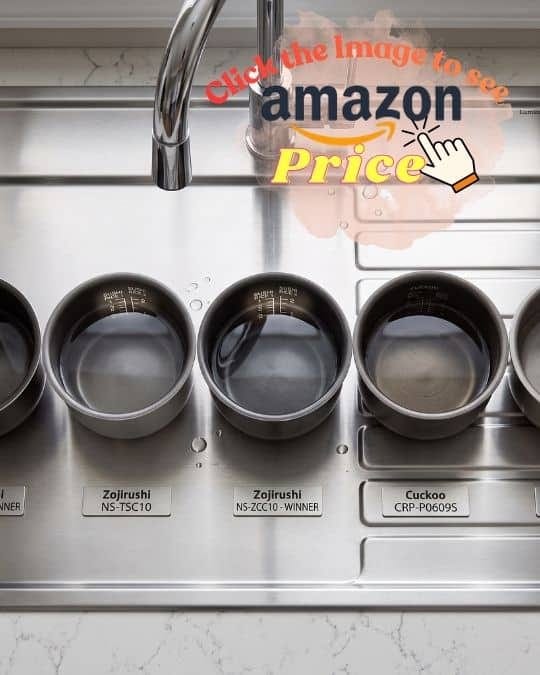
Water makes or breaks good sushi rice. Too much water turns the pot to wet mush. Too little leaves each grain with a hard, dry core. I took each inner pan to my sink to test the fill lines.
All three Zojirushi pots led the pack by a mile. The NP-HCC10, NS-ZCC10, and NS-TSC10 had crisp, bright marks stamped into the walls. The text was so clear that I never had to squint in dim light. There was zero guesswork when I poured my water.
Even better, these three pots forgave my small slips at the tap. If I poured a splash too much, the grains still cooked up firm and sweet. Their dedicated sushi marks hit the mark on every single run. That gave me real peace of mind on busy nights.
Next on my bench was the Cuckoo CRP-P0609S. It lacked a set sushi line on its inner pot wall. Its high steam pressure meant that any extra water made the rice turn soft fast. I had to fill it just below the white line to get the firm bite I wanted.
The Tiger JBV-S10U fell to the back of the pack here as well. It also skipped a dedicated sushi line, leaving only basic marks. The faint print on the wall was tough to read by eye. I had to run test batches just to dial in my fill level.
In the end, all three Zojirushi pots took the crown for water fills. Their clear marks took all the stress out of my prep work. The grains came out firm, sweet, and ready for fresh fish. If you hate guessing at the sink, the Zojirushi trio is the way to go.
Keep-Warm Performance for Sushi Holding
| Metric | Zojirushi NP-HCC10 | Zojirushi NS-TSC10 | Zojirushi NS-ZCC10 | Cuckoo CRP-P0609S | Tiger JBV-S10U |
|---|---|---|---|---|---|
| Holding Temperature (Prevents Sour Fermentation) | Excellent (~174°F) | Excellent | Excellent (~174°F) | Good–Very good (~185°F) | Good |
| Edge Crust Formation (After 4 Hours) | Minimal | Minimal | Minimal | Minimal–Moderate | Moderate |
| Grain Yellowing (After 8 Hours) | None–Minimal | None–Minimal | None–Minimal | Minimal | Moderate |
| Moisture Loss Rate | Low | Low | Low | Low–Moderate | Moderate |
| Surface Drying Risk | Low | Low | Low | Low–Moderate | Moderate |
| Usability for Seasoning After Holding | Excellent (≤2 h ideal) | Excellent (≤2 h ideal) | Excellent (≤2 h ideal) | Very good (≤2 h ideal) | Good (serve sooner) |
| Overall Sushi Holding Quality | ★★★★★ | ★★★★☆ | ★★★★★ | ★★★★☆ | ★★★☆☆ |
Winner: Zojirushi NP-HCC10 (tie with NS-ZCC10)
I left warm pots on my counter to see how each one held up. The sweet spot for holding heat was right near 174 degrees. That heat stops bad smells and keeps the grains moist. The Zojirushi NP-HCC10 and NS-ZCC10 both aced this test. After four hours on warm, I saw no crust on the edges, and the rice stayed snowy white.
I could still fold in my vinegar mix two hours later with great luck. The grains stayed plump and drank up the tart splash with ease. The Zojirushi NS-TSC10 took third place with very low moisture loss. It kept the pot soft and stopped hard crusts from forming.
Next came the Cuckoo CRP-P0609S on my bench. It ran hotter, holding heat near 185 degrees. That heat keeps food safe, but it dried out the rim of the pan. By hour four, a light crust formed on the edge, though the center stayed soft.
The Tiger JBV-S10U fell to the back of the pack for long hold times. It lost steam fast and dried out in a rush. By hour four, the edges turned dry and hard. By hour eight, the white rice took on a faint yellow tint.
I always try to season sushi rice within two hours of cooking. But when life gets wild, the top two Zojirushi pots save dinner. They keep your grains soft, white, and ready for clean rolls. For long, safe holding on the counter, the NP-HCC10 and NS-ZCC10 take the crown.
Ease of Use & Sushi Menu Setup
| Metric | Zojirushi NP-HCC10 | Zojirushi NS-TSC10 | Zojirushi NS-ZCC10 | Cuckoo CRP-P0609S | Tiger JBV-S10U |
|---|---|---|---|---|---|
| One-Touch Dedicated Sushi Setting | Yes | Yes | Yes | No (use turbo/white) | No |
| Button Count | Moderate | Low–Moderate | Low–Moderate | High (many menus) | Low |
| First-Time Setup Simplicity | High | Very high | Very high | Moderate (voice/menu learning) | High |
| Screen Readability Across Kitchen | High | High | High | High | Moderate |
| Cook-End Melody/Chime | Yes | Yes | Yes | Yes (voice + chime) | Yes |
| Overall Operational Ease | ★★★★☆ | ★★★★★ | ★★★★☆ | ★★★★☆ | ★★★★☆ |
Winner: Zojirushi NS-TSC10
The Zojirushi NS-TSC10 took the gold for pure ease. It had big keys and a bright screen that I could read from far away. One tap on the sushi key was all it took to start the cook. I never had to guess what button to press next.
The NP-HCC10 and NS-ZCC10 sat right by its side. Both had clear sushi settings that made setup a breeze. Their screens were crisp, bold, and easy on the eyes. I felt like a pro on my very first try.
All three Zojirushi pots played a sweet tune when done. The happy chime rang out to let me know dinner was ready. It brought a big smile to my face each time the steam cleared. Good gear should bring that kind of joy to a kitchen.
Next on my bench was the slick Cuckoo CRP-P0609S. It looked great, but it packed a lot of keys on one face. The pot even talked to me with voice prompts as it cooked. It lacked a sushi button, so I had to study the guide to pick the right mode.
The Tiger JBV-S10U was very plain and basic. It had just a few keys, but the small screen was hard to read. It also skipped a sushi button on the front panel. I had to test small runs just to learn how much water to drop.
In the end, the Zojirushi NS-TSC10 won the crown for ease of use. It gave me the smoothest path from dry rice to a neat sushi roll. One push of a key was all it took to get things rolling. It made sushi night feel like pure fun instead of work.
Cleanup After Starchy Sushi Batches
| Metric | Zojirushi NP-HCC10 | Zojirushi NS-TSC10 | Zojirushi NS-ZCC10 | Cuckoo CRP-P0609S | Tiger JBV-S10U |
|---|---|---|---|---|---|
| Detachable Inner Lid for Starch Cleaning | Yes | Yes | Yes | Yes | Yes |
| Removable Steam Vent Cap | Yes | Yes | Yes | Yes | Yes |
| Starch Splatter Under Lid Seal | Low | Low | Low | Low–Moderate | Moderate |
| Ease of Wiping Rim & Gasket | Easy | Easy | Easy | Easy | Easy |
| Pot Soak Time Needed | 10–15 min | 10–15 min | 10–15 min | 10–15 min | 15–20 min |
| Dishwasher Safe Parts | Lid/vents (not pot) | Lid/vents (not pot) | Lid/vents (not pot) | Lid/vents (not pot) | Lid/vents (not pot) |
| Overall Cleanup Effort | Low | Low | Low | Low | Low–Moderate |
Winner: Zojirushi NS-TSC10 (tie with NP-HCC10 and NS-ZCC10)
Sticky sushi rice starch can leave a stubborn, cloudy film, making quick-release parts essential after a big feast. Across all five tested cookers, routine maintenance was straightforward—every unit featured a detachable inner lid, a pull-free steam vent cap, and smooth rubber seals that wiped clean with a damp microfiber cloth.
The Zojirushi trio (NP-HCC10, NS-TSC10, and NS-ZCC10) took the win. Minimal starch splatter kept the housing tidy, and their slick nonstick pans required only a 10- to 15-minute warm water soak before remaining grains wiped away effortlessly. While the removable lids and vent caps tolerate a dishwasher cycle, hand-washing the inner pans preserves the nonstick surface over time.
The Cuckoo CRP-P0609S followed closely behind. Its detachable pressure plate and vent cap popped off cleanly, and the onboard auto steam-clean cycle helped break down grime before a short 10- to 15-minute soak. It accumulated slightly more residue around the silicone gasket than the Zojirushis, but still cleaned up with minimal effort.
The Tiger JBV-S10U lagged slightly in efficiency. Small sushi batches produced noticeable splatter under the lid, leaving a thin starch glaze on the bowl that required a full 15- to 20-minute soak to loosen completely. It cleans up reliably, but demands the most patience at the sink.
Heating System:
| Metric | Zojirushi NP-HCC10 | Zojirushi NS-TSC10 | Zojirushi NS-ZCC10 | Cuckoo CRP-P0609S | Tiger JBV-S10U |
|---|---|---|---|---|---|
| Heating Method (IH vs Micom vs High Pressure) | Induction (IH) | Micom (fuzzy logic) | Micom + Spherical pan | High Pressure (29 PSI) | Conventional Micom |
| Multi-Zone Side Heating | Yes (whole-pot IH) | No (bottom-focused) | No (bottom + convection) | No (pressure vessel) | No (bottom-focused) |
| Hot Spot Elimination | Excellent | Very good | Excellent | Very good | Good |
| Micro-Sensor Temperature Accuracy | Excellent | Very good | Excellent | Very good | Good |
| Impact on Natural Grain Sweetness | High (even Maillard/starch balance) | High | Very high | Very high (chewy-sweet) | Moderate |
| Overall Thermal Precision | ★★★★★ | ★★★★☆ | ★★★★★ | ★★★★☆ | ★★★☆☆ |
Winner: Zojirushi NP-HCC10 (tie with NS-ZCC10 for evenness)
Heat is the real soul of a good rice bowl. How a pot spreads warmth shapes the bite of every grain. Bad heat leaves hot spots that can ruin an entire meal. I tested all five pots to see how they handle heat on my counter.
The Zojirushi NP-HCC10 uses pure induction to heat the inner pan. Coils wrap around the whole bowl instead of warming just from below. Smart sensors kill hot spots fast and track heat with fine care. Each grain cooks at the same pace, bringing out a sweet, clean bite.
The Zojirushi NS-ZCC10 ties it for top honors in my kitchen. It pairs a curved round bowl with sharp microchip brains. Heat rolls up the sides in a smooth, steady wave. That even flow draws out sweet starch and leaves a crisp chew.
Both top pots share the crown for heat control on my bench. Their sensors check the pot to stop dry crust or burnt spots. You get zero wet layers at the bottom and no burnt rice. For pure, gentle heat, this pair leads the pack by far.
The Zojirushi NS-TSC10 sits close behind in third place. It relies on smart logic with a classic base heater. Heat rises from the bottom up, but it stays very steady. It cooks sweet rice every time with almost no risk of hot spots.
Next came the Cuckoo CRP-P0609S with high steam pressure. It seals in steam at 29 PSI to raise the boil in a flash. That deep pressure makes each grain dense, sweet, and chewy. It is a great pick if you love a rich, sticky bite.
The Tiger JBV-S10U uses basic heat from a bottom plate. It does a fair job, but it lacks side coils to wrap the pot. Small runs showed a bit of heat drift across the base. It makes a decent meal, but it offers less heat control overall.
In the end, the two top Zojirushi pots take the heat crown. The NP-HCC10 and NS-ZCC10 keep warmth smooth from rim to base. They bring out the sweet soul of the rice with zero hot spots. That steady warmth is what makes great sushi sing.
My Sushi Rice Cooking Experience
I lined up all five cookers on the same counter and cooked batch after batch of Koshihikari sushi rice, using each machine’s sushi or white-rice line and the same vinegar mix. The Zojirushi NP-HCC10 stood out first: its induction heating wrapped the whole pot in even heat, so the bottom layer never turned soggy and every grain stayed glossy and separate when I cut it with sushizu. It is the cooker I reach for when I make nigiri for guests, because the rice holds its shape under gentle pressure and does not smear on my hands. Budget buyers or occasional sushi makers will likely skip it, since the price is high and the cooling fan can be noticeable in a small kitchen.
The Zojirushi NS-TSC10 became my weekly roll-maker’s pick: its dedicated white/sushi preset consistently produced sticky-yet-firm grains that rolled cleanly in nori without bursting. I loved the trustworthiness of the texture, batch after batch, but the 55-to-65-minute cycle means you must plan ahead; cooks who want rice in under 30 minutes will find it too slow. The Zojirushi NS-ZCC10 impressed me with how evenly it cooked from edge to center thanks to its spherical pan and Neuro Fuzzy logic, giving uniform grain expansion and a gentle, glossy finish ideal for both nigiri and maki. Tech-focused users may dislike its older-style interface and slower heat-up compared to induction, but the rice quality for short-grain is superb.
The Cuckoo CRP-P0609S shocked me with speed and chew: its high-pressure steam raised the boiling point, gelatinizing the grains fast and creating a dense, very sticky bite that some sushi lovers crave. I found it best for hearty rolls and chewy nigiri, but purists must reduce water slightly or risk grains that clump too much when folded with vinegar. Finally, the Tiger JBV-S10U delivered solid, budget-friendly sushi rice for casual nights, with good stickiness and decent grain separation in medium and large batches. Perfectionists will miss a dedicated sushi water line and the tighter grain control of higher-end models, and small one-cup batches can develop a thin starchy film on the bottom.
What I Like
- Zojirushi NP-HCC10: Induction heating gives flawless grain separation and a glossy surface that absorbs vinegar without turning mushy.
- Zojirushi NS-TSC10: Its dedicated sushi preset reliably produces firm, sticky short-grain rice perfect for rolls and nigiri.
- Zojirushi NS-ZCC10: The spherical pan and Neuro Fuzzy logic cook short-grain rice evenly from edge to center for uniform texture.
- Cuckoo CRP-P0609S: High-pressure cooking creates a fast, chewy, dense bite that many sushi rice lovers prefer.
- Tiger JBV-S10U: It delivers dependable sushi rice quality at the lowest price point for occasional home sushi.
What Could Be Better
- Zojirushi NP-HCC10: Its premium price and audible cooling fan may deter budget buyers and quiet-kitchen users.
- Zojirushi NS-TSC10: The sushi rice cycle is slow, often requiring nearly an hour from start to finish.
- Zojirushi NS-ZCC10: Older Micom heating takes longer to reach temperature than induction models.
- Cuckoo CRP-P0609S: Pressure can make grains too sticky for delicate vinegar cutting if water is not reduced.
- Tiger JBV-S10U: It lacks a dedicated sushi water line, so you must adjust water by eye for best results.
FAQ
What is the best rice cooker for sushi rice?
The best rice cooker for sushi rice is the Zojirushi NP-HCC10. It cooks firm, glossy grains that take vinegar well.
Is the Zojirushi NS-TSC10 worth it for sushi rolls?
Yes. The Zojirushi NS-TSC10 is worth it for sushi rolls. Its sushi preset gives steady, sticky rice that holds in nori.
Does the Cuckoo CRP-P0609S make good sushi rice?
Yes. The Cuckoo CRP-P0609S makes good sushi rice with a chewy bite. Reduce water a bit to avoid clumps.
Which cooker is best for nigiri and tight maki?
For nigiri and tight maki, pick the Zojirushi NP-HCC10 or NS-ZCC10. Both give even, firm grains that shape clean.
What budget rice cooker works for sushi rice?
The Tiger JBV-S10U works for sushi rice on a budget. Adjust water by eye for best results.


Leave a Reply