


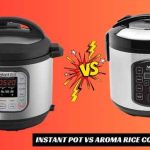
Do you want to know the difference between an Instant Pot and a rice cooker? But you have a doubt in mind: can an Instant Pot cook like a Rice Cooker?
The Instant Pot Duo locks its lid tight to trap steam and raise water boiling heat to 240°F. That high pressure forces water into hard grains and tough meat fibers in minutes. Meanwhile, an Aroma Rice Cooker or Zojirushi Micom boils at normal air pressure and uses a thermal sensor or smart chip to watch the water. Once the rice drinks every drop and the pot temp rises past 212°F, the rice cooker rests the grains so they turn out soft.
- Best for busy families & one-pot meal preppers: Instant Pot. Check Price On Amazon
- Best for daily rice eaters & grain purists: Dedicated Rice Cooker. Check Price On Amazon
Instant Pot vs Rice Cooker
The Instant Pot vs Rice Cooker choice comes down to how each machine uses heat and water. I have used an Instant Pot Duo 7-in-1 and a Zojirushi Micom Rice Cooker in my small kitchen for years. Both make food perfectly, but they run on completely different science.
1.1 Cooking Versatility
| Cooking Task & Function | Instant Pot (Duo 7-in-1 / Pro) | Dedicated Rice Cooker (Aroma / Zojirushi / Tiger) | Category Winner |
|---|---|---|---|
| High-Heat Sauté & Searing | Yes (Built-in Sauté mode for browning beef & onions) | No (Cannot reach searing heat for meat) | Instant Pot Duo / Pro |
| Pressure Cooking & Stews | Yes (Softens tough meat cuts in under 60 mins) | No (Cooks at normal air pressure only) | Instant Pot Duo / Pro |
| Dry Beans (No Soaking) | Yes (Cooks raw dry beans soft in 35–45 mins) | No (Thick bean foam clogs steam vents) | Instant Pot Duo / Pro |
| Homemade Broth & Chili | Yes (Deep bone broth & rich chili under pressure) | Limited (Can simmer light soup, but risks boil-over) | Instant Pot Duo / Pro |
| Yogurt & Proofing | Yes (Low-temp milk boil & ferment modes) | No (Lacks low-temp yogurt settings) | Instant Pot Duo / Pro |
| Steaming Sides & Cakes | Yes (Steel rack for eggs, veggies, and cheesecake) | Yes (Steam basket for dumplings, oats, and sponge cake) | Tie (Both Excel) |
| Main Dish + Rice at Once | Needs Trivet (Must use Pot-in-Pot bowl or 2nd inner pot) | Sync Cooking (Tiger tacook plate steams protein over rice) | Tiger JBV-S / Tie |
| Specialty Grains & Porridge | Basic (One rice button; lacks GABA or sushi cycles) | Mastery (Sushi, GABA brown, congee, quinoa, steel-cut oats) | Zojirushi / Aroma / Tiger |
Versatility Winner: Instant Pot Duo 7-in-1 and Instant Pot Pro win for full dinner prep by replacing five tools, while the Zojirushi NS-TSC10, Tiger JBV-S10U, and Aroma ARC-5200SB win for pure grain modes and light steaming.
When friends ask me if the Instant Pot Duo or the Zojirushi Micom does more, my answer is quick. The Instant Pot Duo is like a Swiss Army knife, while the Zojirushi is like a sharp paring knife. Both tools do great work, but they fill very different roles on your counter.
I put both pots to the test on a busy Tuesday night. In my Instant Pot Duo 7-in-1, I browned beef chuck right in the steel pot on Sauté mode, poured in broth, and cooked a rich stew fast. I also used my Instant Pot to cook dry black beans with no pre-soak and ferment fresh yogurt overnight.
However, I quickly hit a wall that every buyer needs to know about. When my Instant Pot Duo was locked up for an hour making beef curry, I had no way to cook white rice for the side unless I stacked a metal bowl on a trivet or bought a second inner pot. That is why I kept my Zojirushi Micom and Aroma Digital Rice Cooker on the counter.

An Aroma Rice Cooker or Zojirushi cannot sear beef or boil dry beans without thick foam clogging the steam vent. Yet the Zojirushi NS-TSC10 and Tiger JBV-S10U shine when you want sushi rice, sprouted GABA brown rice, creamy congee, or even a tall Japanese sponge cake. If you want one pot to cook stews, roasts, and beans, buy the Instant Pot Duo; if you cook main dishes on the stove and need a side of grains ready at the same time, get the Zojirushi or Aroma.
1.2 Rice Texture and Taste
| Rice Variety & Texture Factor | Instant Pot (Duo 6-Qt / Pro) | Dedicated Rice Cooker (Zojirushi / Tiger / Aroma) | Category Winner |
|---|---|---|---|
| Water-to-Rice Ratio (White Rice) | Strict 1:1 Ratio (Sealed lid traps 100% of moisture) | 1:1.25 Ratio or Bowl Lines (Accounts for gentle steam loss) | Zojirushi / Aroma (Foolproof lines) |
| Short-Grain & Sushi Rice | Dense & Gummy (High pressure bursts outer starch cells) | Glossy & Plump (Pre-soak and steam curve keep grain shape) | Zojirushi Micom / Tiger IH |
| Long-Grain (Jasmine / Basmati) | Good on High Pressure 3–4m (Auto Rice button makes it mushy) | Light & Fluffy (Separate, fragrant grains every time) | Zojirushi / Tiger / Aroma |
| Brown & Wild Rice (1:1.25 Ratio) | Tender & Nutty (High pressure softens tough bran coat fast) | Chewy in Basic Pots (Soft in Zojirushi GABA mode, but slow) | Instant Pot Duo / Pro |
| Top-to-Bottom Consistency | Uneven Gradient (Top grains feel dry; bottom feels sticky) | Uniform Texture (Fuzzy logic sensors balance heat and steam) | Zojirushi Micom / Tiger |
| Bottom-Layer Crust Risk | Chewy or Hard (Direct base heat dries out the bottom layer) | Even & Soft (3D wrap heating prevents scorching) | Zojirushi / Tiger / Aroma |
Texture & Taste Winner: Zojirushi NS-TSC10 Micom, Tiger JBV-S10U, and Aroma Digital win for white, jasmine, basmati, and sushi rice, while the Instant Pot Duo 6-Qt and Instant Pot Pro win for fast, tender brown and wild rice.
If you care deeply about rice texture, the way each pot handles water and starch is the whole story. A great cook makes each grain plump and sweet, while a poor cook turns dinner into wet paste.
When I first tried making jasmine rice in my Instant Pot Duo, I used my old stovetop habit of 1.5 cups of water to 1 cup of rice and hit the preset Rice button. It came out like wet glue. I learned the hard way that because the Instant Pot Duo seals tight with zero steam escape, you must use an exact 1:1 water-to-rice ratio. Even better, skip the preset Rice button—which runs too long on Low Pressure—and set High Pressure for 3 to 4 minutes followed by a 10-minute natural rest.
In side-by-side taste tests, my Zojirushi Micom Rice Cooker still beat my dialed-in Instant Pot Duo on white and sushi rice. The Zojirushi pre-soaks the grains to draw moisture to the core before boiling, giving me glossy, separate grains from top to bottom. In the Instant Pot Duo, intense pressure bursts the outer starch cells, leaving the bottom layer denser than the top and drying out the base if left on warm.

Brown and wild rice flipped the script in my kitchen. In my Aroma Rice Cooker, tough brown grains took over an hour and still chewed like dry bark. In my Instant Pot Duo, using 1 cup of brown rice to 1.25 cups of water on High Pressure for 15 minutes broke down that tough bran coat into nutty, soft perfection. Pick the Zojirushi, Tiger, or Aroma if you eat white jasmine or sushi rice daily, or choose the Instant Pot Duo if you love brown rice and hearty whole grains.
1.3 Speed and Total Cook Time
| Food Item & Batch Type | Instant Pot (Duo 6-Qt / Pro) | Dedicated Rice Cooker (Aroma / Zojirushi / Tiger) | Category Winner |
|---|---|---|---|
| White Rice (Standard Cycle) | ~24 mins (10m preheat + 4m pressure + 10m natural rest) | 25–35 mins on Aroma; 45–55 mins on Zojirushi (includes soak) | Instant Pot Duo / Pro |
| White Rice (Quick / Lever Mode) | ~22–24 mins (Cannot skip preheat or natural release) | 15–20 mins (Aroma Quick Rice / Basic Lever pot) | Aroma / Basic Rice Cooker |
| Small Solo Batch (0.5 to 1 Cup) | Poor Direct Fit (Wide 6-Qt base dries out 1 cup unless using PIP) | Flawless (Narrow bowl cooks 0.5 to 1 cup soft in 15–25 mins) | Aroma / Zojirushi / Tiger |
| Brown & Wild Rice | 35 mins total (10m preheat + 15m pressure + 10m release) | 70–90 mins (Requires long soak and gentle simmer) | Instant Pot Duo / Pro |
| Dry Beans & Beef Stew | 40–60 mins total (Cuts stove and slow-cook time by 70%) | 3–4+ hours (Or fails to reach safe tenderizing heat) | Instant Pot Duo / Pro |
Speed Winner: Instant Pot Duo 6-Qt and Instant Pot Pro take the overall speed crown by cutting brown rice, dry bean, and stew times by up to 70%, while the Aroma Digital Rice Cooker and Tiger JBV-S10U win for fast 15-minute weeknight white rice and small 1-cup batches.
Many home cooks buy an Instant Pot Duo thinking it will cook white rice in four minutes flat. While the screen says four minutes, that timer hides the real clock. You must also count the ten minutes it takes to build steam and the ten minutes the rice must sit before you open the valve.
I raced both pots with a stopwatch on a busy weeknight. My Instant Pot Duo 6-Qt took ten minutes to heat up, four minutes to pressure cook, and ten minutes to rest—24 minutes in all. My budget Aroma Rice Cooker finished a small batch in 18 minutes with zero waiting on a locked lid, though my Zojirushi Micom took 50 minutes on its standard cycle because it pre-soaks the grains for better flavor.
Batch size also changes the race. When I tried cooking just one cup of dry rice directly in my wide 6-quart Instant Pot Duo, the water spread too thin and half the grains stuck to the floor. Meanwhile, my Aroma and Zojirushi cooked a single solo cup of rice with zero waste.
When you switch to tough foods, the Instant Pot Duo wins by a mile. It turns raw pinto beans soft in 40 minutes and melts a beef roast in an hour. Choose the Aroma Rice Cooker if you want quick weeknight white rice or small 1-cup meals, or pick the Instant Pot Duo if you want fast brown rice, party-sized batches, and 1-hour stews.
1.4 Ease of Use
| Usability Factor | Instant Pot (Duo 7-in-1 / Pro) | Dedicated Rice Cooker (Aroma / Zojirushi / Tiger) | Category Winner |
|---|---|---|---|
| Setup & Daily Controls | Multi-Step (Check silicone ring, close valve, set pressure & timer) | One-Touch (Single lever on Aroma; clear grain button on Zojirushi) | Aroma / Zojirushi / Tiger |
| Water & Cup Measuring | Manual Ratio (Must measure equal 1:1 cups of rice and water) | Etched Bowl Lines (Scoop with 180ml rice cup; fill water to line) | Zojirushi / Tiger / Aroma |
| Mid-Cycle Lid Access | Locked Shut (Pin locks lid tight until all pressure drops) | Open Anytime (Safe to lift lid, stir, or toss in peas & greens) | Aroma / Zojirushi / Tiger |
| Burn Risk & Error Codes | Prone to “BURN” Alert (Unrinsed starch or thick sauces trip sensor) | Zero Burn Codes (Automatically shifts to gentle Keep Warm) | Aroma / Zojirushi / Tiger |
| Post-Cook & Delay Timer | Manual Steam Release (Must vent valve; turn off hot Keep Warm) | Set & Forget (Wake-up Delay Timer; fluff and serve right away) | Zojirushi Micom / Aroma |
Ease of Use Winner: Dedicated Rice Cookers (Aroma One-Touch / Zojirushi Micom) win by a mile. They offer true set-and-forget simplicity with no learning curve, while the Instant Pot (Duo / Pro) demands regular attention to lid seals, steam valves, and liquid ratios.
If you want a pot with zero stress, ease of use is a big deal. Some nights you just want to press one key and walk away. Other nights you do not mind checking valves and dials.
My rice cooker is the king of calm. I add rice and tap water to the line in the bowl. Then I push start and walk away. I can even pop the lid open mid-cook to toss in peas or check my grains with no fear.

My Instant Pot took some real practice to master. You have to seal the steam valve, lock the heavy lid, and pick the right cook time. If you do not add enough liquid, the screen blinks with a scary Burn notice. Venting the hot steam at the end can also scare new cooks.
Is an Instant Pot hard to use? Not once you learn the steps. But a rice pot is far more simple. If you want zero stress on busy nights, the rice pot takes the prize.
1.4 Ease of Use
| Usability Factor | Instant Pot (e.g., Duo 7-in-1 / Pro) | Dedicated Rice Cooker (e.g., Aroma / Zojirushi) | Category Winner |
| Setup & Daily Controls | Multi-Step (Select pressure level, adjust timer, check seal) | One-Touch (Single switch on Aroma, clear grain key on Zojirushi) | Rice Cooker |
| Water Level Guidance | Manual Measuring (Must calculate exact cup-for-cup ratios) | Etched Water Lines (Fill rinsed rice, add water straight to the line) | Rice Cooker |
| Mid-Cycle Lid Access | Locked Shut (Cannot open lid while under pressure) | Open Anytime (Safe to pop open, stir, or drop in fresh greens) | Rice Cooker |
| Burn Risk & Error Codes | Prone to “BURN” Alert (Triggers error if starch settles at bottom) | Zero Burn Codes (Switches gently to Keep Warm automatically) | Rice Cooker |
| Post-Cooking Process | Steam Release Required (Must manage quick vs. natural venting) | Instant Serving (Open lid, fluff with paddle, and eat) | Rice Cooker |
Ease of Use Winner: Dedicated Rice Cookers (Aroma One-Touch / Zojirushi Micom) win by a mile. They offer true set-and-forget simplicity with no learning curve, while the Instant Pot (Duo / Pro) demands regular attention to lid seals, steam valves, and liquid ratios.
If you want a pot with zero stress, ease of use is a big deal. Some nights you just want to press one key and walk away. Other nights you do not mind checking valves and dials.
My rice cooker is the king of calm. I add rice and tap water to the line in the bowl. Then I push start and walk away. I can even pop the lid open mid-cook to toss in peas or check my grains with no fear.

My Instant Pot took some real practice to master. You have to seal the steam valve, lock the heavy lid, and pick the right cook time. If you do not add enough liquid, the screen blinks with a scary Burn notice. Venting the hot steam at the end can also scare new cooks.
Is an Instant Pot hard to use? Not once you learn the steps. But a rice pot is far more simple. If you want zero stress on busy nights, the rice pot takes the prize.
1.6 Safety and Peace of Mind
| Safety Feature & Concern | Instant Pot (e.g., Duo 6-Qt / Pro) | Dedicated Rice Cooker (e.g., Aroma / Zojirushi) | Category Winner |
| Operating Pressure | High Pressure (~11.6 to 15.2 psi of trapped steam) | Zero Pressure (Standard atmospheric boiling at 0 psi) | Rice Cooker |
| Internal Temperature | Superheated Steam (~240°F / 115°C) | Standard Boiling (~212°F / 100°C) | Rice Cooker |
| Lid Locking Mechanism | Safety Pin-Lock (Physically locked until pressure drops) | Simple Latch (Can be opened safely at any time) | Rice Cooker |
| Steam Venting Risk | High-Velocity Steam Jet (Risk of burns during quick release) | Gentle Steam Drift (Slow, mild venting from a small cap) | Rice Cooker |
| Safety Redundancies | 10+ Built-In Sensors (Overheat guard, lid sensor, fuse) | Basic Thermal Cutoff (Simple bimetal switch to Keep Warm) | Instant Pot |
Safety Winner: Dedicated Rice Cookers (Aroma / Zojirushi / Tiger) take the win for everyday peace of mind. They cook with zero pressure and no sudden steam blasts, while the Instant Pot (Duo / Pro) is well-built with modern safety locks, but demands care around hot, pressurized steam.
Safety is a huge factor when you bring a hot pot into your home. You want to cook good food without fear or stress. If you have kids or pets, peace of mind matters even more.
My rice cooker is as safe as an old tea kettle. It cooks with zero pressure, so steam just drifts out of a small hole. The lid never locks shut, and you can open it at any time. It sits quiet on my counter and never makes me jump.

My Instant Pot is safe too, but it demands your full care. Modern pots have ten safety locks so the lid will not fly off. Yet hot steam shoots out fast when you open the vent. That hot cloud can burn your skin if your hand is too close.
Are you scared of hot steam or loud hissing sounds? Then a rice cooker gives you pure peace of mind. But if you take your time and follow the rules, an Instant Pot is quite safe to use.
1.7 Price and Value
| Budget Tier & Category | Instant Pot (e.g., Duo / Pro) | Dedicated Rice Cooker (e.g., Aroma / Zojirushi) | Category Winner |
| Entry-Level / Budget Pick | $60–$70 (Duo Mini 3-Qt on sale) | $20–$35 (Aroma 6-Cup / Dash Mini) | Rice Cooker (Lowest buy-in) |
| Mid-Range Sweet Spot | $80–$110 (Instant Pot Duo 7-in-1 6-Qt) | $80–$120 (Cosori / Tiger Micom) | Instant Pot (Replaces 5+ appliances) |
| Premium Flagship Model | $150–$200 (Duo Crisp with Air Fryer lid) | $180–$350+ (Zojirushi Induction Heating) | Instant Pot (Broader meal utility) |
| Inner Pot Longevity | Indestructible (Food-grade 304 steel; no coating) | Fragile Coating (Non-stick layer wears in 3–5 years) | Instant Pot |
| Overall Value per Dollar | High (Prepares full dinners, meats, beans, broths) | High Only for Grain Eaters (Limited extra utility) | Instant Pot |
Price & Value Winner: Instant Pot (Duo 7-in-1 / Pro) takes the overall value crown. While an entry-level rice cooker (Aroma Digital) is much cheaper upfront, a mid-range Instant Pot delivers far more cooking power per dollar, and its heavy steel inner pot will never peel or wear out.
Price is more than just the tag on the box. You must also think about what you get for your cash. A cheap tool that sits in a dark closet is no deal at all.
If cash is tight, a basic rice pot is a great pick. I bought my small Aroma pot for under thirty bucks. It still works well today. But high-end rice pots cost two hundred bucks, which is a lot for just rice.

A mid-range Instant Pot gives you the best total value. A solid six-quart pot costs about eighty to ninety bucks. It takes the place of five old pots on your shelf. Best of all, its steel inner pot will not peel or scratch.
Which pot gives you the most bang for your buck? If you have only thirty bucks, get a basic rice pot. But if you have eighty bucks, an Instant Pot gives you far more for your cash.
1.8 Energy Use
| Energy & Heating Factor | Instant Pot (e.g., Duo 6-Qt / Pro) | Dedicated Rice Cooker (e.g., Aroma / Zojirushi) | Category Winner |
| Peak Power Draw | 700W to 1,000W (High-watt heating element) | 300W to 700W (Gentle, low-watt heating plate) | Rice Cooker (Lower peak draw) |
| Active Heating Cycle | Pulsed Heating (Element turns off once pressurized) | Constant Boil (Runs steadily until liquid evaporates) | Instant Pot |
| Keep Warm Power Draw | ~40W to 60W (Runs relatively hot at ~145°F–170°F) | ~25W to 40W (Low-watt, regulated thermal plate) | Rice Cooker |
| Keep Warm Quality | 1–2 Hours Max (Dries out grains; crusts the bottom) | 12–24 Hours (Maintains soft, fresh grain moisture) | Rice Cooker |
| Total Energy per Meal | Lowest for Big Meals (Cuts oven/stove time by 70%) | Lowest for Small Grains (Quick, low-power cooking) | Tie |
Energy Winner: Tie. The Instant Pot (Duo / Pro) uses the least total electricity for long-cooking roasts, broths, and dry beans because it cooks in a fraction of the time. However, a Dedicated Rice Cooker (Zojirushi / Tiger / Aroma) wins easily for all-day warming, using a tiny trickle of power to keep rice fresh for hours.
Power use is a sneaky cost on your monthly bill. You want a pot that cooks fast without wasting heat. Both of these tools use far less power than a big kitchen stove.
I tested both pots to see their real power use. My Instant Pot draws more power to heat up. Once the lid locks in steam, the heat shuts off. It cooks so fast that it saves power on big meals.
A rice cooker uses less power to start. It also has a great low-heat warm mode. It sips just a tiny bit of power to keep rice soft all day. My Instant Pot runs too hot on warm and dries out the rice.
Which pot will save you the most power? An Instant Pot cuts power use on big stews and beans. But a rice cooker is the true champ for keeping rice warm all day long.

1.9 Space and Capacity
| Storage & Sizing Factor | Instant Pot (e.g., Duo 6-Qt / Pro) | Dedicated Rice Cooker (e.g., Aroma / Zojirushi) | Category Winner |
| Available Sizes | 3-Qt, 6-Qt, 8-Qt, 10-Qt (Liquid volume capacity) | 3-Cup, 5.5-Cup, 10-Cup (Uncooked rice grain measure) | Tie |
| Counter Footprint & Height | Bulky & Tall (~13″ x 13″ x 13″; takes deep counter space) | Compact (~8″ x 9″ x 8″ for small pots; tight fit friendly) | Rice Cooker |
| Unit Weight & Portability | Heavy (12 to 18 lbs; clumsy to lift into high cabinets) | Lightweight (4 to 8 lbs; easily lifted with one hand) | Rice Cooker |
| Overhead Steam Clearance | High Clearance Needed (High-velocity steam can warp wood) | Low Clearance Needed (Mild, gentle steam drift) | Rice Cooker |
| Large-Batch Meal Capacity | Full Dinners (Fits a whole 5-lb chicken or large pork roast) | Sides Only (Limited to grains and small top steam basket) | Instant Pot |
Space & Capacity Winner: Dedicated Rice Cookers (Aroma / Dash / Zojirushi 3-Cup) win for small kitchens, dorms, and easy cupboard storage. However, the Instant Pot (Duo 6-Qt / 8-Qt) takes the crown for large families and weekly meal prep because its deep inner bowl can cook large roasts and big batches of food.
Counter space is like gold in a small home. You need a pot that fits your shelf and feeds your whole crew. If a tool is too big, it ends up in the way.
My rice cooker is small and light. I can lift it with one hand and tuck it in a drawer. It fits on my tight counter with room to spare. A three-cup or six-cup pot is plenty for daily meals and small side bowls.

My Instant Pot is a big, heavy pot. It weighs over twelve pounds, so moving it is hard work. It shoots hot steam high, so keep it away from low shelves. But its six-quart bowl can fit a whole chicken or feed a big crowd.
Which pot fits your home best? If you have a small kitchen, a compact rice pot is your top pick. If you cook for a big family, an Instant Pot is well worth the space. It gives you the room you need to feed a crowd.
My Instant Pot And Rice Cooker Cooking Story
II bought my first Instant Pot Duo 7‑in‑1 during a big sale, and the box sat on the floor for three days because I felt a bit intimidated. When I finally opened it, I threw in lentils, canned tomatoes, onions, and some jasmine rice, pressed a button, and walked away to clean up. About twenty minutes later, I had a bowl that tasted like it had simmered all afternoon, and that was the moment I fell in love with it. A few months later I added a fuzzy logic rice cooker, and the first batch it made was so soft, fragrant, and fluffy that I knew both machines had a place in my kitchen.
Now I reach for the Instant Pot when I want a full one‑pot meal with almost no babysitting, like chili, chicken and rice, or a big pot of beans. I reach for the rice cooker when I want the rice itself to shine under a stir‑fry or curry, with every grain light and separate. If you meal prep, love soups, or hate washing extra pans, the Instant Pot will feel like a hard‑working teammate. If rice sits at the center of most of your plates and you want it perfect every time, the rice cooker is the quiet partner that makes your table feel complete.

What I Like
- Instant Pot cooks rice, beans, soups, and stews all in one pot.
- Rice cooker gives soft, fluffy, very consistent rice with almost no thought.
- Instant Pot cuts cook time for dry beans and tough cuts by a lot.
- Rice cooker is so simple that anyone can use it on the very first try.
- Both switch to warm mode after cooking, so hot food waits for you.
- Instant Pot can replace a slow cooker, steamer, and big soup pot in one.
- Rice cooker keeps rice moist and fresh in warm mode for hours.
What Could Be Better
- Instant Pot rice can feel a bit dense or sticky if you are picky about texture.
- Rice cooker cannot pressure cook or handle full one-pot meat meals.
- Instant Pot has many buttons and a small learning curve at first.
- Some rice cookers take 30 to 35 minutes for white rice, longer than pressure cooking.
- Instant Pot is bulkier and usually costs more than a basic rice cooker.
- Silicone seal on Instant Pot can hold strong food smells over time.
- Rice cooker does not do much beyond rice and simple grains.

FAQ
Is an Instant Pot better than a rice cooker for everyday U.S. cooking?
It depends on your meals. Instant Pot suits busy cooks who want one-pot dinners, while a rice cooker is best for perfect daily rice. Learn more about which fits your routine.
Does a rice cooker make better rice than an Instant Pot?
Yes, rice cookers usually win on fluffy texture and aroma. Instant Pot rice is good but can feel denser. Learn more about what makes rice cooker results stand out.
Is an Instant Pot worth buying if I already own a rice cooker?
Yes, if you want fast soups, stews, and batch meals beyond rice. Instant Pot adds a lot of value on top of what a rice cooker can do. Learn more about how it can replace other kitchen gadgets.
Can I replace a rice cooker with just an Instant Pot?
Many home cooks do this with solid results using a 1:1 water-to-rice ratio. Texture may differ slightly from a dedicated cooker though. Learn more about tips for better Instant Pot rice.
Which is cheaper to buy first, an Instant Pot or a rice cooker?
Basic rice cookers cost less upfront and are a great easy first step. Instant Pots cost more but cover far more cooking jobs. Learn more about when spending more on a multi-cooker makes sense.
Leave a Reply