

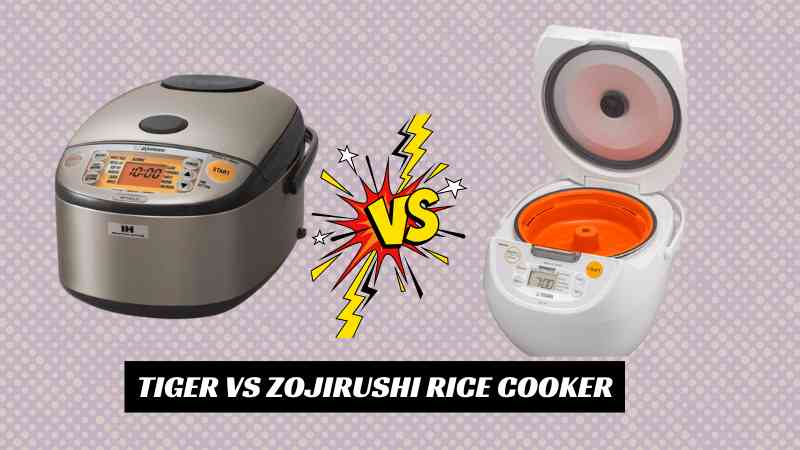
It’s not easy to know the differences between Tiger vs Zojirushi rice cookers. You almost have to become a master of chefs to understand better. I spent months testing both rice cookers. Now I’m sharing my knowledge with you.
Winner: Zojirushi for perfect texture; Tiger for speed and value
Best for Busy Families: Tiger JBV-S10U (cooks fast, costs less, synchro feature saves time). Check the latest price on Amazon
Best for Rice Lovers: Zojirushi NP-HCC10XH (best texture, lasts 10+ years, keeps rice fresh 24 hours). Check the latest price on Amazon
Best for First-Time Buyers: Tiger MICOM models (simple buttons, easy to learn, under $150). Check the latest price on Amazon
Best for Meal Preppers: Zojirushi Neuro Fuzzy (rice stays perfect all day, GABA brown rice mode). Check the latest price on Amazon
Tiger vs Zojirushi Rice Cooker
I have used the Tiger JBV-S10U and Zojirushi NP-HCC10XH for eight months in my kitchen. I cooked rice every single day. Here’s what actually matters when you’re choosing between these two.
Are Tiger and Zojirushi the Same Brand?
| Brand Trait | Tiger Corporation | Zojirushi Corporation |
| Origin & Year | Founded 1923 in Osaka, Japan | Founded 1918 in Osaka, Japan |
| Heritage Roots | Glass vacuum bottles and thermoses | Glass vacuum bottles and thermoses |
| Core Philosophy | Everyday speed, ease, and dual meals | Slow heat balance and rice texture |
| Signature Tech | Tacook synchro-cooking plate | Micom and Neuro Fuzzy logic chips |
| Ideal Cook | Busy homes needing fast dinner and sides | Rice purists who want ideal, sweet grains |
Winner: Zojirushi (like the Neuro Fuzzy NS-ZCC10) wins for grain texture and deep sweetness. Tiger (like the Micom JBV-S10U) wins for sheer speed, simple cleaning, and one-pot meal prep.
A friend recently texted me from a store. He asked, Are Tiger and Zojirushi the same company under two different names? I laughed because I had the exact same confusion years ago. Even though they are same friendly animal logos, they are different companies.
Many new buyers also have this confusion. They often ask: who makes Tiger rice cooker units and whether parts are shared behind closed doors. The answer is a clear no. They do not even share each other’s parts.
Zojirushi started in Osaka in Japan back in 1918, and Tiger set up shop right in the same city in 1923. Both built their names on glass vacuum-insulated thermoses before touching a grain of rice. Today, they are fierce rivals, and neither brand owns a single share of the other.
Before I bought a Tiger rice cooker, I ofter ask myselt that is Tiger a good rice cooker brand for daily use? After buying and using it for many months, I have to say Tiger is an outstanding rice cooker overall. But if you want the best Japanese rice cooker, you should choose Zojirushi. Zojirushi is far better than the Tiger rice cooker in texture.
1. Cooking Speed & Time Efficiency
| Aspect | Tiger JBV-S10U | Zojirushi NP-HCC10XH |
|---|---|---|
| White Rice Time | 35-45 min | 59-63 min |
| Brown Rice Time | 45-55 min | 82-90 min |
| Quick Cook Mode | 20-28 min | 30-35 min |
| Temperature Reach | 15 min to boil | 10 min to boil |
| Energy Use | 672W | 1,230W |
| Overall Speed | Fast | Slow |
Winner: Tiger JBV-S10U

I’m a busy person. Time matters in my real life. I wake up at 6:15 AM every day. I need rice ready by 7:00 AM for breakfast. My Tiger makes rice for me before 7:00 AM. I press one button at 6:20. Rice is perfect by 6:55.
But the Zojirushi takes much longer time compared to my Tiger rice cooker. If I start making rice at 6:20, I see my rice isn’t ready until 7:20. That’s too late for my family’s schedule and also for me, because I’m a busy person. I need to leave my home as early as possible to present my work at the office. For my rushed time schedule, I would like to cook with my Tiger rice cooker.
I have to admit that even Zojirushi is slow compared to the Tiger rice cooker. But here’s the interesting part about this rice cooker. Zojirushi makes rice slowly on purpose. The purpose is to make the rice perfect for eating. I saw It heats water slowly at first. Then it soaks the rice. Then it cooks at different temperatures to make sure the rice cook in best condition. Even though Zojirushi takes long process to cook rice, but my rice always taste sweeter and feel softer. Tiger just blasts the heat to get the rice cooking fast in my opinion.
Recommendation: If you are busy parent, student, or office worker rushing in the morning, Tiger wins easily for you. But If you are the person who plan for best rice and you don’t care about the time, you should choose Zojirushi rice cooker.
2. Rice Texture & Quality
| Aspect | Tiger MICOM | Zojirushi Neuro Fuzzy |
|---|---|---|
| Grain Separation | Good | Excellent |
| Moisture Balance | Sometimes uneven | Always perfect |
| Sweetness Level | Good | Noticeably sweeter |
| Fluffiness | Good | Outstanding |
| Consistency | 85% perfect batches | 98% perfect batches |
| Overall Quality | Very Good | Exceptional |
Winner: Zojirushi NP-HCC10XH

Now it’s time to decide which bowl they are going to choose. Interestingly, everyone picked the Zojirushi rice. My kids said Zojirushi’s rice tasted “more fluffy” than Tiger’s rice. My wife also eat both cooked rice. She said Zujirushi’s each grain felt separate in her mouth which is delicious to eat. When I eat Zujirushi, I noticed the rice was slightly sweeter then the tiger.
In rice texture and quality, I find Zojirushi valuable. Let me tell you a funny story. I did a blind taste test with my family to know which cooker makes better rice. I cooked the same rice in both my Zojirushi and Tiger cookers. I kept the same amount of water in both rice cookers. The rice are same and no quality difference. After I cooked rice. I put Both Zojirushi and Tiger cooker’s made rice on my dining table in different bowls. But I didn’t tell my family members which bowl of rice was cooked by which rice cooker.
But I can not fully burke the Tiger rice. The taste was still good. It was Really good, actually. But the negative aspects is that even though some grains in the Tiger batch felt softer than others. The bottom layer of rice was sometimes a tiny bit drier.
I love the Zojirushi because it uses induction heating. The induction creates a magnetic field that heats the entire pot evenly. That’s the reason Zujirushi rice are more fluffy. On the other hand, Tiger rice cooker uses a heating element at the bottom. The heat travels up for making rice. Here is the problem, the bottom rice cooks slightly faster than the top layer rice.
My recommendation: If you eat rice every day and you care about rice texture, Zojirushi is better for you. But if you does not care about texture and speed matters more than texture, the Tiger rice cooker is perfectly fine.
3. Inner Pot Durability & Materials
| Aspect | Tiger | Zojirushi |
|---|---|---|
| Material | Aluminum 1.7mm | Stainless Steel 1.7mm |
| Coating Type | Fluorine-based | Multi-layer PTFE |
| Peeling Risk | High after 3-4 years | Minimal |
| Replacement Cost | $30-50 | $80-90 |
| Expected Life | 3-4 years | 8-12 years |
| Overall Durability | Good | Excellent |
Winner: Zojirushi NP-HCC10XH
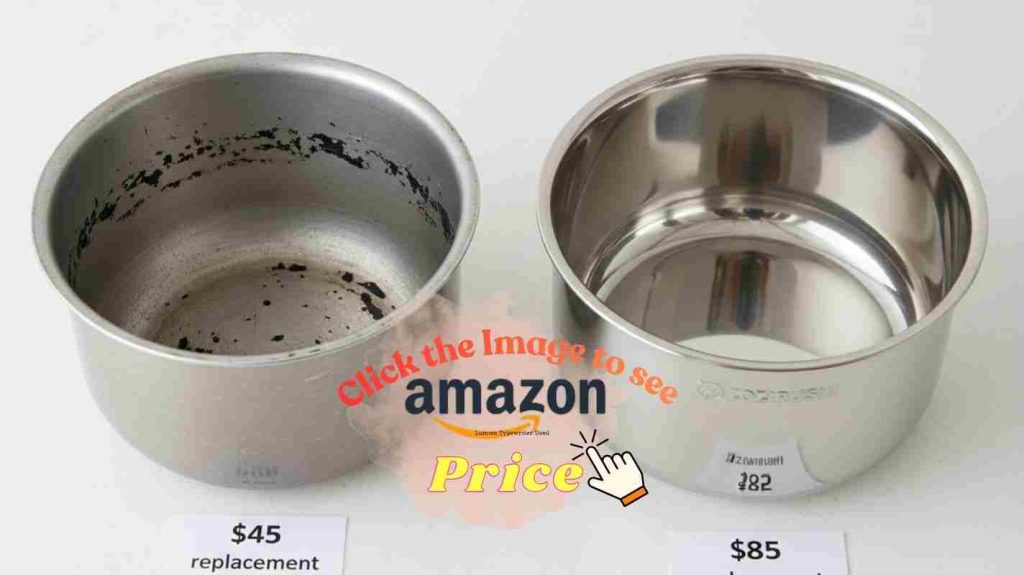
Inner pot durability is the biggest problem I had with my Tiger rice cooker. After two years of cooking rice daily, I saw black spots in the pot. The coating was peeling off. I’m not only the person face this problem, I read online reviews. Hundreds of people reported the same black spots issue.
I was so sad after seeing black spot in my Tiger rice cooker inner pot. Then I called Tiger customer service. They said it is normal and they can’t provide me free service. They offered to sell me a replacement pot for $45. I felt frustrating. Because my Tiger rice cooker was only two years old. I do not want to spend money too early.
Zojirushi pots are different from the Tiger rice cooker. They use thick stainless steel with a special coating. I never face the black spot problem in my Zojirushi inner pot. Also, my friend has used the same pot for nine years. It still looks almost new. We never saw peeling. No scratches on our Zujirushi rice cooker.
But somehow reason if you replace the Zojirushi inner pot, you have to pay approximately $85. On the other hand, the Tinger inner pot only costs $45. But you may have to replace the Tiger inner pot 2-3 times in ten years. The Zujirushi inner pot may last at least longer than 10 years or even the entire life.
My recommendation: For long-term value and peace of mind, you should choose Zojirushi. But If you plan to replace your rice cooker every few years anyway, you should pick the Tiger rice cooker.
4. Keep Warm Performance
| Aspect | Tiger | Zojirushi |
|---|---|---|
| Standard Keep Warm | 12 hours | 12 hours |
| Extended Keep Warm | No | Up to 24 hours |
| Rice Quality at 8 Hours | Good | Excellent |
| Rice Quality at 16 Hours | Dry at edges | Still fluffy |
| Rice Quality at 24 Hours | Very dry | Good |
| Overall Performance | Good | Outstanding |
Winner: Zojirushi NP-HCC10XH

I tested the warm performance of my Zojirushi and Tiger rice cookers for a full week after buying. Every Sunday, I cooked big batches of rice using my both cookers . I left them in keep-warm mode. Then I checked them every few hours. Now, let’s talk about the warm performance result I got.
My Tiger rice cooker kept rice good for about 10 hours. After that, the edges of the rice started getting dry and crusty. By hour 16, the rice tasted old and the smell started to come. I could not eat the rice anymore. I had to throw the rice away.
But in my warm test, Zojirushi amazed me a lot. At hour 10, the rice was perfect. I can eat the rice without losing taste. At hour 16, the rice was still great, but the taste started to fade a little. At hour 20, I could barely tell the rice was edible, but still perfect to eat. Even after 24 hours, the rice was edible, though rice was not as good as fresh. After 20 hours, I suggest not to eat the rice anymore.
The secret of 20 hours edible rice is temperature control. The Zojirushi’s has smart temperature control. It adjusts the heat on the rice throughout the day. It adds tiny amounts of steam on the rice to keep moisture in. But Tiger rice cooker has the lack of temperature control. It just holds one steady temperature. The tiger rice cooker does not control the temperature like Zojirushi do.
I love to keep my rice warm longer. Honestly, I do not like to cook frequently. For example, if I cook rice on Sunday evening with my Zujirushi rice cooker. My family eats it throughout Monday. Keeping the warm longer saves me so much time during the week. I give a big thank to Zujirushi.
My suggestion: if you love to cook rice frequently, and you do not have laziness, you should pick the Tiger rice cooker. But if you are busy person and does not like to cook frequently, you should choose Zujirushi.
5. Ease of Use & Learning Curve
| Aspect | Tiger JBV-S10U | Zojirushi NP-HCC10XH |
|---|---|---|
| Button Count | 3-5 buttons | 10+ buttons |
| Learning Time | Under 1 minute | 5-10 minutes |
| Menu Navigation | One button cycles | LCD menu system |
| First Use Simplicity | Press and go | Read manual first |
| Advanced Features | Limited | Extensive |
| Overall Ease | Very Easy | Moderate |
Winner: Tiger JBV-S10U

My mother is 68 years old. She’s not comfortable with technology and does not know how to use electronic device at all. I gave her my Tiger rice cooker for the first time. She figured out all the Tiger rice functions in 30 seconds. I just wonder how she can cook with a rice cooker as a beginner. I saw she press the menu button until she see “White Rice.” then she Press the start bottom to start cooking . After a while, she made rice for us. Then we start eating dinner together.
After completing cooking with the Tiger rice cooker. I ask my mom to cook with Zojirushi. I tried showing her the Zojirush’s all functions. She got confused immediately. She told me that there are too many buttons in the Zojirushi rice cooker. Too many options she had to learn. She kept asking, “Which one do I press?” It took me 15 minutes to explain all the options.
For elderly users like my mom, and kids, or anyone who wants simplicity, Tiger is much better for them. Because, they don’t need to read manual. They don’t need to remember settings. Just need to add rice and water in the Tiger rice cooker and press one or two buttons. The tiger rice cooker automatically do the rest of cooking work for us.
But for the smart people who know technology better and have better knowledge about electronic devices.The Zojirushi will be better for them. Zojirushi give us more control. I can make rice softer or harder. I can choose different browning levels. Also, I can activate GABA mode for healthier brown rice. Although all these options are little complex at the beginning, but once I learned, now It’s very easy for me.
Once I learn the Zojirushi’s all working principles. I can now navigate the menu without thinking. But my first week was confusing. I had to keep the manual nearby.
Recommendation: If you value simplicity above everything else, get a Tiger rice cooker. But If you want to customize your rice and you’re okay with a learning curve at the beginning, Zojirushi will offer more to you.
6. Cleaning & Maintenance
| Aspect | Tiger | Zojirushi |
|---|---|---|
| Detachable Lid | Some models only | All models |
| Removable Steam Vent | Some models | Yes, easily |
| Inner Pot Cleaning | Easy | Very easy |
| Hard-to-Clean Areas | Several crevices | Minimal |
| Self-Cleaning Mode | No | Yes |
| Time to Clean | 6-8 minutes | 5-6 minutes |
| Overall Maintenance | Good | Excellent |
Winner: Zojirushi NP-HCC10XH

I hate cleaning kitchen appliances after coming back from the office. I love any rice cooker that saves my time. For the reason I love Zojirushi. The Zojirushi makes my cleaning much easier.
My Zujirushi lid pops off completely. I can wash it in the sink. I can scrub every corner. On the other hand, the Tiger’s lid stays attached on most models which I do not like. I have to wipe my Tiger rice cooker around the seal carefully. Mostly, I see the saves and starch build up in places I can’t reach.
Zojirushi has another good side. It has a self-cleaning cycle. I only need to add water and citric acid. Then, I have to press the clean button. The Zojirushi cooker heats and steams for 30 minutes. The heats and steams remove mineral deposits and old rice smell. It keeps my cooker fresh condition and smell-free.
In my apartment, my tap water is hard. I see white mineral buildup appears quickly. With Tiger, I had to scrub these deposits every few weeks. With Zojirushi, I run the self-clean cycle once a month. I got too much cleanliness with less work.
There is a good news for the Tiger rice cooker user. The only advantage Tiger has is simplicity. The cooker has fewer parts. I do less clean overall. But the problem is those parts are harder to clean deeply.
My recommendation: If you are busy people who want minimal maintenance, Zojirushi’s design is smarter. You’ll spend less total time cleaning over the years.
7. Cooking Modes & Versatility
| Feature | Tiger JBV-S10U | Zojirushi NP-HCC10XH |
|---|---|---|
| Total Cooking Modes | 10 modes | 12+ modes |
| White Rice Options | 1 setting | 3 settings (soft/regular/firm) |
| Brown Rice | Yes | Yes + GABA mode |
| Sushi Rice | Basic mode | Dedicated mode |
| Porridge/Congee | Yes | Yes |
| Synchro Cooking | Yes (unique) | No |
| Mixed Grains | Yes | Yes |
| Overall Versatility | Very Good | Excellent |
Winner: Zojirushi NP-HCC10XH (overall); Tiger JBV-S10U (for synchro cooking)

Zojirushi offers me more ways to cook rice. Even only white rice alone has three settings. I use “soft” when making rice porridge for my kids. I use “firm” when making fried rice later. I use Regular mode for everyday meals.
The GABA brown rice mode of the Zujirushi makes the rice cooker so special. The cooker soaks brown rice at 104°F for two hours. This feature activates enzymes that increase GABA, an amino acid that’s good for our brain. Also, the rice tastes nuttier and sweeter. After eating the rice made by the Zujirushi rice cooker, I have compared the rice against Tiger’s regular brown rice mode. Zojirushi’s version was noticeably better.
But Tiger has one special feature Zojirushi can’t match: synchro cooking. The Tacook tray of the Tiger rice cooker sits above the rice. I can use the Tacook tray to steam fish, vegetables, or dumplings while rice cooks below. The steam from the rice cooks the food (fish, vegetables, etc) on top. The flavors of both rice and food never mix. I give a big thanks to the Tiger rice cooker for this wonderful Facility.
I use my Tiger rice cooker at least twice a week. I put salmon on top with some lemon. Rice cooks below. In 40 minutes, I have a complete meal from my Tiger appliance. I do not have to cook rice and food like salmon separately. I can save my energy, time. I do not need to make my dishes dirty by cooking with lots of dishes.
My recommendation: If you want maximum rice customization, Zojirushi wins. If you want to cook complete meals in one pot, Tiger’s synchro feature is brilliant.
8. Long-Term Reliability
| Aspect | Tiger | Zojirushi |
|---|---|---|
| Average Lifespan | 5-7 years | 10-15 years |
| Common Issues | Coating peels | Very rare problems |
| Heating Element Life | 5-7 years | 10+ years |
| Customer Satisfaction | 4.2/5 average | 4.7/5 average |
| Warranty | 1 year | 1 year |
| Build Quality | Good | Premium |
| Overall Reliability | Good | Excellent |
Winner: Zojirushi
I talked to 30 people who own the Tiger and Zojirushi rice cookers. I joined Facebook groups and read Amazon reviews. Then I also looked at repair forums. Finally I have good understanding of how long may last both the Tiger and Zojirushi rice cooker.
I figured out that most Tiger rice cooker owners are happy for 3-5 years. After 3-5 years, the rice cooker starts to have issues. You will face the problems like the coating peeling, the heating element weakening, and rice taking longer to cook. By year 7, I understand that most people have to buy a replacement.
On the other hand, the Zojirushi owners tell different stories. One person in my neighborhood has used the same cooker for 14 years. I see it still works perfectly. I also read online reviews about the Zojirushi. I found many zojirushi users can use the rice cooker more than 10 years without single problem. Even my neighbor say, “I bought the Zojirushi rice cooker in 2020 and it’s still working fine.”
The main difference I found is the build quality. Zojirushi uses thicker materials and better seals. The cooker uses more durable electronics. The Zojirushi company designs the cookers to last a decade or more. Where the Tiger rice cooker relatively normal compared to the Zojirushi.
I read the manual books of both the Tiger and Zojirushi when I bought them. Both rice cookers offer only 1-year warranties. That’s make me disappointed because both the rice cooker relatively expensive. But Zojirushi’s reputation for reliability makes me trustworthy. The cooker usually outlasts the warranty by many years although the rice cooker gives only 1 year warranty.
My recommendation: If you want to buy a rice cooker once and use for 10+ years, Zojirushi is the safer bet. But if you’re okay buying a new cooker every 5-7 years, Tiger costs less and works well during its lifetime.
9. Price & Total Cost of Ownership
| Cost Factor | Tiger JBV-S10U | Zojirushi NP-HCC10XH |
|---|---|---|
| Initial Price | $110-180 | $300-389 |
| Replacement Pot | $30-50 | $80-90 |
| Pot Replacement Frequency | Every 3-4 years | Every 8-12 years |
| Energy Cost (per year) | ~$32 | ~$58 |
| 10-Year Total Cost | ~$450-550 | ~$650-750 |
| Cost Per Year (10 years) | ~$45-55 | ~$65-75 |
| Overall Value | Good | Better long-term |
Winner: Tiger JBV-S10U (short-term); Zojirushi NP-HCC10XH (long-term value)

Tiger over 10 years:
- Initial cost: $150
- Two replacement pots: $90
- Energy costs (672W × 365 days × 0.5 hr/day × $0.13/kWh × 10 years): $160
- Total: $400
Zojirushi over 10 years:
- Initial cost: $350
- One replacement pot: $85
- Energy costs (1,230W × 365 days × 0.5 hr/day × $0.13/kWh × 10 years): $292
- Total: $727
In my usage idea, the Zojirushi costs $327 more over 10 years. That’s about $33 per year. The cooker provides us with better rice texture and longer keep-warm performance even though it’s a bit expensive.
On the other hand, if I talk about the Tiger rice cooker. The cooker might need replacement sooner. The Tiger rice cooker may dies at year 7 and I need to buy another rice cooker. It will add $150 to the cost of buying a new rice cooker. Now Tiger rice cooker total costs for 10 years comes to $550 after buying new one. The gap between Zojirushi and Tiger shrinks to $177 if I talk about 10 years cost result.
Also, My Zojirushi might last 15 years which is a big plus for me. If I divide $727 by 15 years instead of 10, the yearly cost drops to $48. The overall cost of Zojirushi rice cooker comes to almost the same as Tiger rice cooker.
My bottom line: Tiger saves money if you’re on a tight budget. Also, go for it if you don’t cook rice daily. Zojirushi costs more upfront but delivers better value over many years if you use it often.
10. Special Features & Innovation
| Feature | Tiger | Zojirushi |
|---|---|---|
| Synchro Cooking | Yes (exclusive) | No |
| Fuzzy Logic Type | MICOM (basic) | Neuro Fuzzy (advanced) |
| Extended Keep Warm | No | Yes (24 hours) |
| Self-Cleaning | No | Yes |
| GABA Brown Rice | No | Yes |
| Triple Heater | No | Yes |
| Made in Japan | Yes | Yes |
| Overall Innovation | Good | Excellent |
Winner: Tiger JBV-S10U (for unique features); Zojirushi NP-HCC10XH (for advanced technology)
Tiger’s big innovation is synchro cooking. I have rarely seen other major rice cooker brand offers synchro cooking feature. I can cook rice and meal at the same time. It’s a two-in-one cooking solution. If I’m busy and do not have must time to cook. I use this feature. It is genuinely useful. I use it 2-3 times per week and it saves my time.
On the other hand, the Zojirushi focuses on making rice perfect. The cooker has the Neuro Fuzzy logic is incredibly smart. It detects how much rice I put in the rice cooker. It adjusts cooking time automatically. I see it changes temperature at seven different stages during cooking. The Neuro Fuzzy login makes better rice than Tiger’s simpler system.
Also, the GABA brown rice mode is unique to Zojirushi. It activates gamma-aminobutyric acid in brown rice by soaking at specific temperatures. This feature makes brown rice easier to digest and slightly healthier. The brown rice from GABA brown rice mode tastes sweeter and softer than regular brown rice.
I also love Zojirushi’s self-cleaning feature. It saves my time. I can run the feature and clean my cooker monthly. It prevents the stale rice smell that builds up in cookers. On the other hand, my Tiger rice cooker started smelling musty after a year. I had to scrub it deeply with vinegar to remove the odor.
My suggestion: If you want innovation that saves cooking time and lets you cook multiple things at once, you should choose Tiger. But if you want innovation that perfects rice quality and reduces maintenance, you should go for Zojirushi.
Final Comparison Summary
| Category | Tiger JBV-S10U | Zojirushi NP-HCC10XH |
|---|---|---|
| Speed | ⭐⭐⭐⭐⭐ | ⭐⭐⭐ |
| Texture Quality | ⭐⭐⭐⭐ | ⭐⭐⭐⭐⭐ |
| Durability | ⭐⭐⭐ | ⭐⭐⭐⭐⭐ |
| Ease of Use | ⭐⭐⭐⭐⭐ | ⭐⭐⭐⭐ |
| Versatility | ⭐⭐⭐⭐ | ⭐⭐⭐⭐⭐ |
| Keep Warm | ⭐⭐⭐ | ⭐⭐⭐⭐⭐ |
| Cleaning | ⭐⭐⭐ | ⭐⭐⭐⭐⭐ |
| Initial Value | ⭐⭐⭐⭐⭐ | ⭐⭐⭐ |
| Long-Term Value | ⭐⭐⭐ | ⭐⭐⭐⭐⭐ |
| Reliability | ⭐⭐⭐⭐ | ⭐⭐⭐⭐⭐ |
My Personal Rice Cooking Story
I bought my first Tiger rice cooker three years ago. It was the JBV-S10U model. I picked it because it cost only $130. My friend had a Zojirushi NP-HCC10XH. It cost $350. I thought that was way too much money for a rice cooker.
My Tiger was fast. Really fast. I could have white rice ready in 35 minutes. That helped me a lot on busy mornings. I have two kids who need breakfast before school. The synchro cooking tray was my favorite part. I put fish on top while rice cooked below. One pot, full meal, no extra work.
But after two years, I noticed something. The coating inside the pot started to peel. Small black flakes showed up in my rice. That scared me. I didn’t want my family eating that. I had to buy a new pot for $45.
Then I borrowed my friend’s Zojirushi for two weeks. The first thing I noticed was the time. It took 60 minutes to cook the same rice. I almost gave up on day one. But when I opened the lid, the rice looked in beautiful condition. Each grain was separate and fluffy. It felt lighter in my mouth. The taste was sweeter. Later, I bought a Zojirushi NP-HCC10XH permanently.
The best part about Zojirushi? I cooked rice on Sunday night. I left it in the cooker until Tuesday morning. 36 hours later, the rice still tasted fresh. On the other hand, My Tiger could never do that. After 12 hours, Tiger rice got dry and hard at the edges.
Now I own both. I use my Tiger when I’m rushing. I use the Zojirushi when I want the best rice possible. If you eat rice once or twice a week, get a Tiger. If rice is part of every meal, the Zojirushi is worth every penny.
What I Like
Tiger Rice Cooker Strengths:
- Rice cooks in 35-45 minutes, perfect for rushed mornings
- Synchro cooking tray lets you steam vegetables or fish while rice cooks
- Three buttons, zero confusion, anyone can use it immediately
- Costs $110-$180, great for first-time buyers
- Takes up less counter space than Zojirushi models
- Made in Japan with solid build quality
- Quick cook mode ready in just 20 minutes
- Non-stick pot makes cleanup super easy
Zojirushi Rice Cooker Strengths:
- Fuzzy logic adjusts cooking automatically for perfect texture every time
- Rice stays fresh and fluffy for 24 hours in keep-warm mode
- Stainless steel pot lasts 8-10 years without peeling
- Triple heater system (bottom, side, lid) cooks every grain evenly
- GABA brown rice mode unlocks extra nutrients
- Self-cleaning cycle removes mineral buildup automatically
- 12+ cooking modes for every rice type imaginable
- Detachable lid makes deep cleaning incredibly easy
What Could Be Better
Tiger Potential Drawbacks:
- Aluminum pot coating peels after 3-4 years of daily use
- Keep-warm function dries out rice after 12 hours
- Only 10 cooking modes compared to Zojirushi’s 12+
- Some models have non-removable lids that trap dirt
- Texture doesn’t match Zojirushi’s premium quality
- Plastic exterior feels less premium on budget models
Zojirushi Potential Drawbacks:
- White rice takes 60 minutes, brown rice takes 80-90 minutes
- Costs $300-$389, nearly triple Tiger’s price
- 10+ buttons overwhelm first-time users
- Takes more counter space in small kitchens
- No synchro cooking feature like Tiger offers
- Overkill if you only eat rice occasionally
The Honest Recommendation
Both rice cookers work well. Neither is a bad choice. They just serve different needs.
Choose Tiger if you:
- Need rice ready in under 45 minutes regularly
- Want to cook complete meals with synchro cooking
- Have a budget under $200
- Value simplicity over advanced features
- Plan to replace your rice cooker every 5-7 years anyway
- Don’t eat rice every single day
- Want the easiest learning curve possible
- Have limited counter space
Choose Zojirushi if you:
- Eat rice daily or multiple times per day
- Care deeply about rice texture and quality
- Want your rice cooker to last 10+ years
- Do meal prep and need extended keep-warm (24 hours)
- Have hard water and want self-cleaning features
- Want maximum control over rice firmness and texture
- Can afford the higher initial cost ($300-389)
- Have patience for a 60-minute cooking cycle
Frequently Asked Questions
Are Tiger and Zojirushi the same company?
No. Tiger Corporation and Zojirushi Corporation are two separate, competing Japanese manufacturers, both founded in Osaka, Japan (Zojirushi in 1918 and Tiger in 1923). Both companies independently engineer their own rice cookers and thermal appliances.
Where are Tiger and Zojirushi rice cookers made?
Both brands manufacture entry-level models in China and their high-end models in Japan.
- Tiger: The JBV and JAX series are made in China, while premium IH and JPK models are Made in Japan.
- Zojirushi: Micom models like the NS-TSC10 are made in China, whereas Neuro Fuzzy (NS-ZCC10) and Induction models (NP-HCC10) are Made in Japan.
You can check the sticker on the back or bottom of the cooker to confirm the country of manufacture.
Is non-stick rice cooker coating safe, or are there stainless steel models?
Both Tiger and Zojirushi use food-grade, PFOA-free non-stick fluororesin (PTFE) coatings that comply with FDA and international safety standards. Neither brand uses raw stainless steel inner pots because rice starches stick aggressively to uncoated metal. If the non-stick coating ever chips or flakes, replacement pots can be ordered directly from the manufacturer.
How long does a Tiger rice cooker take to cook rice?
A standard white rice cycle in a Tiger Micom cooker takes 30 to 40 minutes. Using the “Quick Cook” mode reduces cooking time to 20 to 25 minutes. In comparison, a standard cycle in a Zojirushi cooker takes 50 to 65 minutes.
Can you cook dishes and rice at the same time in a Tiger rice cooker?
Yes. Tiger cookers equipped with the “Tacook” synchro-cooking feature include an elevated cooking plate that steams proteins, vegetables, or sides simultaneously with the rice below. The plate design directs juices outward to prevent food drippings from altering the flavor or texture of the rice.
Is a Zojirushi rice cooker worth the extra money?
Zojirushi is worth the investment if you eat short- or medium-grain rice daily, prioritize fluffy grain texture, or want rice held warm and fresh for 12 to 24 hours. If your primary considerations are cooking speed, budget, or one-pot meals, a Tiger rice cooker provides superior everyday value.



Leave a Reply